Family Heirloom: Les Pannequets Saint-Louis

Family Heirloom: Les Pannequets Saint-Louis

Among all the family recipes Les Pannequets Saint-Louis is truly a unique one, et je pèse mes mots — that is: and I weigh my words — yes: unique, a word I almost never use.
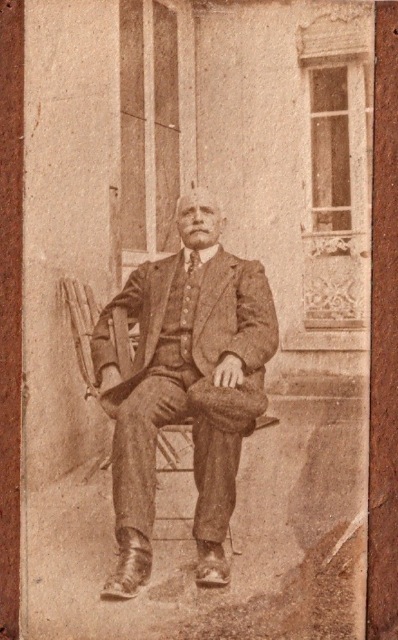
Louis

My great grandfather Louis, Gabriel, Marcel, Marie, Peyrafitte (1858-1929) created this amazing recipe that we still make for very special occasions like this Christmas day when Pierre, Joseph, Miles and I gathered around our kitchen island for a true family food communion.
Pannequets
have been part of the French cuisine repertoire for a long time, though the word derives from the English “pancake”— from the middle English pan +cake that’s an easy one. The famous French chef, Auguste Escoffier, has several entries for pannequets in the Entremets section of his reference work Le Guide Culinaire. So does Joseph Favre in the Dictionnaire Universel de la Cuisine, mentioning an interesting version of pannequets au gingembre — with ginger. They both specify that it is a Patisserie Anglaise or English pastry. Not surprising at all, in fact, that my Pyrenean ancestors would be acquainted with English desserts. In the 1900’s the French Pyrenees were “invaded” by English tourists, the family hotel in Luchon even changed its name: the Hotel de la Poste became the Hotel Poste & Golf ! My family had sold some land so a golf course could be built for to the increasing (colonial) British clientele. Surfing the net to look for traces of my grandfather Joseph’s stay in England (he was there as a cook between 1902-08), I was quite astounded to find the following entry in  “The Gourmet’s Guide to Europe” by Algernon Bastard (probably published around 1903):

Throughout the mountain resorts of the Pyrenees, such as Luchon–Bagnères de Bigorre, Gavarnie, St-Sauveur; Cauterets–Eaux Bonnes, Eaux Chaudes, Oloron, etc., you can always, as was stated previously, rely upon getting an averagely well-served luncheon or dinner, and nothing more — trout and chicken, although excellent, being inevitable. But there is one splendid and notable exception, viz., the Hôtel de France at Argelès-Gazost, kept by Joseph Peyrafitte, known to his intimates as “Papa.” In his way he is as great an artist as the aforementioned Guichard; the main difference between the methods of the two professors being that the latter’s art is influenced by the traditions of the Parisian school, while the former is more of an impressionist, and does not hesitate to introduce local colour with broad effects, — merely a question of taste after all. For this reason you should not fail to pay a visit to Argelès to make the acquaintance of Monsieur Peyrafitte. Ask him to give you a luncheon such as he supplies to the golf club of which Lord Kilmaine is president, and for dinner (being always mindful of the value of local colour) consult him, over a glass of Quinquina and vermouth, as to some of the dishes mentioned earlier in this article. You won’t regret your visit.

The Joseph Peyrafitte (1849-1908) mentioned above is Louis’ brother and therefore my grand father Joseph Peyrafitte’s (1891-1973) uncle who was named after him. Louis & Joseph had married two sisters, Marie & Anna Secail. Anna moved to the Hôtel de France in Argelès-Gazost and Louis Peyrafitte came to Hotel de la Poste in Luchon. The marriages had been arranged by one of the Peyrafitte’s brothers who was a priest at the Vatican with one of the Secail brothers — also a priest. All this is documented — and left a magnificent family heirloom that I inherited: “the Chandelier” but that story is for another blog-post.  Both brothers had been classically trained cooks so one can easily understand how the inspiration for this recipe came about.
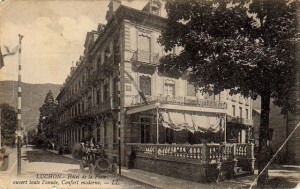


Hotel de la Poste in the late 1890’s

My father, Jean Peyrafitte, doesn’t remember his grandfather’s cooking very much  — he was 6 years old when his grandfather Louis died in 1929 — but he vividly remembers his father Joseph Peyrafitte (my grandfather and cooking mentor) making the Pannequet Saint-Louis.
At that time no “grande carte” was available at the restaurant, though there was a menu du jour which changed daily given that the clientele were “pensionnaires” —residents — who would stay for periods of 3 weeks or more.
My grandfather would occasionally put the pannequets on the menu but only during low season, as they are incredibly time consuming. The recipe was not written down until the mid 1960’s. At that point my dad decided to promote regional cooking and to upgrade the restaurant to a “grande carte,” hoping to get attention from the Guide Michelin and Parisian food critics. So he created a “grande carte” full of regional dishes like Pistache (mutton & bean stew), Peteram Luchonnais (lamb, veal, and mutton tripe), duck confit, etcetera.  My grandfather considered this food low class and believed that lobster and tournedos Rossini was more appropriated.
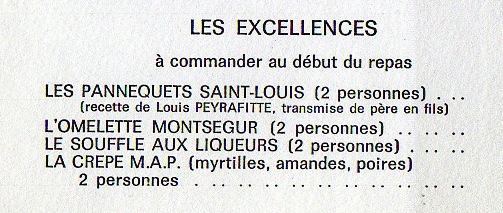
Carte

But my father pointed out that the clients could eat that food anywhere, but not our local specialties. That is when the pannequets Saint-Louis made their way to the dessert menu of the  grande carte and were listed as “Les Excellences to be ordered at the beginning of the meal (order for 2 minimum)”.

Now this is the part I remember. In the late 60’ my mother begged my grandfather to write the recipe down. He said he couldn’t as he knew it by instinct. She didn’t get discouraged. She stood by him as he was making them, weighed the ingredients one by one and made a note of it. I must say that without my mother (Renée Peyrafitte) most of the family memory would be gone.

When I called my parents to talk about the Pannequet Saint-Louis recipe I reassure them that I wasn’t going to give the recipe away. Mom said, “don’t worry no one else can make them anyway.” What she meant is that this recipe takes total dedication. When my grandfather grew old, it was she who was entrusted with the task of making them. She tried to teach a few cooks but the result was never satisfactory.  One of the reasons is that from making the batter to cooking them requires total and utterly focused attention. And if you don’t do that the best dessert in the world turns into the worst glob!
Nicole Peyrafitte

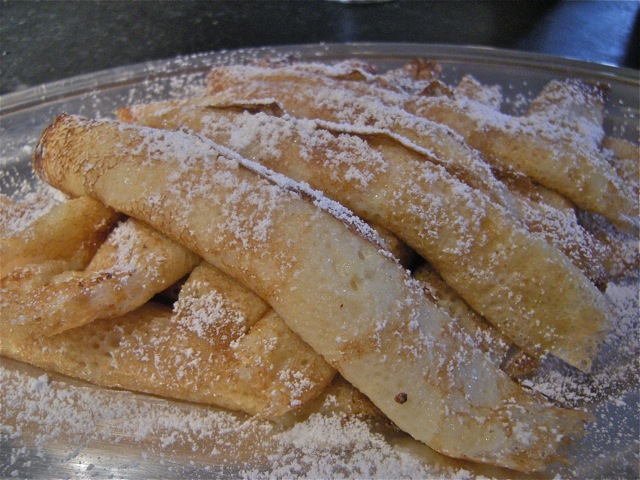
I must say that since a little girl I watched my grandfather & then my mother making them over and over. My favorite post of observation during “service” was in the corridor where I could survey all the action. As soon as I would hear an order for pannequets being “barked,” I would get into position to assist and taste!  I have memorized all the gestures. Unlike the regular crêpes the pannequet doesn’t get flipped (but come and see me do that Sunday at the 36th Annual New Year’s Marathon). Once one millimeter of the batter is poured into a hot and generously buttered cast iron pan, it is let to cook until almost, but not completely, dry. Then the edge of the dough next to the handle is gently detached with a spoon and if cooked perfectly the batter will roll down the pan like a cigarette helped only by little tap in the pan. A perfect pannequet Saint-Louis has a very lightly crisp skin on the outside and custard like consistency on the inside. While the texture melts in your mouth, the rum, almond, lemon & vanilla flavors lead you to gastronomic ecstasy!  I don’t know if my great grandfather named the pannequet “Saint”-Louis himself, but I doubt it — it sounds more like one of those mischievous puns my grandfather Joseph Peyrafitte was famous for!
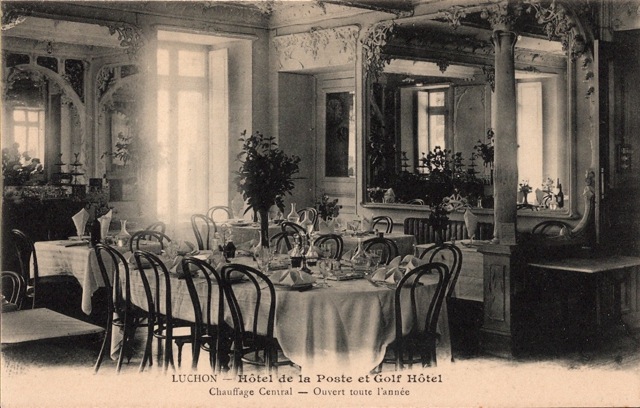

Hotel de la Poste became Hotel Poste & Golf around 1905

Happy New Year, Bona Anada, Bonne Année!
And hope to see you Sunday for poetry and crêpes at the Poetry Project for the 36th Annual New Year’s Day Marathon Benefit Reading .

ps: You might enjoy reading these 2 posts about crêpes:
Crêpes History, Recipe + Video:
The Crêpe, the Theorist, the Chef and the Volunteer
Spirited Noël Dinner

Spirited Noël Dinner

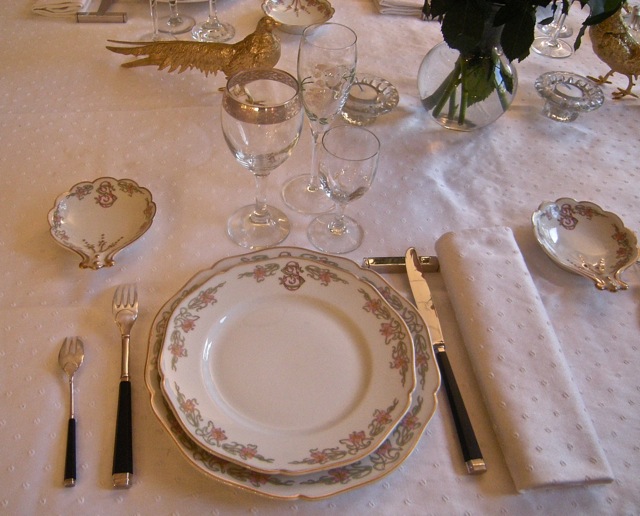
We are not particularly attached to any specific Christmas tradition although this year we were eager to have an intimate family dinner at our new place and to take out the family heirloom china that had been in boxes for a while. So after consulting with husband, sons, and daughter in law, we agreed on a menu:

Foie

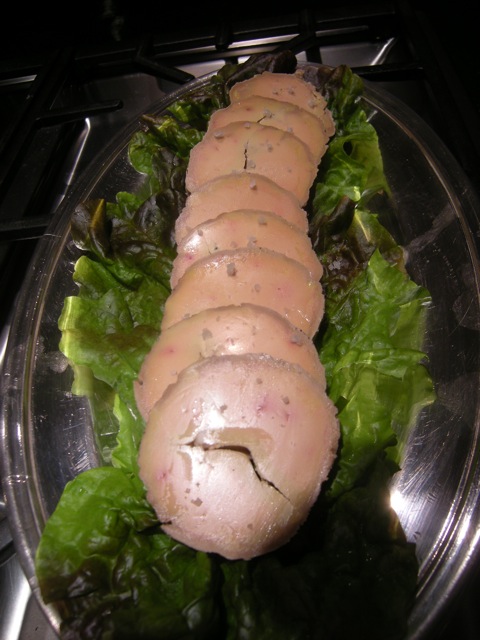
Home made Foie Gras au Torchon

Fisher Island Oysters

Roasted Suckling Pig
Mashed potatoes
Apple & Chestnut Bourbon dressing

Cinnamon Rice Pudding

I had never made Foie au torchon before but my friend, chef Pierre Landet, the executive chef at Cercle Rouge, suggested this excellent idea —by the way, Congrats to Pierre soon to be made Maître Cuisinier or Master Chef! This simple recipe keeps the foie velvety & easy to deal with — even though I have to confess I missed one step.
First break the lobes and delicately take out the nerves and veins. Some people get crazy about the cleaning process and turn their foie into a battlefield. My previous experiences on making terrines had taught me that there is no need for over cleaning. I then seasoned the foie with salt and pepper and rubbed some Armagnac on it. Next step is to put the lobes on top of each other and roll the foie very tightly in cheesecloth —like a sausage — and poach it in a broth at 140ºF for 5/7 minutes. Now cool your foie
in a bath of cold water with ice cube to stop the cooking. This is the step I missed!  So mine was a little over done but no one complained.

Our next course was a dozen Fisher Island oysters each. It gave me a good work out to open the 5 dozen. They were extremely fresh, all very tightly shut. The first taste of a Fisher Island oyster comes as a hit of seawater, followed by the very clean taste of the firm texture of the shiny silvery mollusk. Our favorite way to eat oysters is to add a few sprinkles of lemon, Pierre (Joris) likes to add some fresh ground pepper on his. The experiment this year was to add a ½ teaspoon of a fresh homemade salsa in the oyster shell. Pierre remains skeptic, the kids more enthusiastic; I do like the bite of the salsa on a few of them.  We paired them with a pleasant Sancerre. No other info on that, as the bottle got recycled before I could take a picture of it!

Pierre

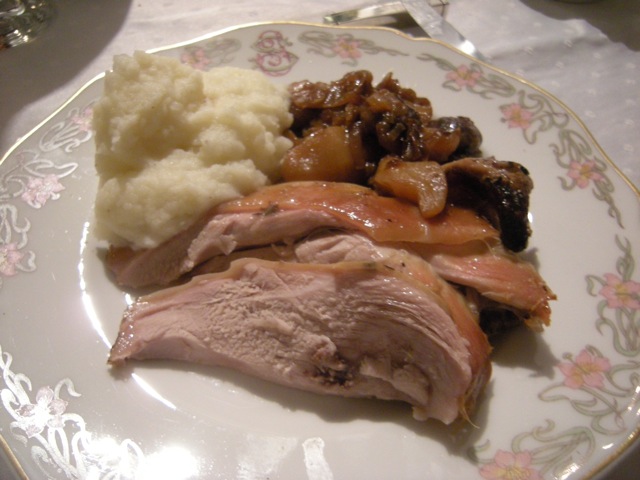
Then came the “piece de resistance:” our roasted suckling pig, an ever so festive and ever so delicious dish. We ordered it from d’Artagnan, and upon it’s arrival we lovingly massaged the piglet with a marinade of lemon, olive oil, thyme and garlic; this can be done 24 to 12 hours before roasting it. We had decided against stuffing it in order to keep our meal “lighter” and most of all to keep the roasting time down! It took about 3 hours for our 10lbs piglet. Pierre (Joris) handled the roasting, he diligently basted it every twenty minutes and covered and uncovered it with aluminum foil as he felt the need to. It turned out perfect, done but moist! I made last minute jus —or light gravy— by deglazing the piglet’s pan with very thinly chopped onions —should have been shallots but I had none— flambé’d it with bourbon, added 1 teaspoon of arrowroot, then some chicken broth and 1 cup of re-hydrated cèpes (boletus), salt & pepper to taste. It was lovely to pour some on the fluffy buttery mashed potatoes (w/ a hint of nutmeg).

Apple

The apple, chestnut & Bourbon dressing (with sautéed minced onions)  enhanced the pork flavor. There is a beautiful complementarity between pork and chestnuts, and as for the apples that had slightly caramelized, they added a pleasing hint of tartness.
The Corbières L’Enclos 2005 —from Domaine des 2 Anes— brought the last touch of bliss to the dish.  This organic blend of mostly Grenache with Carignan, Mourvèdre and Syrah grapes has an earthy, rich and supple taste that literally “talks to me”!

The light, refreshing Ecuadorian cinnamon rice pudding was a Christmas present from our good friend Eleana and it came as a good conclusion to our excellent meal.

Well, the final punctuation was the digestif & the Laubade Armagnac did bring a few spirits down! Santé to you all!

Pyrenean Piedmond

Pyrenean Piedmond

cloudcloud2

I am now in my birthland to gather more info on Augustus Saint-Gaudens (1848-1907) whose father, Bernard Saint-Gaudens,  was born in the village of Aspet in 1816. I will not go into details about it now,  but briefly want to share yesterday’s photographs, impressions & menu.

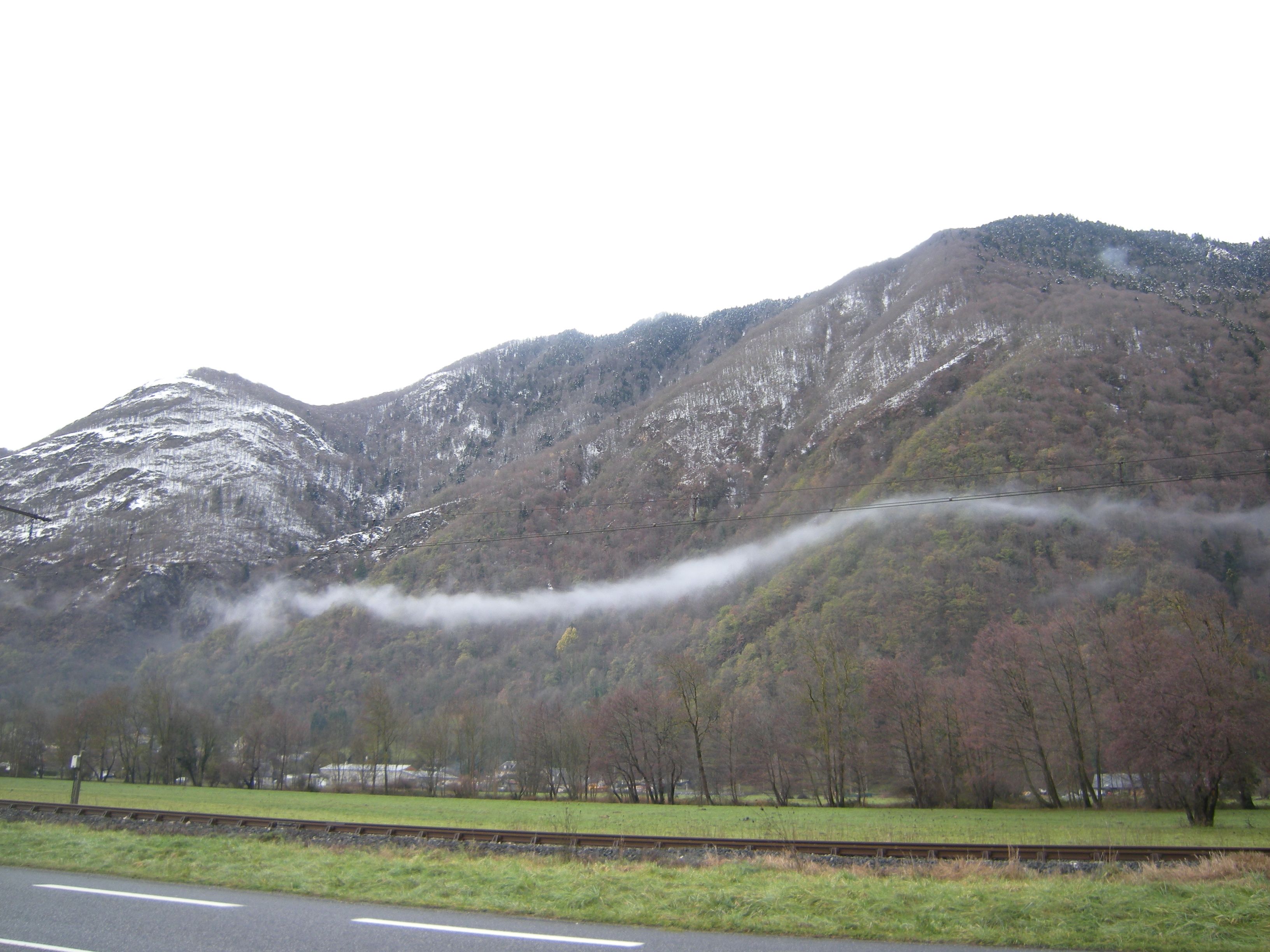
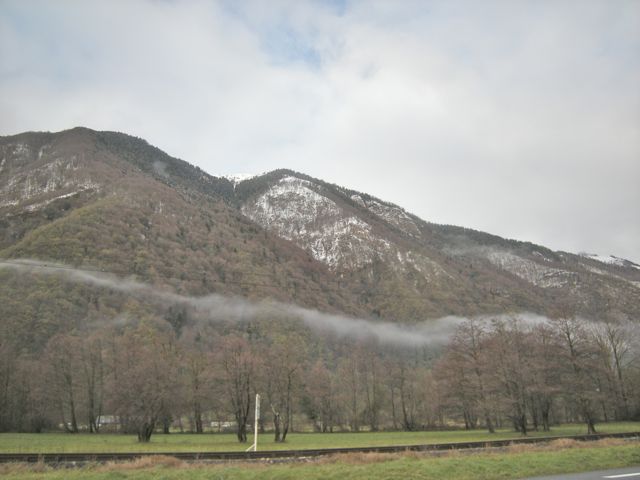
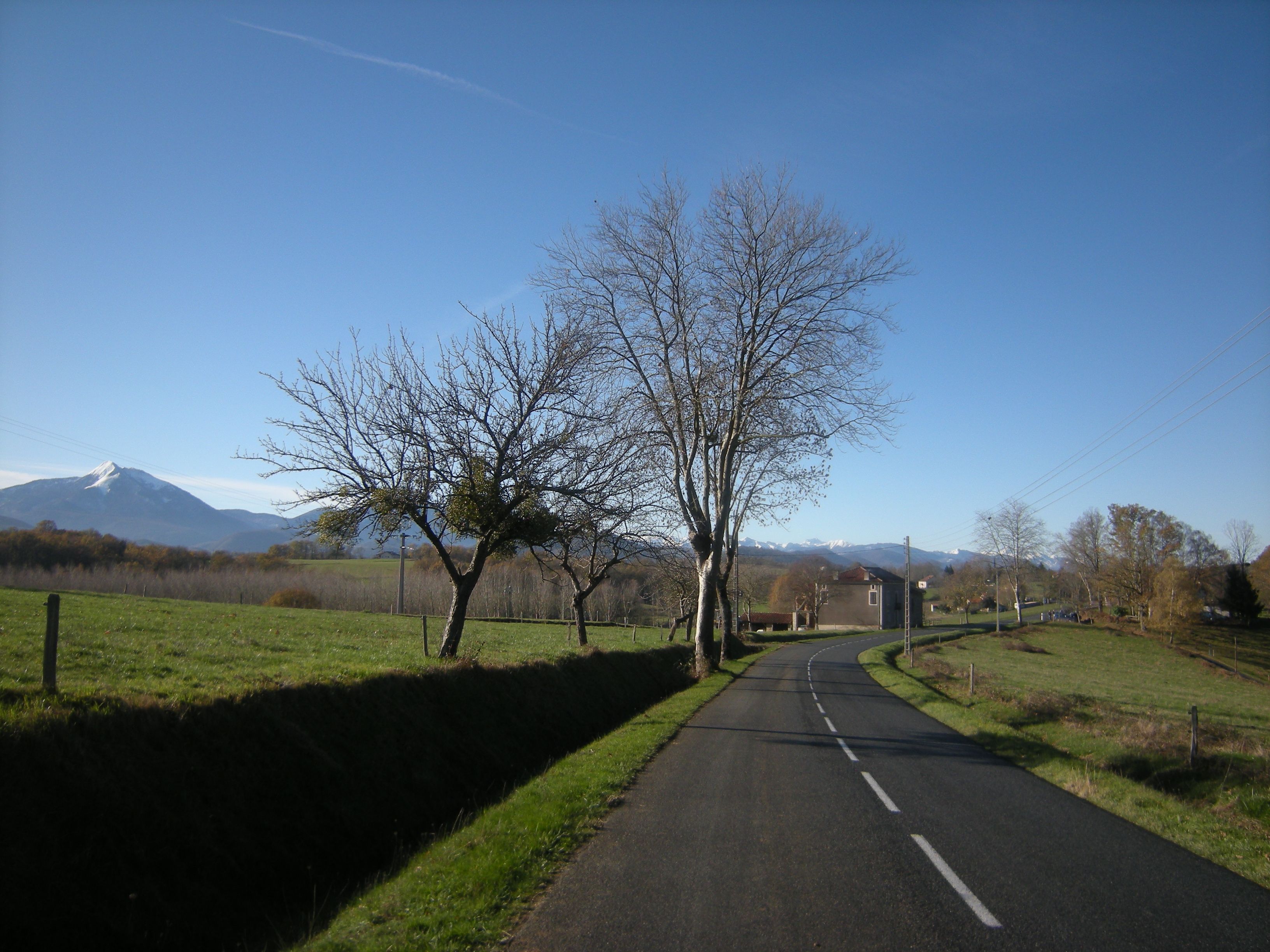
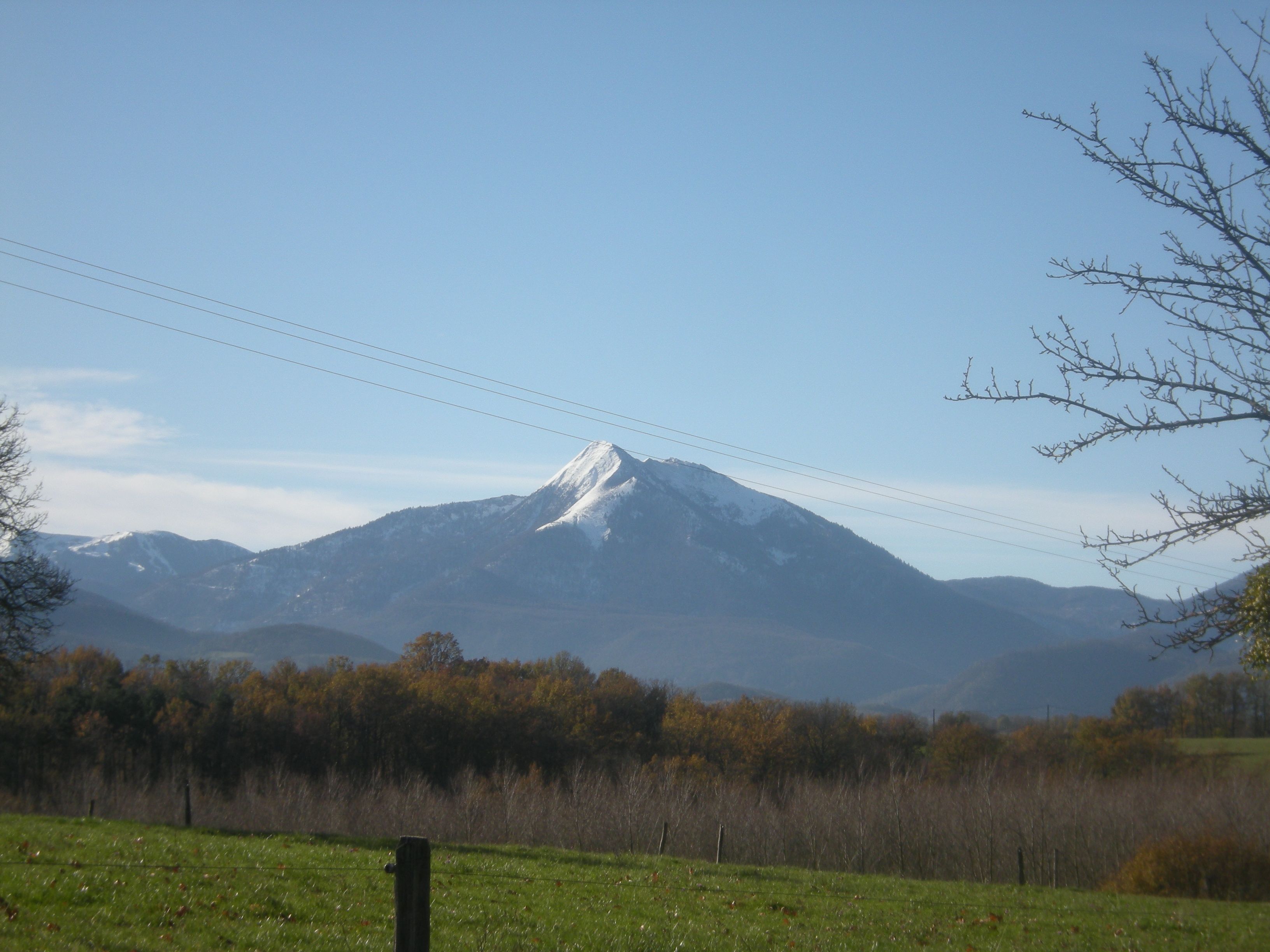
I left Luchon —family hometown where I am based— around 9:30am, a lovely & very unusual cloud was ornamenting the mountain. It looked like a natural pre-Xmas decoration or rather like a true pagan one! I drove away from the high peaks towards the luscious Pyreneans piedmont. The cloudy skies cleared and revealed an intense deep blue that I have only seen here. I drove what I think is the exact same road Augustus Saint-Gaudens traveled in December 1897 to journey from his father’s birth village, Aspet, to Salies-du-Salat where the dad grew up from age 6 till around 16.  The distance between the villages is about 20 kilometers. Except for the asphalted road, the landscape remains identical to the one Augustus admired over 100 years ago. There were no other cars than mine for several miles, no modern constructions, the few farm houses looked over 100 years old and the stunning panorama of the high peaks in the background was certainly unchanged!

DSCN5043DSCN5045

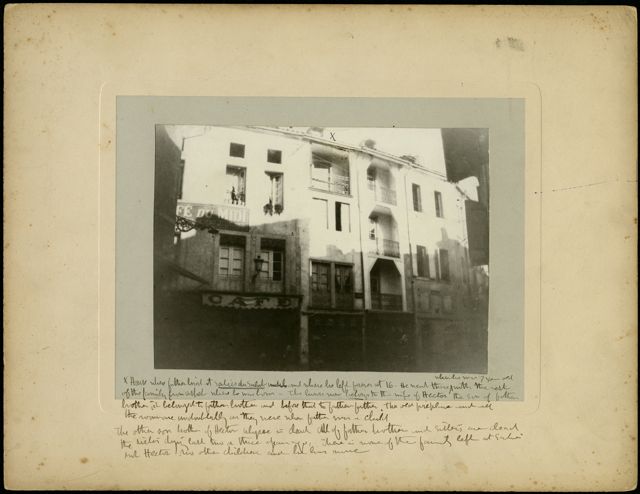
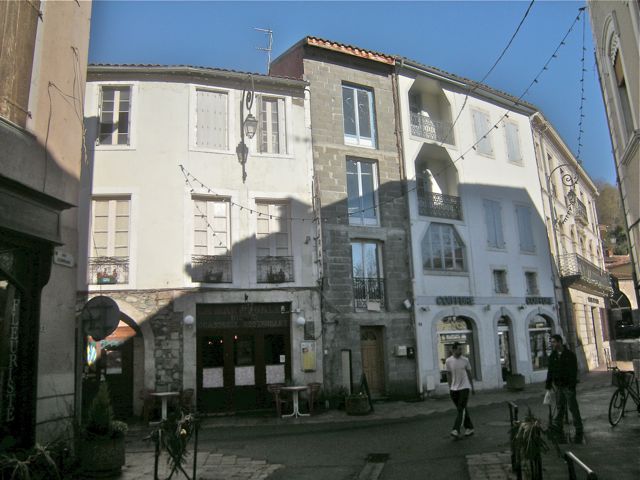
I arrived in Salies-du-Salat around 10:30 am. A phone call to an elder resident pointed me to Bernard Saint–Gaudens’ family house. Despite some remodeling, the shape of the house/street remains pretty much the same as they do on the picture Augustus Saint-Gaudens took in December 1897. In the background, and from far, the 11th century tower and the 14th century church ruins are also the same, except for the tree in front of the tower.

maisonsaliesraunerwholebsghousesalies

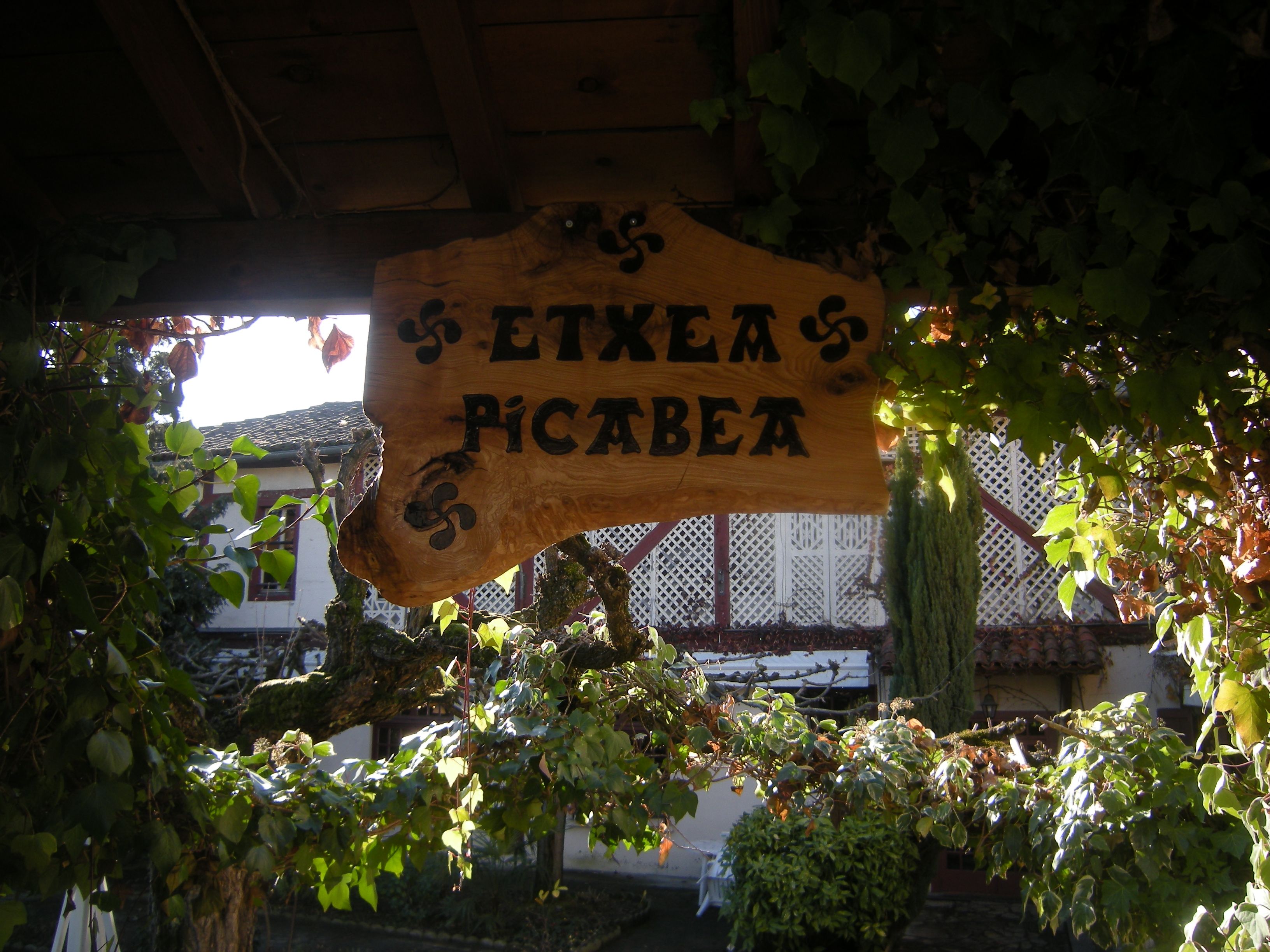
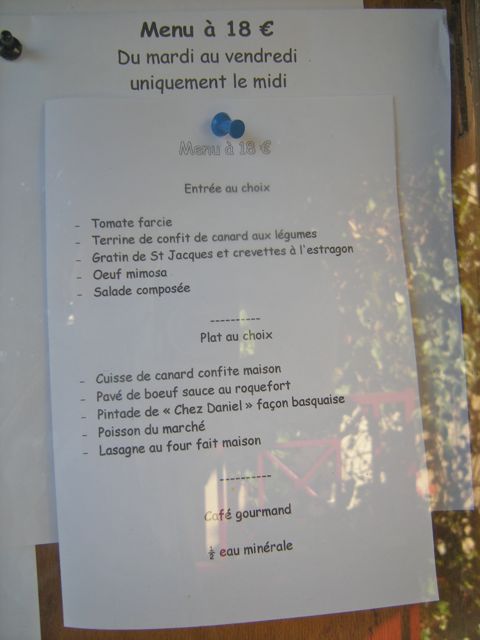
Seeing Bernard’s house in the sharp winter colors & the crisp, clear Pyrenean air left me exalted. I got back on the road to meet a long time friend for lunch at Auberge Beaurivage, an excellent Basque restaurant that I was very much looking forward to try —the chef is a true Basque man — as we are only 2 hours away from the Basque country. As time was limited we had the menu du jour, though chef Philippe Picabea offers a selection of original creations as well as traditional Basque dishes that people drive many miles for.

DSCN5088menupicabea

I had a very fresh, perfectly dressed & copious “salade composées” that included green beans, cucumbers, hard boiled eggs, greens, plenty of onions & tomatoes. As an entrée my friend and her son had filet mignon with a Roquefort sauce. I had a pan-fried lemon sole with a moist and tasty potato & artichoke gratin. For dessert came a large rectangular plate that contained an espresso coffee surrounded by 4 mini desserts: a small cup of light rice pudding, a mini chocolate crème brûlée, a slice of cherry gateau basque, and a tiny cannellé. Price of the menu is €18. Totally worth it and compared to what I had so far on this trip this is rather cheap and one of my best meal. We had no wine as we both had to work in the afternoon. Voilà! Off again to the town of Saint-Gaudens for more work.

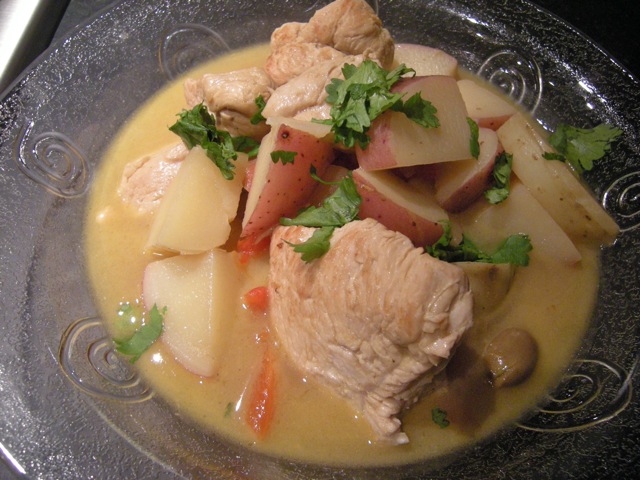
Ragoût Express

Ragoût Express

ragout express

A râgout express is a contradiction in term. A stew should cook as long as possible. This being said let’s move on!
The term râgout covers a lot of territory. A good definition would be “a  well-seasoned meat or fish stew usually with vegetables.” The word ragoût comes from old French ra-gouster “to revive the taste”. We already find several ragoût recipes in Apicius’ cookbook De Re Coquinaria (25 AD). The Latin name for ragoût is: offella – a diminutive for offa which means “piece of meat, morsel”. As the name indicates, all those recipes call for some meat cut up into small pieces, a lot of spices and marinating in liquid, often wine or garum. The English equivalent is stew —from middle English stewen, to bathe in a steam bath; from old French estuver, possibly from vulgar Latin extufare, and from the Greek tuphos, source also for typhus and typhoid which provokes very high fevers.
Every cultures have some sort of ragoût. To name but a few: the Italians have ragús, the Mexicans have moles, the Spanish guisados.  They all emphasize the use of produce of their area, an  illustration of the local food culture. For example let’s take daube,  a typical french ragoût made with beef and red wine, in New Orleans it became: “daube de boeuf Créole” where the wine has been replaced by rum.  Have you tried it? I have not, but below are Elizabeth Davis ‘ words on it:

“The meat is studded with olives and cooked with rum instead of wine, and the curious point is that although the result is a very rich-tasting dish I think very few people would be able to detect the presence of rum, or to say in what precise way the stew differs from the French original”.

A big advantage of stews is that you can use the less expensive cuts of meat. After marinating over night or for several hours, and after the long simmering on top of the stove or in the oven the meat will be tender. If you use poultry, like in my recipe today, the meat is much leaner and will cook faster. It had too in my case!

So back to the story behind today’s recipe. We had to be out of the house at 7:30pm; it was 6:10pm. Pierre wanted to order out and I really didn’t. Any decent take out in our area takes 45 minutes and it’s expensive. I had a 2 lb turkey breast  in the fridge and I had planned to cook and eat it that night! Granted we ate a little fast and to be really honest the dish tasted better the next day, but that’s true of any stew.  Please look at the short video below for the recipe. I am still trying to find better ways to cook/film at the same time. Thank you for your patience and suggestions are always welcome!

Lost in Pepper!

Lost in Pepper!

Mushroom Salad

All I wanted to do was post a quick recipe for Labor Day:
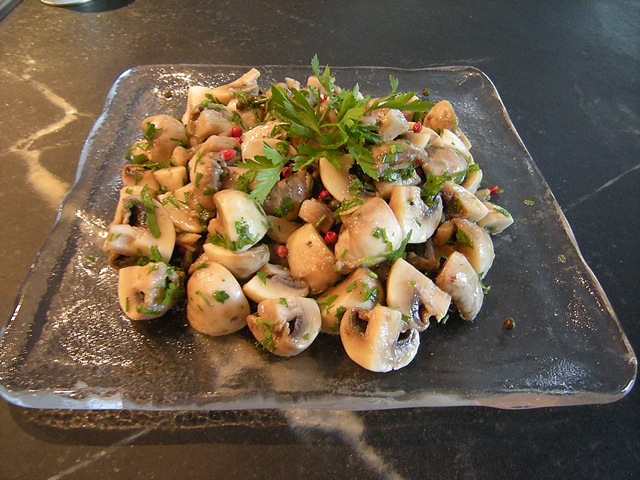
A raw mushroom salad marinated with pink & green peppercorns. Little did I know! I took the photo a week ago, the ‘shrooms are long gone but I am still marinating in pepper!

pink peppercorn

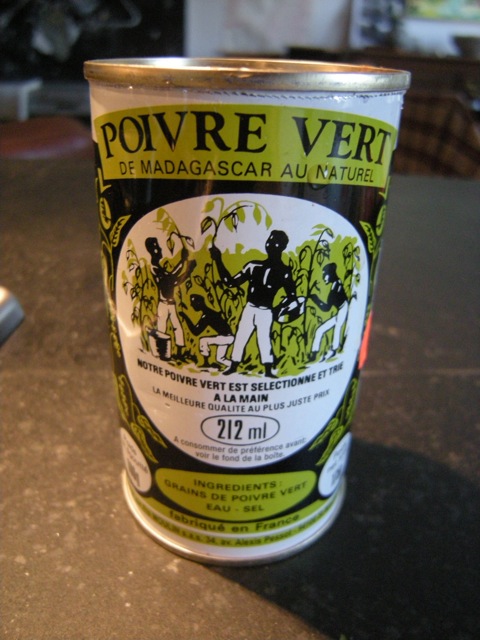
First, I confirmed that green pepper is the unripe Piper nigrum or black pepper that is mostly cultivated in Madagascar. Then I looked into pink peppercorn Schinus terebinthifolius: a faux poivre – a fake pepper. Originally from South America the Baies Roses plant is today cultivated on Reunion Island. And the last thing I was going to look into the Dictionnaire Universel de Cuisine et d’Hygiène Alimentaire” by J. Favre — & there (re)appears the fascinating Monsieur Pierre Poivre.  Oui! le poivre, pepper in French, was named after Pierre Poivre.  In English that would be Mr. Peter Pepper. He was also known as Peter Piper or le missionaire des épices — the missionary of spices!

Pierre Poivre

Pierre Poivre was born in Lyon (France) in 1719 (where he also died in 1786). After studying botany and Latin he was sent to Paris to enter the Seminaire des Missions Etrangères (Foreign Mission Seminary) to become a priest. He thought his vocation was to evangelize the Far East —little did he know.  Before getting ordained he was sent on an initiatory voyage to China. The trip was more than eventful: it coincided with the Jesuits been kicked out of the country. He was arrested & sent to prison. In order to plead his case he learned Chinese. He was brilliant and officials ended up granting him permission to visit the country.  His taste for adventure put a serious damper to his religious vocation. He visited many places among them Cochin China (Vietnam), Macau, Canton and was totally fascinated by their botany, agriculture and commerce. In 1745 he had to return to France to get ordained but fate struck again. The English attacked the ship he was on, a cannonball hit his wrist and amputation of his forearm was inevitable once he landed on Batavia Island (Indonesia) where the Dutch helped him out. That ended his priesthood carrier and more sadly his painting carrier —though I haven’t yet found any samples of his work, he had the reputation of being an excellent painter. While recovering on Batavia Island, he studied the native plants and the idea came to him that the French should grow their own spices in order to bypass the Dutch monopoly.

Bourbon Islands

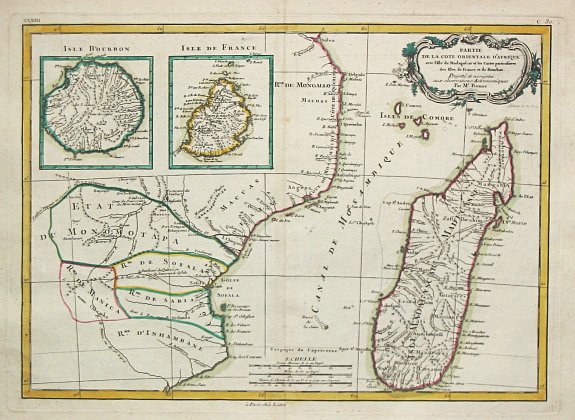
And that’s exactly what he did in 1767 when he became Intendant  des Isles de France et de Bourbon — the French colonies situated in the Indian Ocean south of Madagascar today called Mauritius & Réunion. One of his claims to fame was to transfer spice trees from the Dutch Indies (pepper, nutmeg, cinnamon, clove and many others) to the French colonies. Pierre Poivre was associated with the physiocrats (physis, nature, kratein, rule). The physiocrats are regarded as proto-French revolutionaries; they proposed to benefit agriculture by implementing a system of economic freedom. Poivre was against slavery and he is considered one of the first environmentalists who created and implemented the first environmental laws. Fear of climate change was already a concern and linked to deforestation. If you want to know more about the historic of environmental concerns read this Harvard Seminar on Environmental Values by Professor Richard H. Grove here.
Pierre Poivre married Françoise Robin, who was about 30 years younger than he,  and they had two daughters. It is interesting to note that nine years after Pierre Poivre passed away, Françoise Robin Poivre remarried Pierre Samuel du Pont de Nemours, who was the one who coined the term physiocrat —The du Pont family fled France for the USA during the revolution where Éleuthère Irenée du Pont, her second husband’s son, established the gunpowder manufacturer E.I. du Pont de Nemours & Company. Today Dupont is the second largest chemical company in the world.
Pierre Poivre's Book

Pierre Poivre wrote an extensive memoir:  “Voyage d’un philosophe ou Observations sur les moeurs ou les arts des peuples d’Afriques, de l’Asie et de l’Amérique” filled with acute observations, pertinent information and political & naturalist perspectives. As I stated above, Poivre is still regarded today as the avant-garde of environmentalism and his texts are still studied  —see Richard H. Grove article for more details.
In 1984 I visited Les Jardins de Pamplemouse on Mauritius Island.
Since then the garden that was constructed by Pierre Poivre was renamed SSR Botanical Garden. I remember the visit fondly, though at that time I had more scattered interests and didn’t pay enough attention.  I should still have pictures and recipe somewhere in storage and am tempted to go dig them out, even if they belong to a segment of my “romantic” life I don’t care much revisiting.
T
o be continued? Will see!

Meanwhile there is the recipe that you can adjust to your own taste:

green peppercorn1 lb of very fresh button/white mushrooms
1 lemon (juice)
1/2 cup extra virgin olive oil
2 teaspoon pink peppercorns
2 teaspoon green peppercorns
—dry or in can. If you use the canned ones you can add 1 teaspo0n of the vinegar they marinate in.
1/2 cup roughly chopped parsley
Salt & ….pepper? just a dash!

Prepare your marinade with all ingredients except the parsley.
Clean & cut the mushrooms in quarters (top only, use bottom in a sauce.)
Toss the mushrooms  in the marinade.
Save in the fridge for up to 48 hours.
Toss in parsley before serving.
Garnish with a sprig of parsley and a few pink peppercorns

1 3 4 5 6 7 12