
Bourg d’Oueil 2009

Bourg d’Oueil 2009

DSCN1635

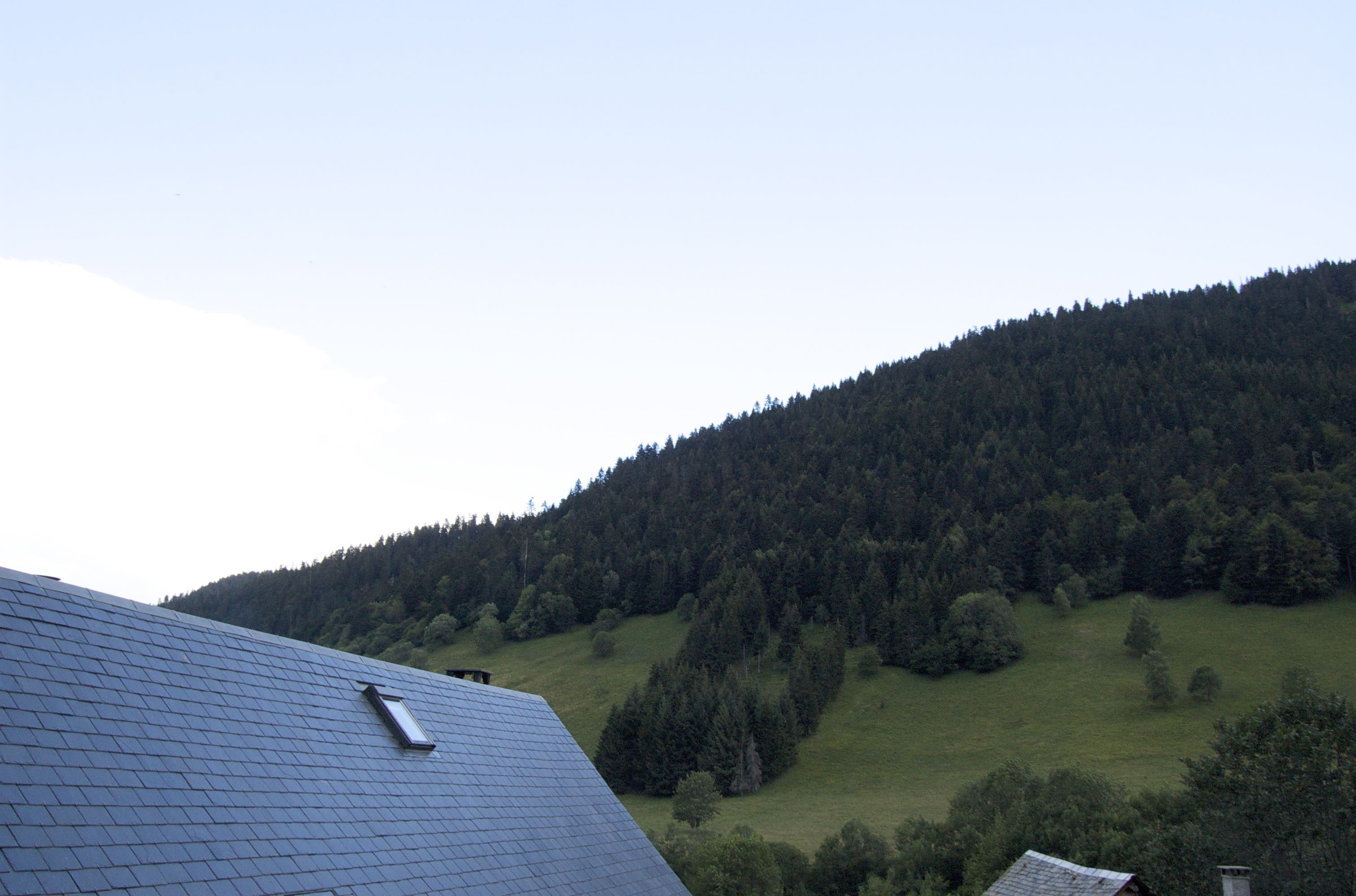
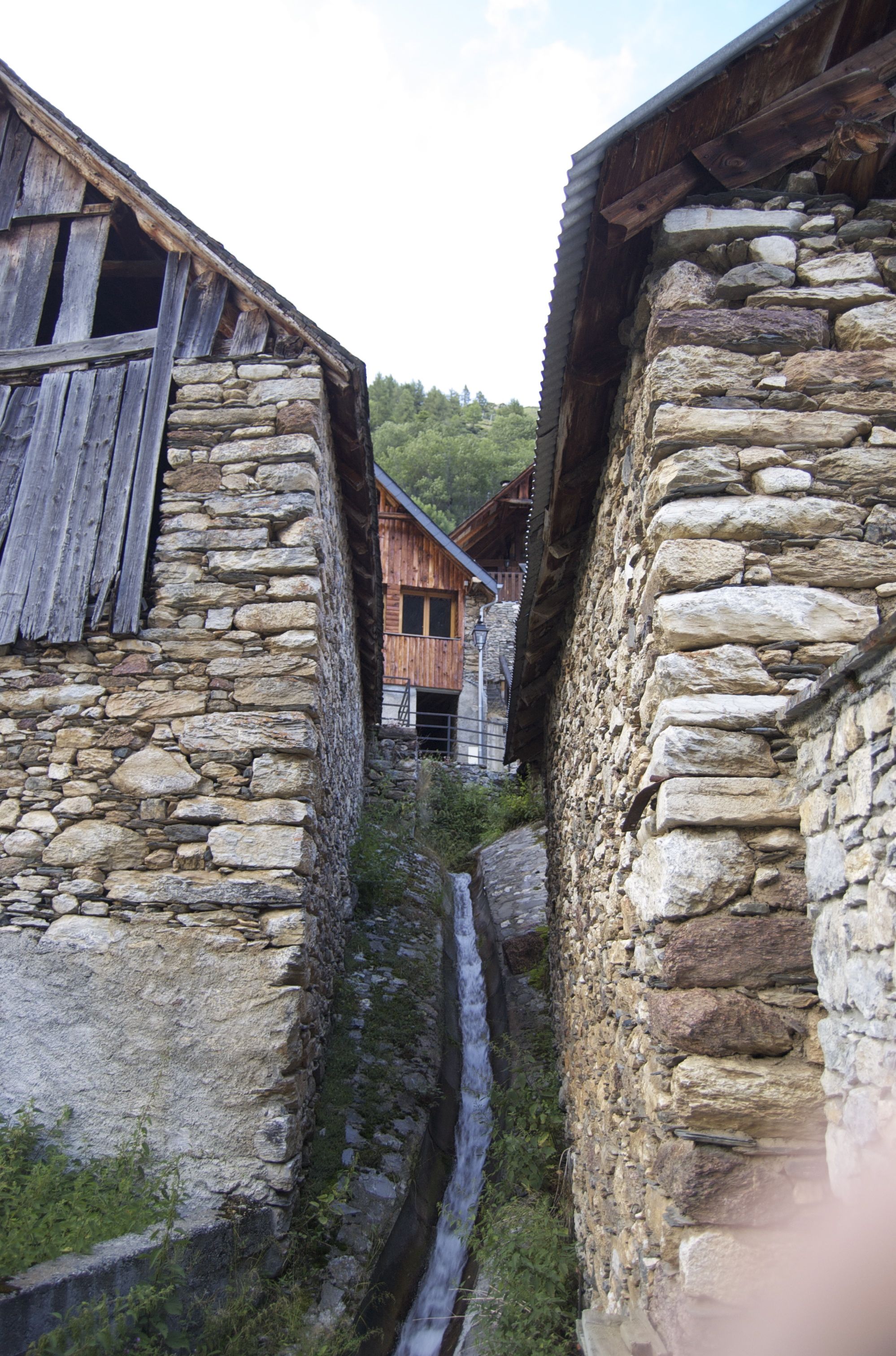
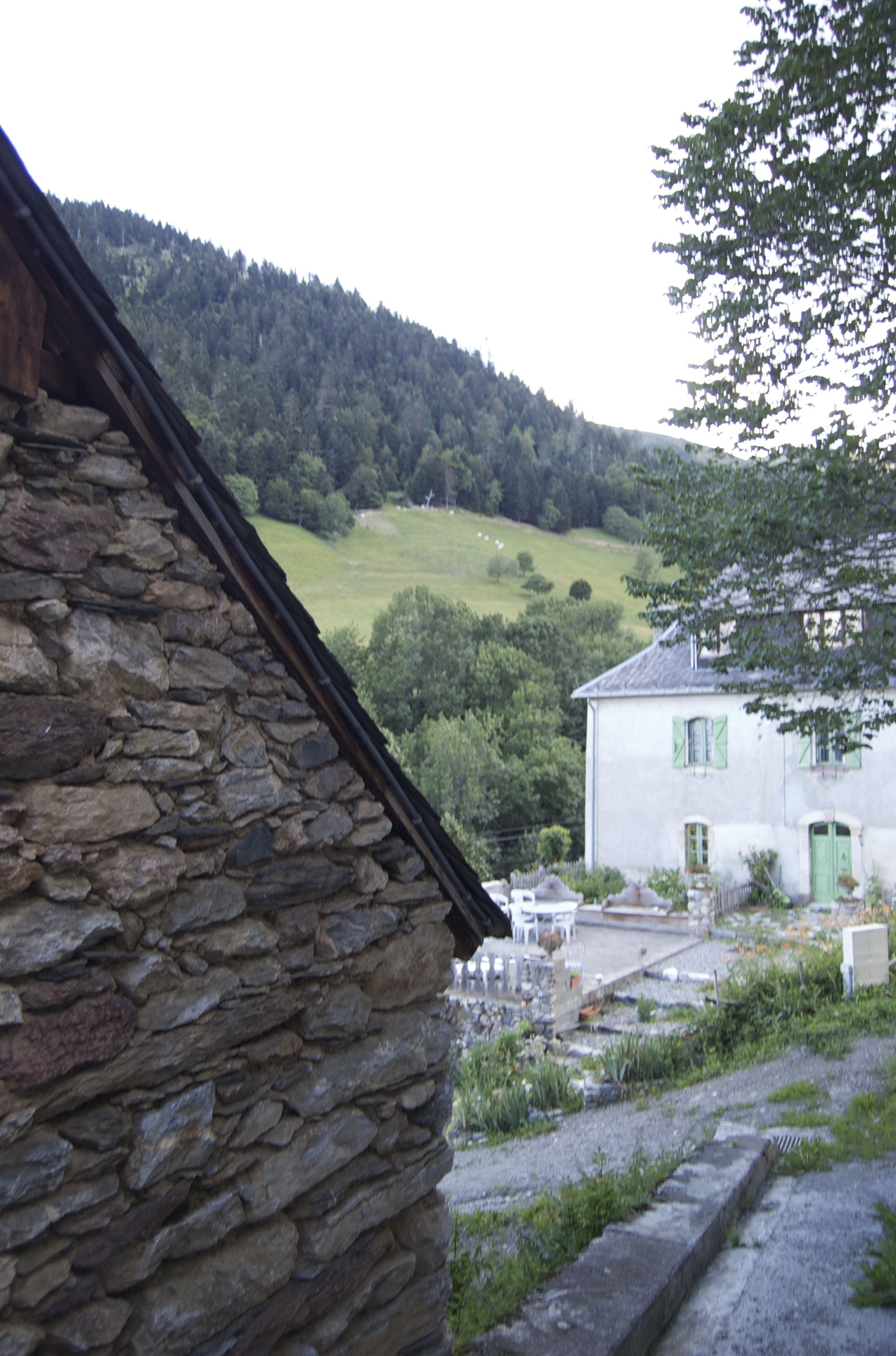
Bourg d’Oueil is a very small village in the central Pyrenees where I escape to every time I can. It is located in the secluded valley of Oueil, 10 miles from Luchon —where I was born and raised— at 4600 feet high. Today the village counts about 10 full time residents. There is one good old fashioned hotel-restaurant “Le Sapin Fleuri” and only one family that still breeds sheep (about 2000 at a time) and a few cows. The rest of the population either works in the town of Luchon or are people like us coming for vacation.
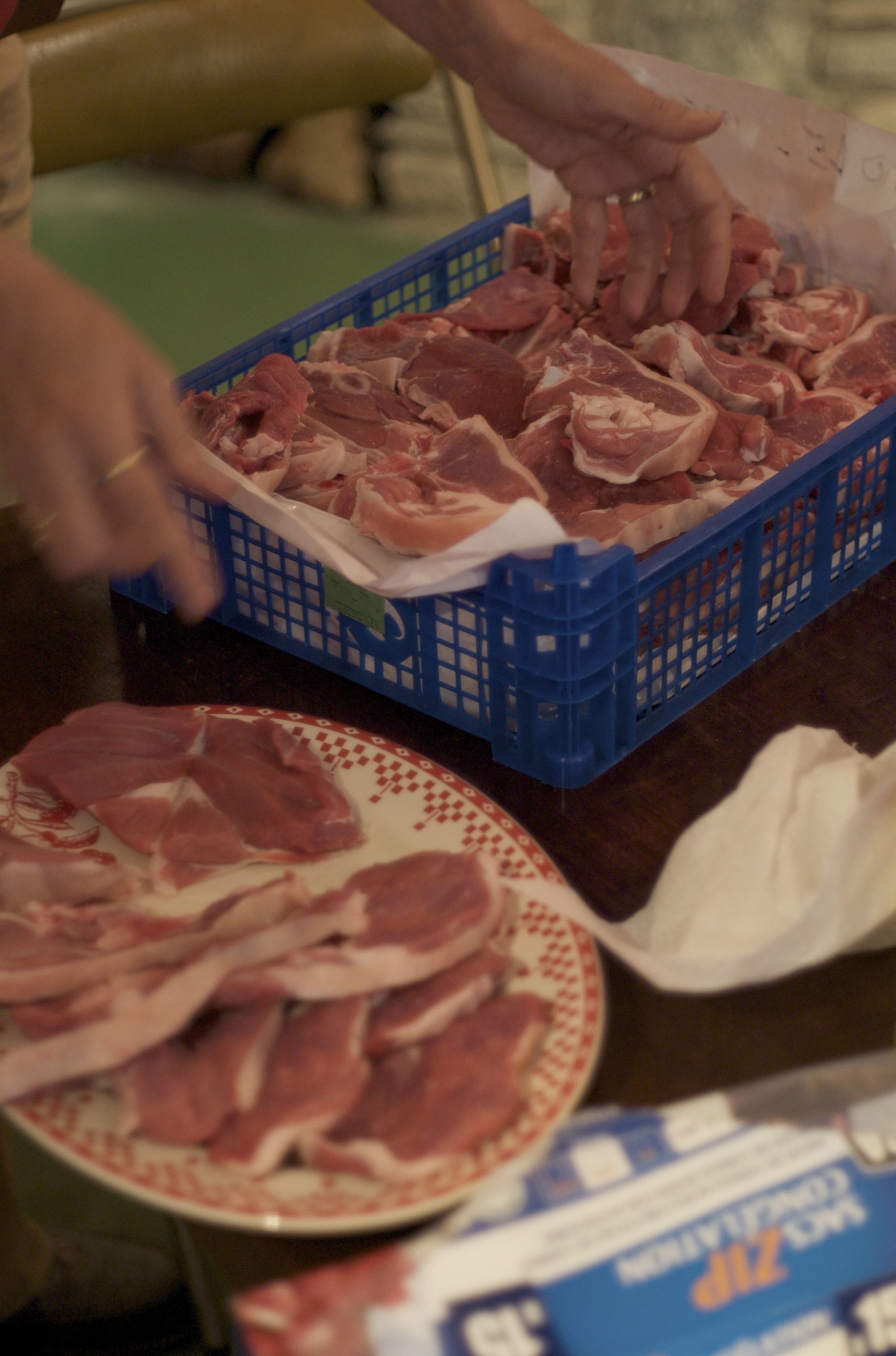
Going to the farm to get lamb is one of the great pleasures and that is what we do as soon as we get there. The first call I make is to Henri Jammes to order 1/2 lamb for our stay (see photo below). Their name is
probably of Basque origin, we tease them a lot and pronounce their name the English way, especially Henri! Henri, Roland, Jeremy (Henri’s son) & Marie Jeanne run the family farm. I used to take Gascon lessons with the father, François Jammes, sadly he passed away this winter at the very honorable age of 89. I really  miss hanging out with him this year.
My connection to the village goes way back. The chef and co-owner of the “Sapin Fleuri”, Jean Toucouère, apprenticed cooking under my grand father. Joseph Garces, Maitre d’H for 15 years at the family hotel, whom I consider family, is also from Bourg. In 2002 he lend me his barn for 2 weeks and it is at that time that we decided to try get a place there. An other event of significant importance for me is that it was in Bourg d’Oueil in 1971 that I earned my first and only victory in a ski race!

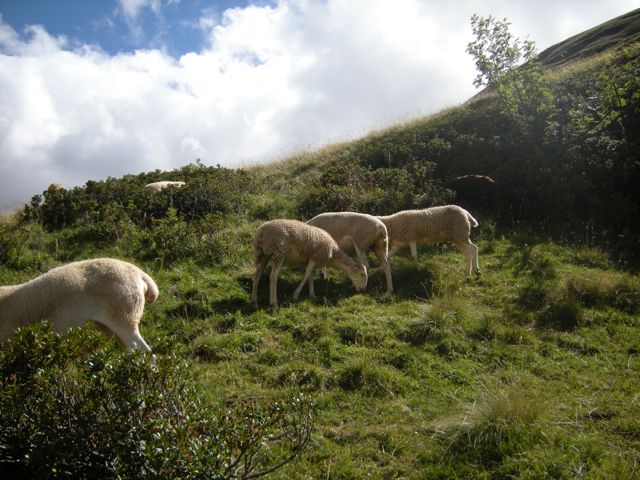
In the summer the sheep are in the mountains above the village. While Roland Jammes cuts the hay with Jeremy, Henri is the shepherd. They used to hire a summer shepherd but in the past few years they do it all by themselves. I feel like they are working way before I wake up and way after sundown. So we are here for a few weeks and to sum up how I feel I will say: this place makes sense to me!
DSC_1703

DSC_1701DSCN1633DSC_1686DSC_1702


Transit & Cranes

Transit & Cranes

DSCN3628


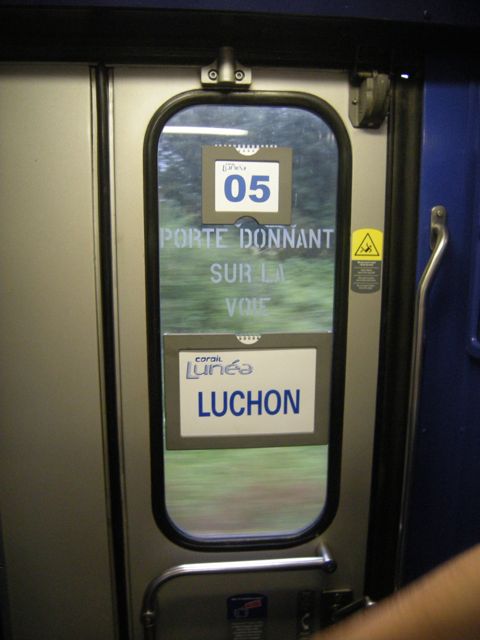
After a long trip we arrived in my hometown, Luchon, in the Central Pyrenées.  There is very little time to process pictures and notes gathered daily. Since we got here, it has been an uninterrupted stream of aperitifs, meals, digestifs with family and friends.
For now I will report on our transit day in Paris on 14 July, Bastille Day. We landed from our transcontinental flight midday and directly headed to Gare d’Austerlitz to drop off our luggage until our night train to Luchon. It sounded convenient and pleasant to have lunch at the nearby Jardin des Plantes and then spend time in the gardens and menageries. As Bastille Day is also Pierre’s birthday, we were really looking forward to a nice meal on the outside terrace of the newly renovated restaurant “ La Baleine.” The sun, the bread & very decent house wine kept us content, though the meal was mediocre, overpriced and the service lousy.
The garden was originally planted in 1626 as a medicinal herb garden. Back then it was known as the Jardin du Roi
(Louis XIII). In 1640 it opened to the public. In 1792 the Royal Menagerie was moved to the gardens from Versailles. Among a wide variety of animals we had a great time watching the super entertaining orangutans, the 250 lb 120 years old Aldabra Giant tortoise (Geochelone gigantea) and I was particularly delighted spending time with the White Nape Cranes. Last fall I wrote a piece called crane/grue that is on my cd Whisk! Don’t Churn! Below you will find the recording as the sound track of the video I shot Monday.

So voilà for now! My son Miles and I are off tomorrow for a short trip to Aix-en-Provence for a mother and son adventure, while Pierre Joris will be in Lodève at the Poetry Festival “Les Voix de la Mediterranée.” We will join him towards the end of the week for a shared performance, and then back to the Pyrenées — and for now, as we say here, Adishatz!


C.S.A & Sour Cherry Sangria

C.S.A & Sour Cherry Sangria

DSCN3520

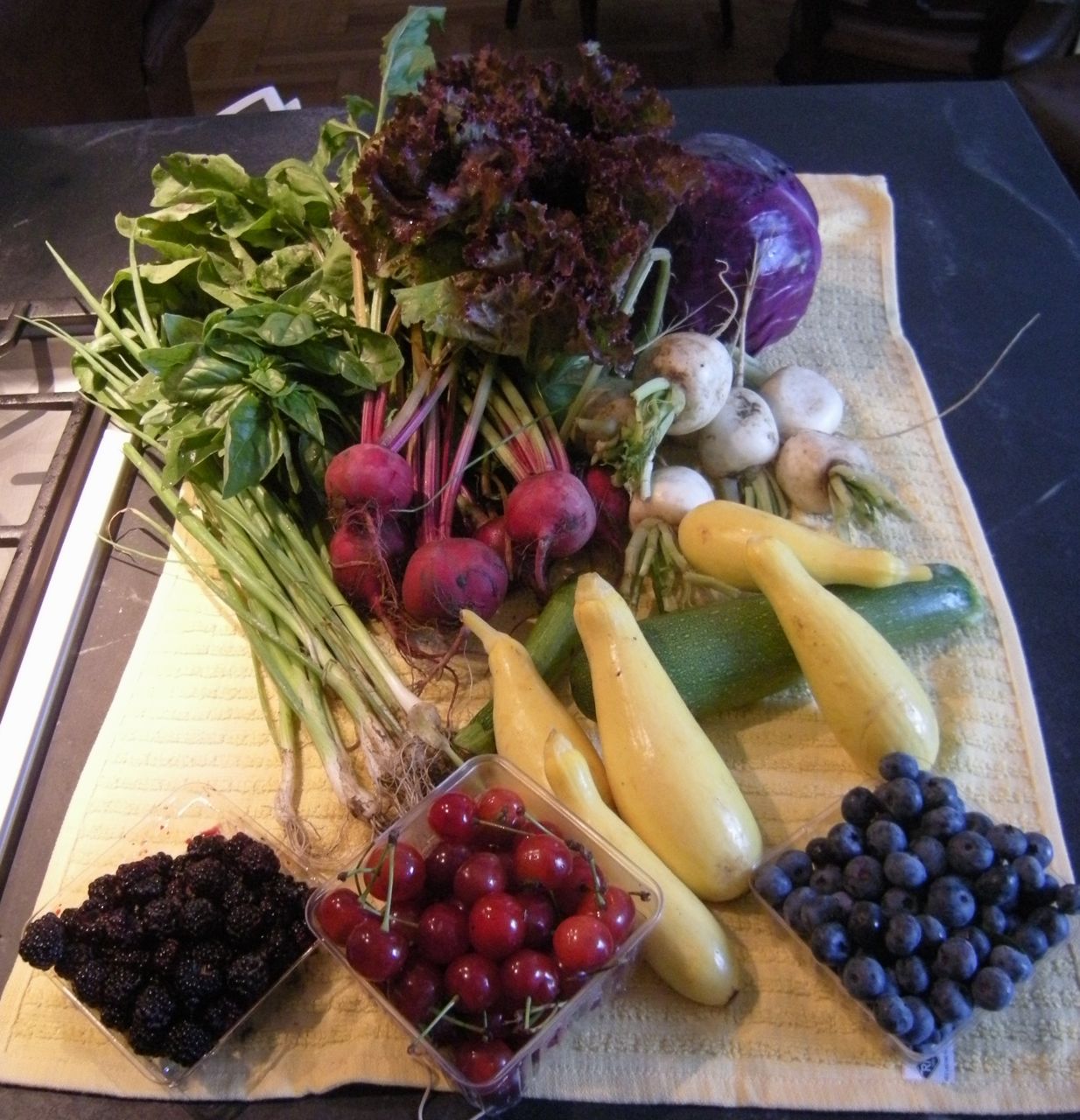
Most of you probably know about Community Supported Agriculture (CSA), which has become a popular way for consumers to buy local, seasonal food directly from a farmer. This is how it works: a farmer offers a certain number of “shares” to the public. Typically a share consists of a box of vegetables, though other farm products may be included: as you can see above there are fruits. This year the Bay Ridge CSA program offered fruit shares. The consumers purchase a share (aka a “membership” or a “subscription”) and in return receive a weekly offering of seasonal produce throughout the farming season. “Our” farm is Hearty Roots Community Farm in Tivoli NY. I have not yet met the farmers personally, nor have I visited the farm, but so far I like their produce and the variety. I also like the way we get it; instead of getting the traditional prepacked individual box, we are instructed what to take and we get to pack our own from the bulk crates (except for the fruit, but that is from another farm anyway). C.S.A arrangement creates many rewards for both the farmer and the consumer, if you want to read more on the subject click here. I do share a share with my older son’s family and this is what we got this week.

Veggie Share:
8 scallions
1 head of lettuce
2lb of zucchinis
1 red cabbage
1 lb of japanese turnip
1 lb of Chioggia beets
1 bunch of basil

Fruit Share:
1/2 pint mulberries
1 pint sour  cherries
1 pint blueberries

DSCN3521


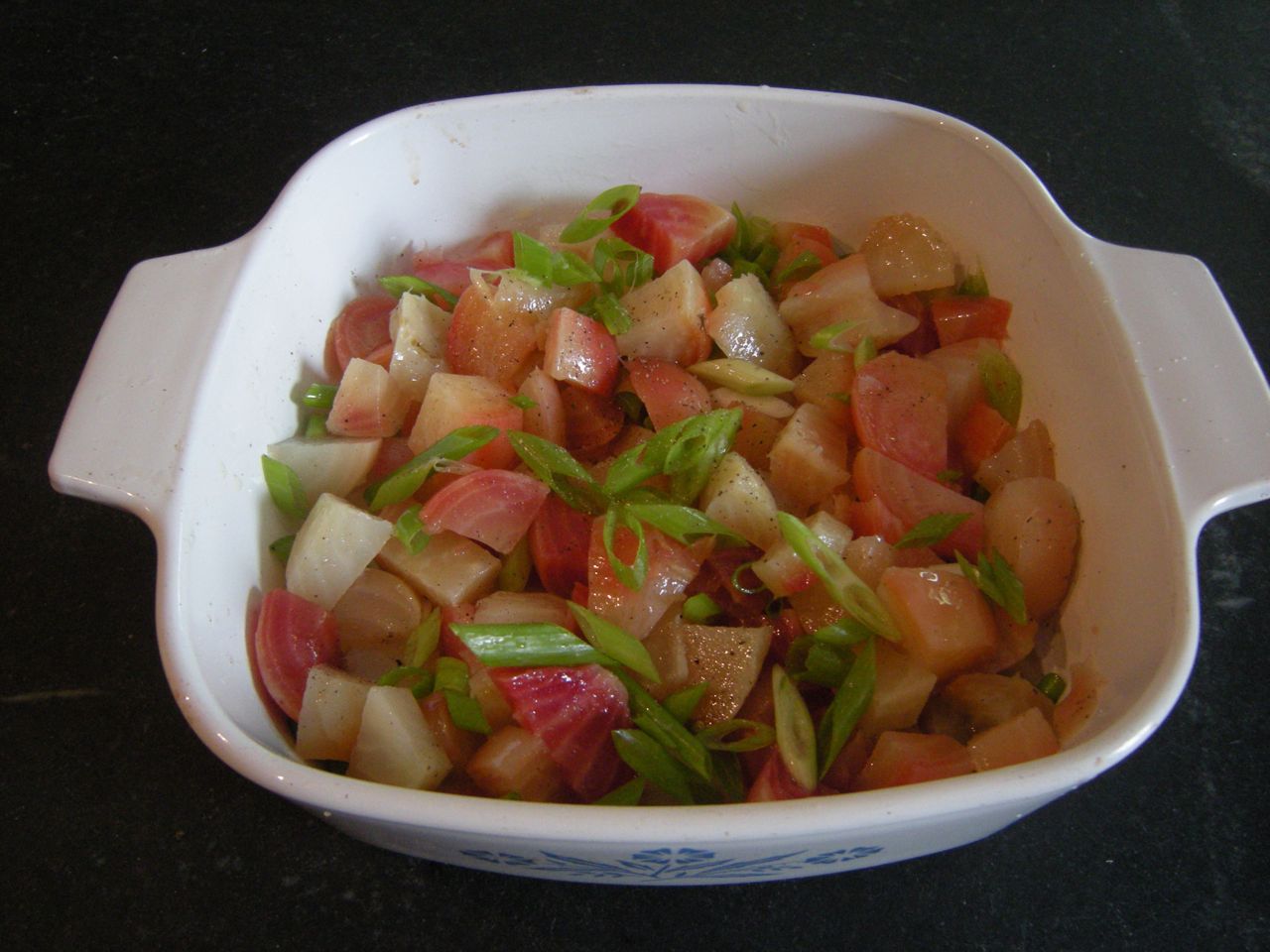
I boiled the beets until tender and dressed them with fresh scallions, sprinkled with olived oil, salt & pepper. I saved the beets greens and mixed them with sautéed potatoes. What I really like is to discover what I am getting and I can’t wait to get home and start processing my new bounty.


DSCN3544

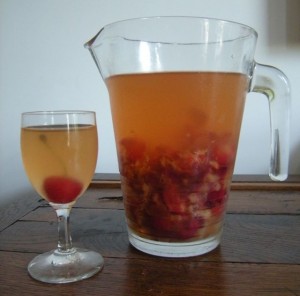
The sour cherries were a little disappointing. They didn’t have much taste raw, not really sour enough to make an interesting sauce — I used to make a wild salmon with sour cherry sauce.  As they were very pretty, I had the vision that they might enhance a not so great white wine I had sitting in the fridge. Bingo! This made a great summery aperitif! Let’s call is Sour Cherry Sangria! I crushed the cherries in the wine, added one dash of maple syrup plus one serious dash of grappa. Let it is sit for a few hours in the fridge. Strain and serve in small glasses with a fresh sour cherry at the bottom! Enjoy the summer — and the next post should be from my dear Pyrenean mountains. Adishatz!


Le Paté de Ken

Le Paté de Ken

We are trying to settle a minimum into our new place before taking off for 6 weeks in France/Luxembourg. We will mostly be in the Southwest though the first week in the Southeast, then a final week in Luxembourg. If you are traveling around these areas come and see us!
Pierre will be at the fabulous Lodève poetry festival : Les Voix de la Mediterranée (July 18-27). He will perform almost every day and we will meet up with him around July 24th. Miles Joris-Peyrafitte and I will debut our duo tour in the streets of Aix, Montpellier, Lodève and we will have 2 concerts in Peyragudes (Thursdays 6 & 13 of August). Peyragudes is a resort next to Luchon.
I do hope to be able to post photos and recipes as often as possible. Meanwhile I have to run to open more boxes in order to repack! I want to leave you on a less frantic note. Below, a beautiful recipe  from Ken Albala. Ken is a food historian, a great investigative cook, and an excellent  writer.  Ken’s books should be on your summer reading list. I am savoring his book on  beans myself and always read his blog, Ken Albala’s. Today I am cross posting my favorite kind of paté. Like Ken, I like chunky patés, and am not a fan of the smoothie spreading kind. This recipe is terrific and I can’t wait to be back in the fall to make it; here is the direct link: http://kenalbala.blogspot.com/2009/07/pate-de-campagne.html.

And OUI! this is a what I call a TRUE Paté de Campagne!

Saturday, July 4, 2009

Pate de Campagne?

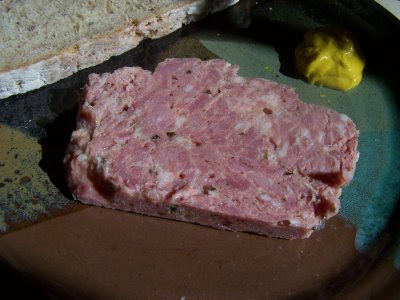
I have to admit, I was not sure what this would be when I started. And I’m still not sure. A souse, coppa di testa, sulze. Not really, those are all set in gelatin. Nor really a pate, because it isn’t smooth and spreadable. Not that a pate de campagne should be. So there it is. And have to admit, this solid toothsome version is much more interesting than the cream-laden versions one normally sees, covered in bacon. If you want bacon, eat bacon. This one is actually cured pork. Very simply seasoned.
SO, I offer you a recipe! In standard format. Ah me. But technique IS antiquated.
2.5 lbs of boneless pork shoulder, or 4 fatty country ribs.
2 tbs salt
1 tsp coarsely ground pepper
1 tsp thyme or other herb you like, esp. juniper
1 good pinch instacure #1 (pink curing salt)
3 ice cubes
Coarsely chop the pork and pork fat into small nubbins. Add the seasonings. Mix and put in the fridge for 5 days to cure. Then put the mixture into a large mortar and pound the hell out if it for about 15 minutes. Throw in the ice cubes as you go. This is a GREAT upper body workout. I suspect if you kept going with this you would have a smooth bologna. The mixture is very much a sausage mix, with darker, lighter and white fat in a suspension but still separate, which would not work in a grinder or processor. If you have a large beef bung I would stuff it in there. I used a large round porcelain ramekin. Cover it with plastic wrap, and place in a steamer. Steam gently for 40 minutes. Cool and refrigerate at least 24 hours. Slice and serve with mustard, good rye (which I baked yesterday) and cornichons – which alas I had not. You can also slice this very thinly and make sandwiches. The next time I do this I am going to pour in a glug of cognac, or maybe vinegar. Gin would be lovely too.

Long Island Sound Mahi-mahi

Long Island Sound Mahi-mahi

MahiMahi

Saturday morning we extracted ourselves from moving madness mode to go to the Bay Ridge green market. I was craving good fish and I know I can always rely on the American Seafood stand, they do catch all their fish on Long Island Sound and  to this day they have always provided top quality fish, clams or mussels. There I had the nice surprise to find Susan who had been working for the buffalo cheese and meat stand but returned to the fish stand. After a serious scanning of the offerings and pow-wow we settled for Mahi-mahi. Our friend Claire who is visiting us from Brittany never had it and  honestly I didn’t know Mahi-mahi was caught in Long Island Sound. I might have been fooled by it’s Hawaiian sounding name, Mahi-mahi. Also called dolphinfish, it is neither a mammal, neither a member of the Delphinadae family —dolphin family, but one of the two members of the Coryphaenidae family, the other being the pompano. The darkish flesh of Mahi-mahi turns white once cooked; it is dense, a little firm and quite moist. Like any other fish, don’t overcook it. I prepared it very simply and here is how:

Recipe:
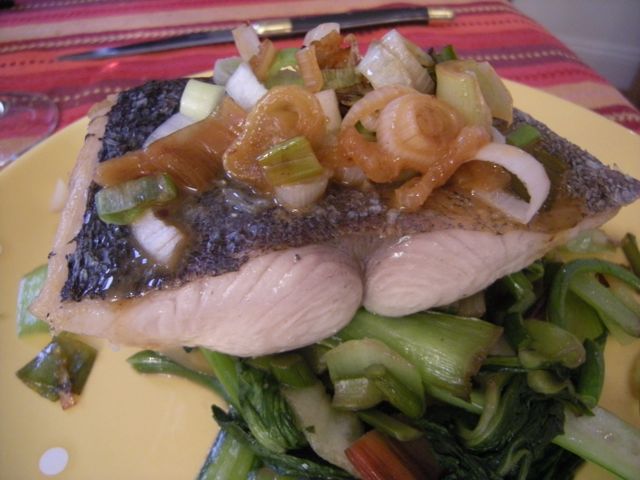
Heat oil in a skillet, place fish on the skin side first. Cook for 3/5 minutes depending on thickness, repeat on the other side.
Keep warm between 2 plates.
Sauté 1/3 cup per person of sweet fresh white onions in the same pan, remove and deglaze the pan with a touch of Mirin and dry white wine.
When ready to serve adjust salt & pepper to taste and “monter la sauce au beurre” —that is to swirl in, until completely melted, a dollop of unsalted butter; it will give your sauce a velvety texture and a rich flavor.
I served it with all the leftover veggies from last week’s CSA. Swiss chards, bokchoys, scapes were sautéed in olive oil with abundant fresh garlic and provided a beautiful bed for the Mahi-mahi. Top it with onions, serve the sauce on top or around and bon appétit to you!

1 … 37 38 39 40 41 … 63