Purple Cabbage & Gromperen Plaâ

Purple Cabbage & Gromperen Plaâ

Red Cabbage Salad

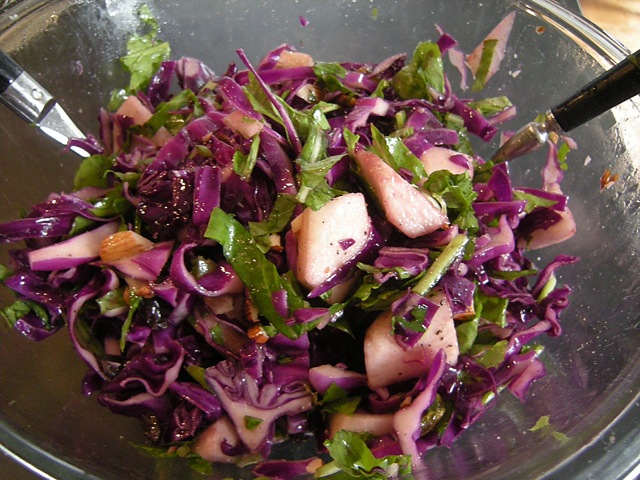
When we took off for France in mid-July I left a purple cabbage (red cabbage is actually never “red”) in the fridge. I was pretty confident it would keep until our return. It was a beautiful purple cabbage from our CSA share and I actually wrote a post and took pictures about that particular share — click here for details. It was a very firm,  bright, shiny and freshly picked purple cabbage.  I must say I was a little surprised to find it in the CSA box so early in the season.  When we returned mid-August, the cabbage was holding great, no obvious signs of aging. It was not wrapped, or in the crisper, but just decorating the middle shelf of the fridge. I still was not ready to eat it; summer veggies were still plentiful and I assimilate cabbage more with a fall/winter food. I became so used to see it in the fridge that I almost forgot to eat it.  But a few nights ago I pulled it out of the near empty fridge to accompany Pierre’s Bay Ridge version of a Luxembourgish dish: the Gromperen plaâ. Only the first layer of the cabbage leaves where a little limp, the rest was still crisp. Before I tell you a little more about the Gromperen  plaâ this is how I made the cabbage salad:
1/2  red/purple cabbage head sliced thinly
1 diced onion
1 diced apple
1 diced celery rib
Chopped walnuts and/or almonds

Moisten all the ingredients with olive oil. Drizzle with vinegar — it can be: apple cider, or rice or light wine vinegar. Add a dash of sesame oil —very little, the goal is to use it to outline the ingredients  not to really taste it (do you  know what I mean?). Then add  fresh  chopped Italian parsley, salt & pepper to taste.

Pierre was supposed to give me the detailed recipe of the Gromperen plaâ but as you can check on his blog he is not home very much these days. In Luxembourgish Gromper means potato & plaâ means dish —plat in French. This is the first dish Pierre’s sister Michou makes when we visit. All the ingredients go into a terrine or a lasagna type dish. As I indicated I don’t have an exact recipe but I think I am right to say that Pierre never really follows one either. This is the kind of dish that is adjustable to what you have and how you feel. I personally encourage this kind of cooking and would like to have the guts to write such a cook book! Now here are the indications for you to make your own potato dish:

Butter  the bottom of the pan.
Line with one layer of sliced parboiled potatoes.
Sprinkle with  diced sautéed onions.
Cut slices of Mettwurscht the “national” sausage of Luxembourg.
In Bay Ridge we don’t have Mettwurscht so Pierre decided to make the Gromperen plaâ with the Turkish sausage sujuk— a beef sausage usually spiced with cumin, sumac, garlic, paprika and other red pepper —we always get it at Aunt Halime’s Halal Meat Market on 3rd avenue and Ovington in Bay Ridge.
Repeat layers until there is no more room in the dish.
Then fill the dish with seasoned
heavy cream—with salt, pepper and a touch of freshly grated nutmeg—  until the top of the pan is barely covered.
Top with a generous layer of shredded
cheese – can be Swiss , Emmental , Gruyère or even cheddar! 
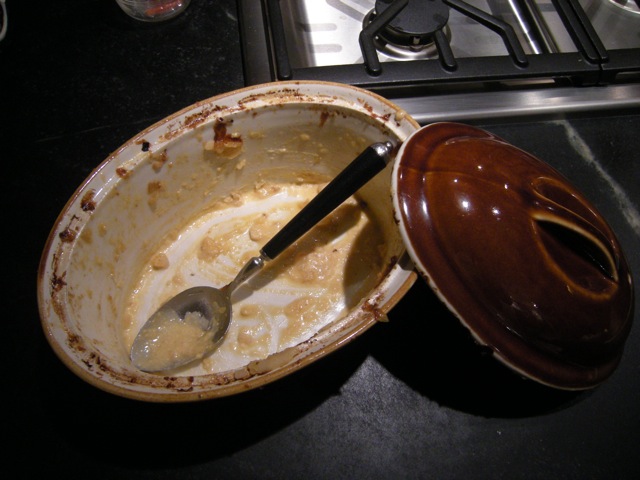
The result was superb; I had forgotten to take a picture of the dish before we started digging into it and next thing we knew is that the three diners around the table cleaned it up in a flash! The combination of the textures and tastes were perfect. Thanks Pierre and this menu is a keeper! The only disappointment Pierre had is that he thought he was going to have some left over for lunch. Sorry!
Gromper Pla

Papalo Scallops & Corn

Papalo Scallops & Corn

scalopscornpapalo

When Miles (my younger son) came into the kitchen and asked quite intrigued: “What is that smell?” I pointed to the Papalo bunch sitting next to the sink.

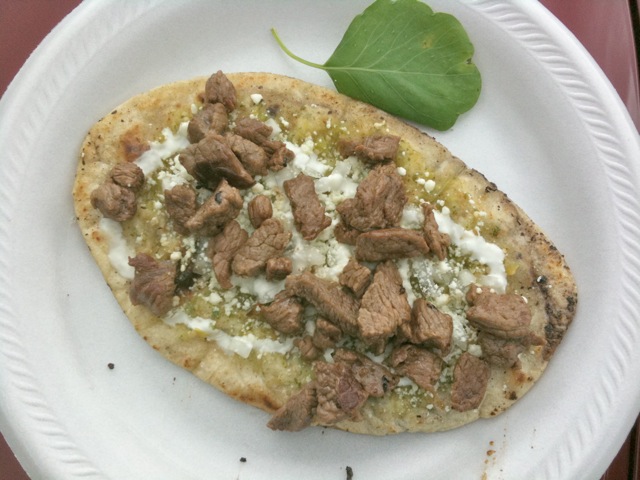
Papalo is a native South American plant, also known as Papaloquite or porophyllum ruderale or macrocephalum. Its name comes from papalotl, —butterfly in Nahuatl and interesting (to me) in French butterfly is papillon!— The first time I encountered papalo was at a flea market Upstate New-York. A Mexican vendor was getting ready to sell Guarachas*—a dish I wouldn’t mind getting more info on. The women were setting up while the men were all sitting down having lunch. I noticed them picking leaves from the middle of the table and eating little bites with their grilled meat and tortillas.

guaracha

I ordered a Guaracha, I had to ask for the leaves as I wasn’t automatically given some. The lady was a bit surprised as she explained — nicely — that gringos didn’t usually care much for it. She was delighted I would try it as it was the way to eat this dish. It was love at “first bite!”; the grilled meat seasoned with lime, the green salsa, the Mexican cheese all topping a homemade corn tortilla —that looked to have had some beans worked into the dough, and the little bite of papalo to make it a truly “gastrorgasmic” moment. Papalo’s taste is condensed, pungent and close to be an entrancing flavor. It must be used appropriately and parsimoniously.

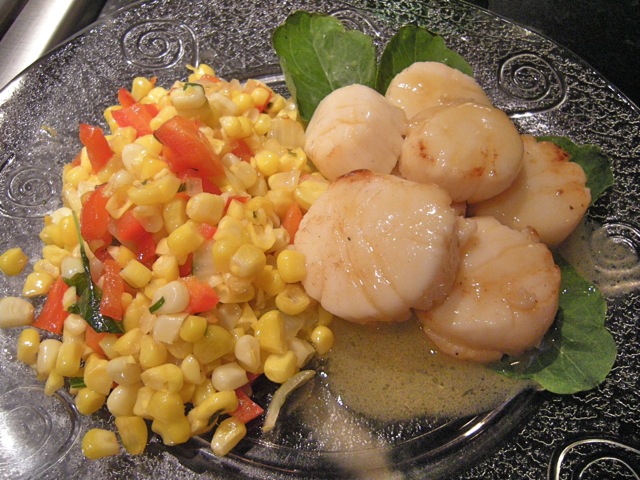
Harold from Carral FarmA few weeks ago I got some papalo from Harold, owner of Carral Farm and a regular vendor at the Bay Ridge Greenmarket. He also gave me some suggestion on how to use it and recommended to also get some  Anaheim peppers. I picked up a pound of fresh scallops at American Seafood (read previous blog on scallops here and here). And this is the recipe I will share with you today:

Scallops With Sautéed Corn and Papalo (for 3)

cornpepperpapalo

1 lb of fresh scallops
2 Tablespoon unsalted butter
1 lime juice
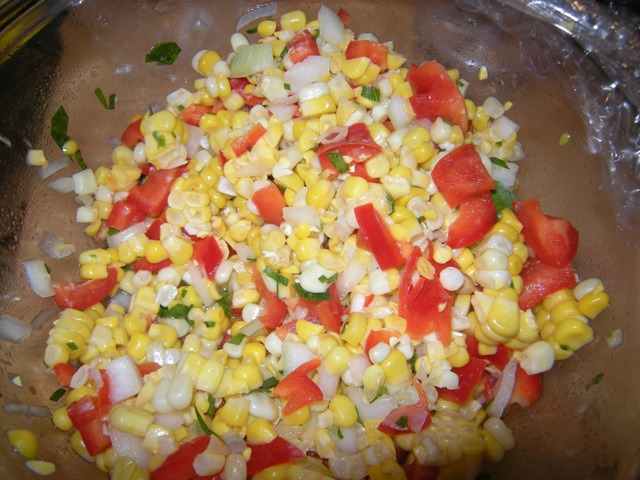
kernels of 2 fresh ears of corn
1/4 cup red bell peppers
1/4 cup sweet onions
1/8 cup green Anaheim peppers
9 leaves of fresh papalo
2 Tbsp brandy or Lillet
1 dollop butter at room temperature

Heat 1 Tbsp of olive oil and 1 Tbsp of butter in a stainless still or cast iron frying pan.

scallops

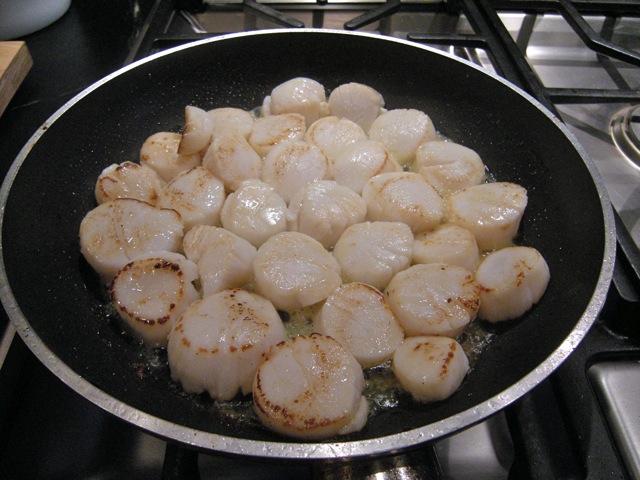
Sear scallops delicately  in the pan or about 3 minutes or so per side —it will depend how thick they are. Do not overcook them. Keep them warm between two plates and reserve until ready to serve.

While the scallops are cooking, sautée all the vegetables (with only 3 leaves of papalo chopped) lightly with olive oil or/and butter (see picture above to see size of veggies).

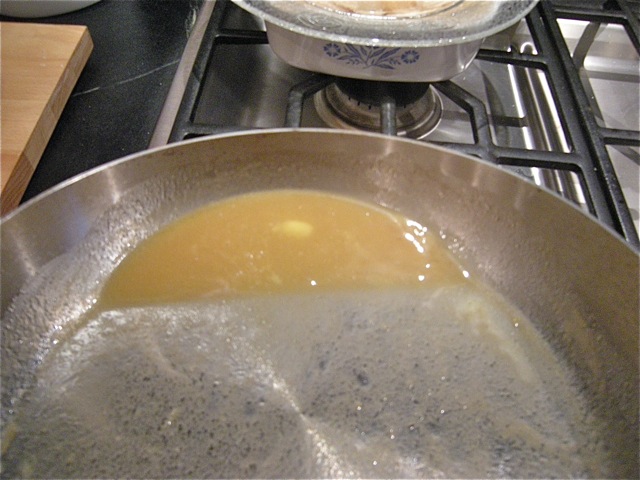
Déglaze the pan with some brandy or Lillet.  Add lime juice  and retrieve all the juice that have deposited in the scallop plate.

monter sauce

Add a dollop of soft butter and when only ready to serve  “monter la sauce au beurre” —that is to swirl in, until completely melted, a dollop of room temperature unsalted butter; it will give your sauce a velvety texture and a rich flavor. We have done it before, right? Add salt & pepper to taste and voilà!

*The guaraches turned out to be huaraches. See comments below and huraches blog.

Look at me Porgy!

Look at me Porgy!

DSCN4286

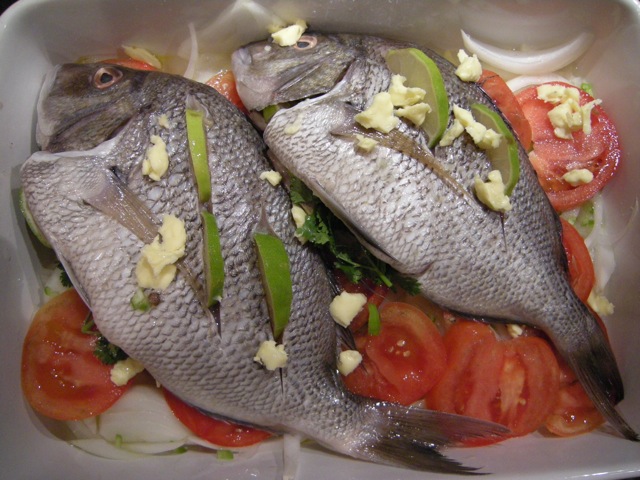
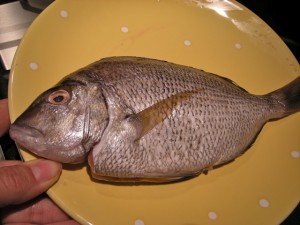
Last night we ate porgies. I bought them at the Bay Ridge Greenmarket from the excellent Long Island Sound based American Seafood stand. I prefer whole fish to fillet or steak. One of the reasons is that I like to look the fish in the eye. If the eye is clear, bright with dense black pupil & looking back at me I see/hear “buy me!” If the eye is cloudy, dry and sunken, the message is that this fish has been on display away from the water for too long. Other general indicators of fish freshness are:
The skin must be moist and shiny.
The gills need to be bright red or pinkish red. When pressed with the finger, flesh should bounce back and leave no indentation.
Fresh fish smells like fresh seaweed, any strong odor is suspicious. If the fish smells, even slightly, like ammonia discard it —I once worked with a chef who asked me to “bathe” the fillet we were to serve as “specials” that night in vinegar & water to make the smell disappeared! I refused.

porgy

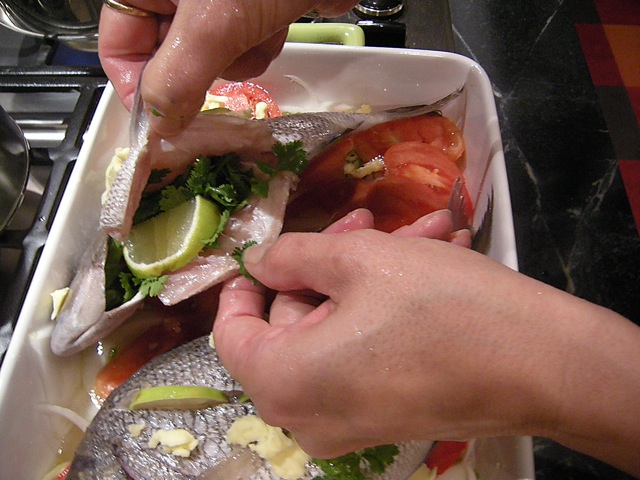
As you can see my porgies were beautiful and cost me $5. Buying a whole fish is much cheaper by the pound. Yes! it is more work as you will have to debone it yourself.  There is also more waste, but what about a fish soup with the bones? I will give you that recipe later. Also, below you will find a quick homemade video on how to serve your fish. I would appreciate if you have a few minutes to give me feedback on the specific questions.
Meanwhile, voilà today’s recipe:

2 Porgies (1 guted & scaled fish per person of 1/2 lb or so)
1 sweet onion peeled and sliced very thin
1 Italian or Jalapeño pepper, inside seeds and rib removed and chopped very small
1 bunch of fresh cilantro
2 ripe tomatoes
1 glass of dry white wine
1 or 2 limes
Salt
½ cup olive oil ¼ cup of butter
Preheat oven to 375º.
Coat the bottom of an ovenproof dish with olive oil. Arrange the onions & hot peppers.

stuffing porgies with cilantro

Add the tomatoes.
Add white wine. Make 2 slits on the fish.
Salt the inside of the fish, squeeze some lime into it & stuff with a few sprigs of fresh (well washed) cilantro.
Insert slices of lime into the slits on the fish.
Pour the juice of ½ a lime over. Scatter tiny pieces of butter on top of the fish.
Put in the oven for 25/30 minutes.
Baste the fish every 10 minutes with the liquid in the pan.

We ate them with corn on the cob and a beet salad. More details on the video on how to serve it.

How to serve the whole fish family style:


Please take the survey below if you have a minute.
To do so copy & paste the question in an email or in the comment box.

Is this video helpful to you?
Did you know how to deal with a whole fish before?
If not are you going to try it now?
Did the “homemade” quality of the video bother you?
Do you want more videos on the blog?
If yes, what do you want to see?
How long?

Bonus question:
Add any personal comments :

M E R C I !

C.S.A & Sour Cherry Sangria

C.S.A & Sour Cherry Sangria

DSCN3520

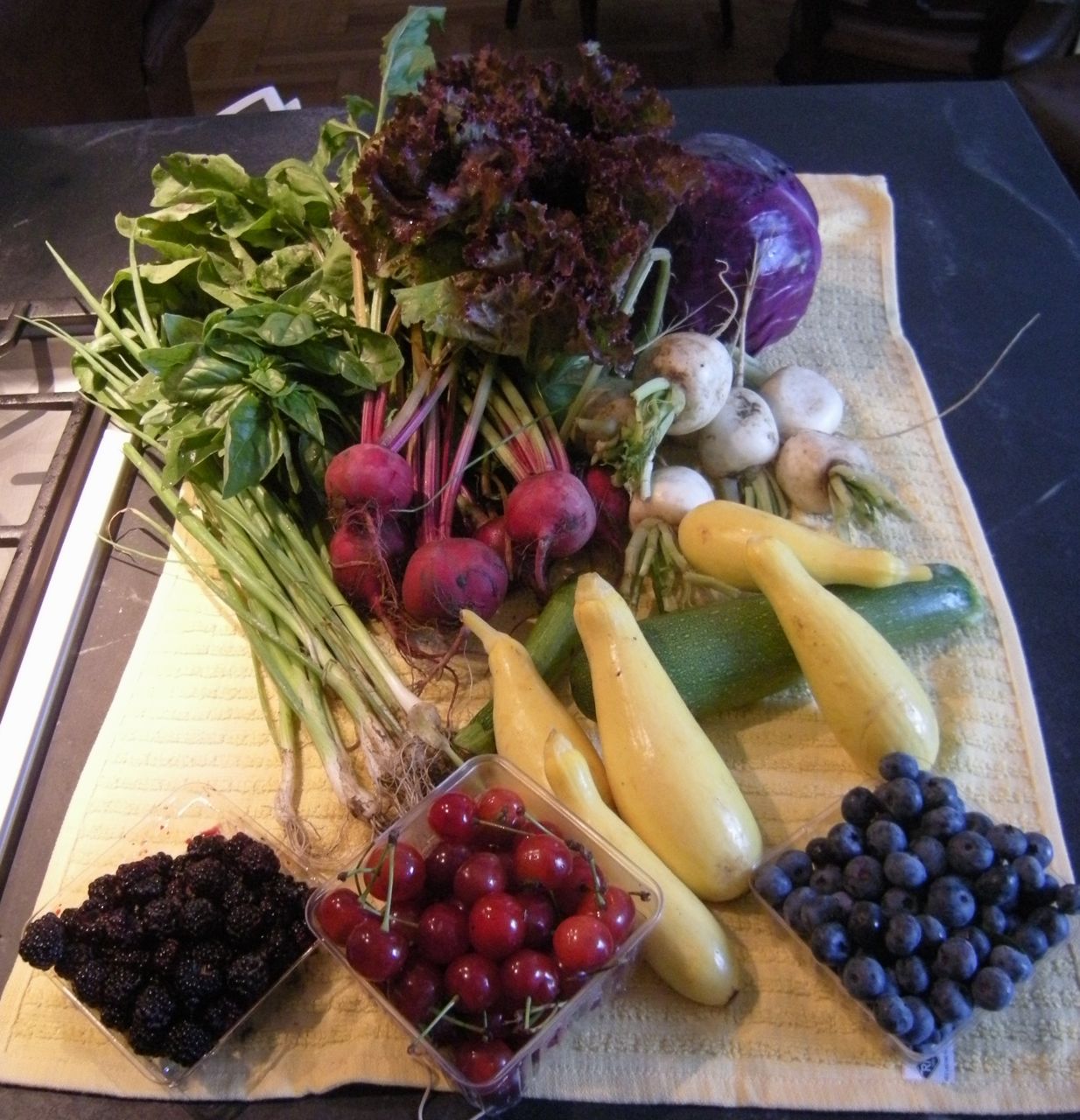
Most of you probably know about Community Supported Agriculture (CSA), which has become a popular way for consumers to buy local, seasonal food directly from a farmer. This is how it works: a farmer offers a certain number of “shares” to the public. Typically a share consists of a box of vegetables, though other farm products may be included: as you can see above there are fruits. This year the Bay Ridge CSA program offered fruit shares. The consumers purchase a share (aka a “membership” or a “subscription”) and in return receive a weekly offering of seasonal produce throughout the farming season. “Our” farm is Hearty Roots Community Farm in Tivoli NY. I have not yet met the farmers personally, nor have I visited the farm, but so far I like their produce and the variety. I also like the way we get it; instead of getting the traditional prepacked individual box, we are instructed what to take and we get to pack our own from the bulk crates (except for the fruit, but that is from another farm anyway). C.S.A arrangement creates many rewards for both the farmer and the consumer, if you want to read more on the subject click here. I do share a share with my older son’s family and this is what we got this week.

Veggie Share:
8 scallions
1 head of lettuce
2lb of zucchinis
1 red cabbage
1 lb of japanese turnip
1 lb of Chioggia beets
1 bunch of basil

Fruit Share:
1/2 pint mulberries
1 pint sour  cherries
1 pint blueberries

DSCN3521


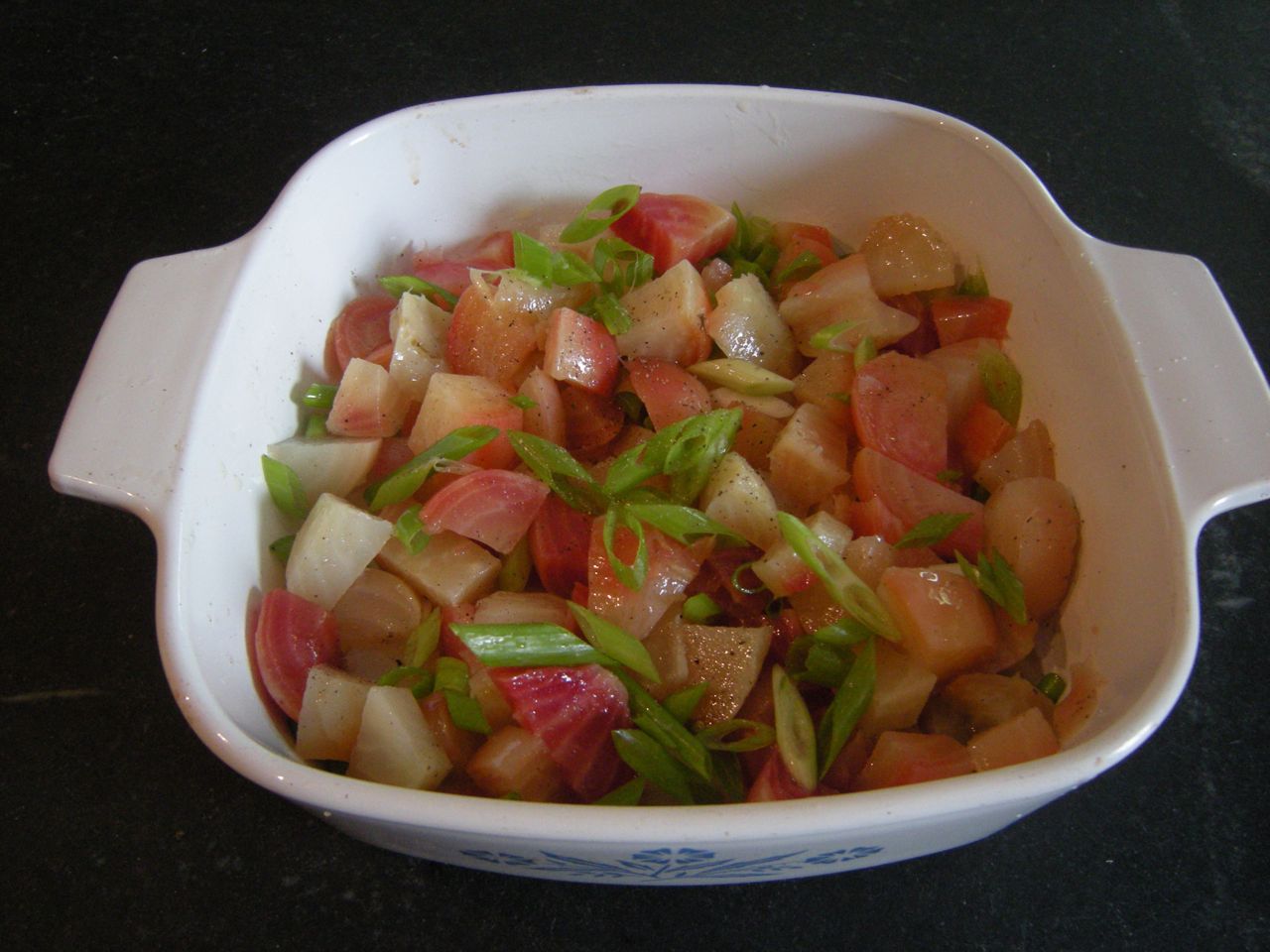
I boiled the beets until tender and dressed them with fresh scallions, sprinkled with olived oil, salt & pepper. I saved the beets greens and mixed them with sautéed potatoes. What I really like is to discover what I am getting and I can’t wait to get home and start processing my new bounty.


DSCN3544

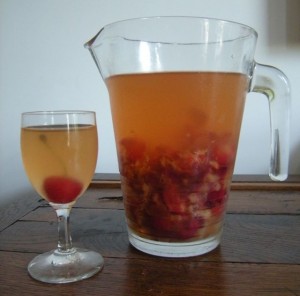
The sour cherries were a little disappointing. They didn’t have much taste raw, not really sour enough to make an interesting sauce — I used to make a wild salmon with sour cherry sauce.  As they were very pretty, I had the vision that they might enhance a not so great white wine I had sitting in the fridge. Bingo! This made a great summery aperitif! Let’s call is Sour Cherry Sangria! I crushed the cherries in the wine, added one dash of maple syrup plus one serious dash of grappa. Let it is sit for a few hours in the fridge. Strain and serve in small glasses with a fresh sour cherry at the bottom! Enjoy the summer — and the next post should be from my dear Pyrenean mountains. Adishatz!


Long Island Sound Mahi-mahi

Long Island Sound Mahi-mahi

MahiMahi

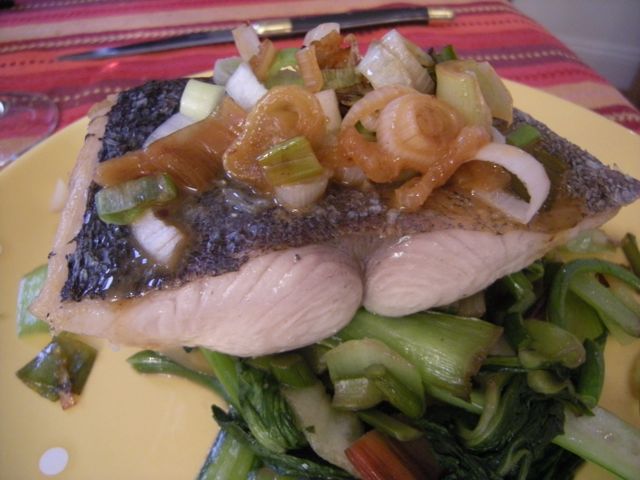
Saturday morning we extracted ourselves from moving madness mode to go to the Bay Ridge green market. I was craving good fish and I know I can always rely on the American Seafood stand, they do catch all their fish on Long Island Sound and  to this day they have always provided top quality fish, clams or mussels. There I had the nice surprise to find Susan who had been working for the buffalo cheese and meat stand but returned to the fish stand. After a serious scanning of the offerings and pow-wow we settled for Mahi-mahi. Our friend Claire who is visiting us from Brittany never had it and  honestly I didn’t know Mahi-mahi was caught in Long Island Sound. I might have been fooled by it’s Hawaiian sounding name, Mahi-mahi. Also called dolphinfish, it is neither a mammal, neither a member of the Delphinadae family —dolphin family, but one of the two members of the Coryphaenidae family, the other being the pompano. The darkish flesh of Mahi-mahi turns white once cooked; it is dense, a little firm and quite moist. Like any other fish, don’t overcook it. I prepared it very simply and here is how:

Recipe:
Heat oil in a skillet, place fish on the skin side first. Cook for 3/5 minutes depending on thickness, repeat on the other side.
Keep warm between 2 plates.
Sauté 1/3 cup per person of sweet fresh white onions in the same pan, remove and deglaze the pan with a touch of Mirin and dry white wine.
When ready to serve adjust salt & pepper to taste and “monter la sauce au beurre” —that is to swirl in, until completely melted, a dollop of unsalted butter; it will give your sauce a velvety texture and a rich flavor.
I served it with all the leftover veggies from last week’s CSA. Swiss chards, bokchoys, scapes were sautéed in olive oil with abundant fresh garlic and provided a beautiful bed for the Mahi-mahi. Top it with onions, serve the sauce on top or around and bon appétit to you!