Very hot in NYC today.
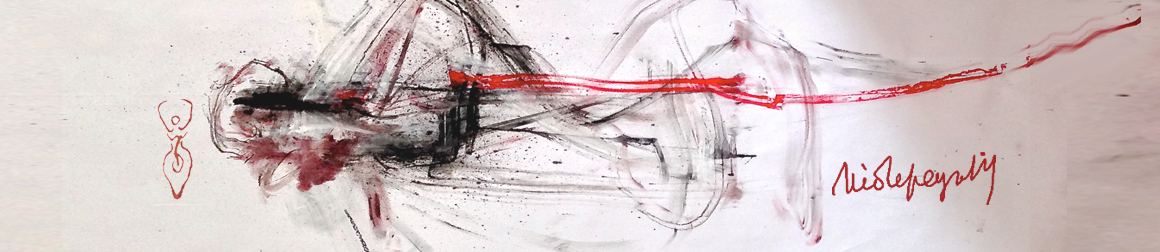
I will probably stay put and work on my on going series “ManyBody”, unless I can’t resist a short trip to Coney Island and refresh in the Ocean!
My post today : “ManyBody 2”. See the section “Paintings/Drawings” in the “categories” to see more of these. Some have titles some have numbers. Stay cool!
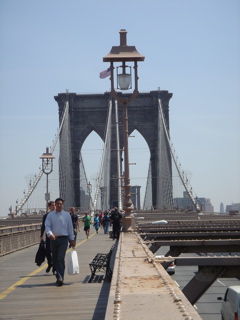
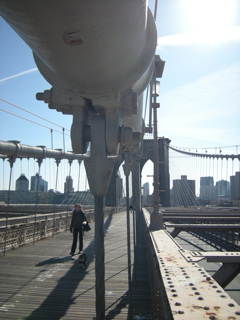
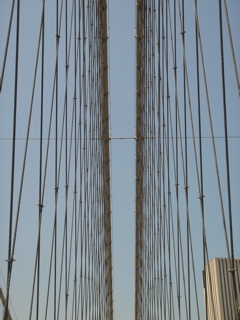
Today I rode my bike into Manhattan from Bay Ridge and as I was riding over the Brooklyn Bridge I remembered that it was a day like today, late May 2005, that I wrote a song about the Brooklyn Bridge. I was still leaving in Albany and it was my first time walking over the bridge. According to the article below crossing from Brooklyn to Manhattan could be quite en ordeal before the construction of the bridge:
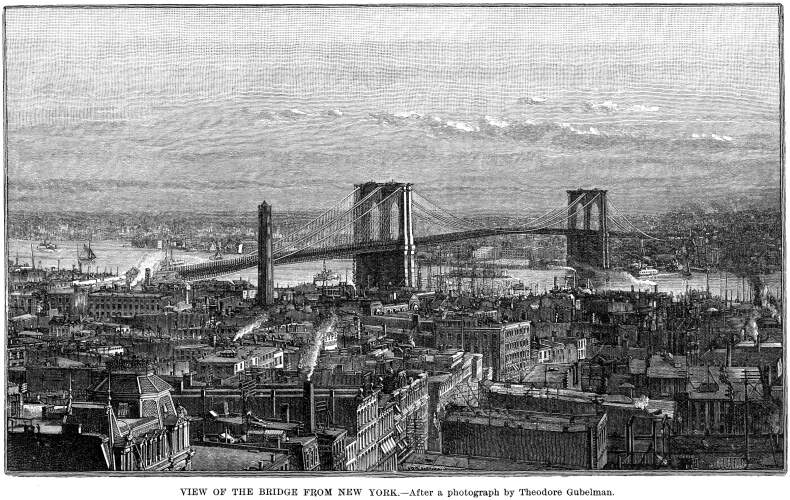
“PEOPLE who seventeen years ago divided an amphibious existence between New York and Brooklyn will long remember their arctic voyages in the East River during the severe winter of 1866-7. There were days in that season when passengers from New York to Albany arrived earlier than those who set out the same morning from their breakfast tables in Brooklyn for their desks in New York. The newspapers were filled for weeks with reports of the ice gorges, and with vehement demand for and discussion of the bridge, which all agreed must be built at once from New York to Brooklyn.” Harper’s Monthly 1883 .
The construction of the suspended Gothic style bridge took 13 years -from 1870 to 1883, the life of 27 workers and two architects. The German immigrant architect/engineer John A. Roebling died of tetanus before the first stone was laid. While surveying the project his foot was crushed by a ferry boat. He was succeeded by his son Washington Roebling who died of caisson disease -a.k.a “the bends”- a disease that can also affects divers if then come up to the surface too fast. If you want to know all the politics & construction details of the bridge you must read the Harper’s Monthly 1883 article.
The song was inspired by the research I had done at that time. The text is reprinted below and click on the video to listen to the version on my cd “La Garbure Transcontinentale / The Bi-Continental Chowder”. The musicians are: George Muscatello on guitar and Danny Welchel on percussion. It was recorded at Bender Lane Studio in Delmar NY, But I can’t remember when. Hope you enjoy!
Brooklyn Bridge
Walking across the Brooklyn Bridge on a sunny spring day Hanging over the East River on a sunny spring day
Suspended lives tramping their lines Wired above a tidal straight Gothic towers to bridge cultures
Walking across the Brooklyn Bridge on a sunny spring day Hanging over the East River on a sunny spring day
Deep in bedrock below water Cables of steel lifting spirits Granite towers make concrete links
Walking across the Brooklyn Bridge on a sunny spring day Hanging over the East River on a sunny spring day
Trussing device pins down the land Hell gate in sight I arch my span Bearing the height holding the light
Walking across the Brooklyn Bridge on a sunny spring day Hanging over the East River on a sunny spring day
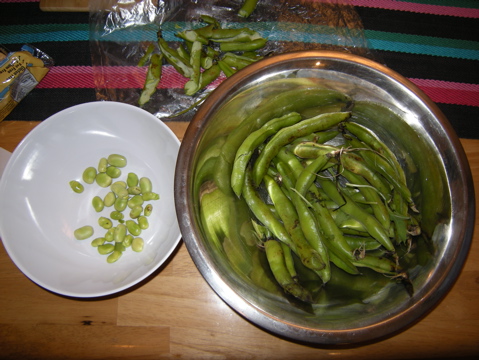
It is fava bean season. This wonderful old world legume is believed to have originated in the Orient and was already cultivated by ancient Egyptians. In the South of France fresh fava beans are also eaten raw, just dipped in a little salt. I have chosen a very simple recipe but they can also be prepared mashed, added into soup, or prepared with béchamel sauce. According to some French websites fava bean flour can be used as an additive to regular bread because of its containt of an enzyme called lipoxygenase that among other things whitens the dough.
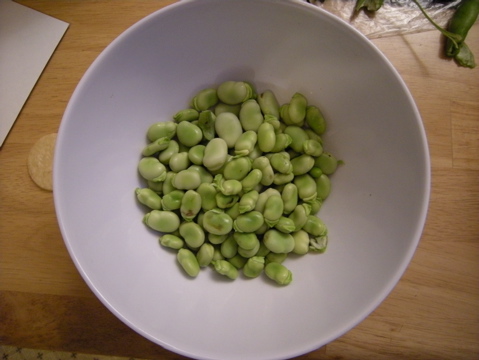
The bean will need to be released from the pod. One pound per person will provide a good size portion. Note that the pods gets the darker as the beans mature.
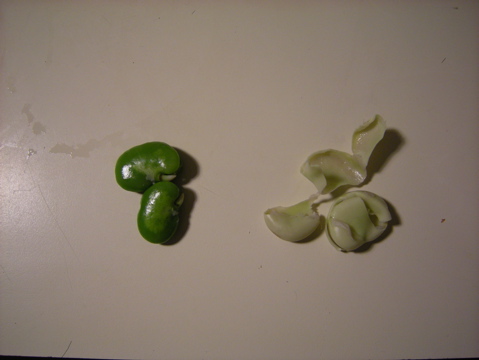
If your fava beans are really fresh you will not need to peel them. If the outer skin is whitish you will need to do it, otherwise the skin gets tough.
Mine where fresh enough so I didn’t peel them
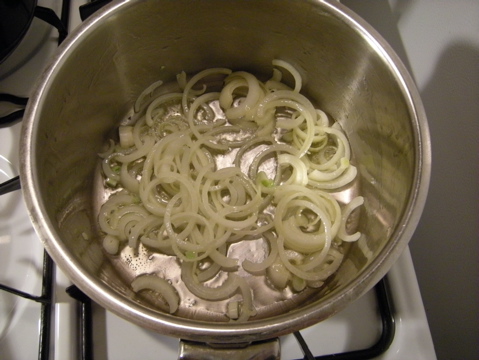
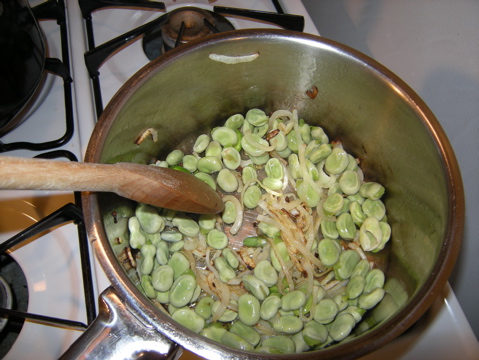
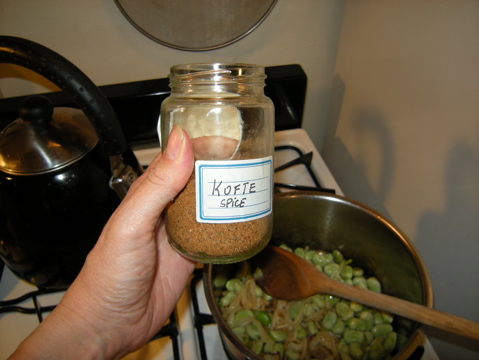
I sauteed one small onion in a spoon of olive oil until golden, then I add the fava beans,one teaspoon of kofte spice, 1/2 teaspoon of fresh savory herb, salt & pepper and 1 tablespoon of water. Cover and cook until the beans are tender or about 6 minutes.
Voilà! for today and if you cook any of my dishes or need more info do not hesitate to write to me.
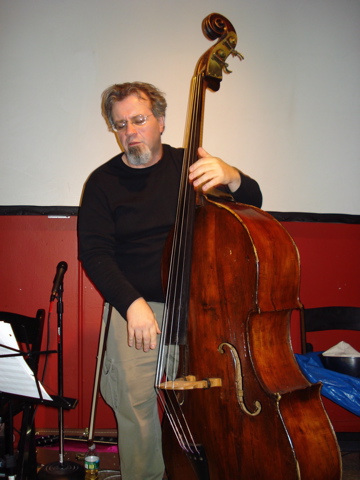
I really thought I was going to have time to post two recipes before taking off to Albany for a gig –with Michael Bisio, tomorrow night . Well! I didn’t so please, hang on for the promised great fresh fava bean recipe.
However, I do want to let you know about the gig at Justin’s in Albany N.Y., it is tomorrow Thursday May 22nd – 9 PM ($3 cover)–or today, or maybe you have already missed it!– depending on when you read this blog . Justin’s is really a great jazz club, their wonderful manager, Victoria Cipollari, has been dedicated to jazz for as long as I have been in the Capital District, and most of all to local bands & musicians, to name a few of my favorites: George Muscatello, Adrian Cohen, Brian Patnaude, Lee Shaw, Yuko Kishimoto, Dany Whelshel, Teri Roiger, John Menegon, Bob Gluck & of course Mike Bisio & I. Today Justin’s IS the jazz scene in the Capital District.
This Thursday Mike and I will be performing some re-arranged French songs, a few jazz standards but mostly my originals and contemporary poetry.
Below is a preview of Mike & I live at the Gershwin Hotel in NYC. Hope to see in Albany or at our next NYC performance on Saturday June 14th at 5c Café.
It is time to brush up on our Latin, celebrate the month of May & eat fava beans!
According to Ovid the origin name May, could derives from maiores –the elders. The ritual he describes in the Fasti’s book V –transcribed and translated below– certainly supports it.
OVID FASTI LIBER V
“Cumque manus puras fontana perluit unda,
Vertitur et nigras accipit ante fabas,
Aversusque iacit; sed dum iacit, ‘haec ego mitto,
His’ inquit ‘redimo meque meosque fabis.’
Hoc novies dicit nec respicit: umbra putatur
Colligere et nullo terga vidente sequi.
Rursus aquam tangit, Temesaeaque concrepat aera,
Et rogat ut tectis exeat umbra suis.
Cum dixit nouies: ‘Manes exite paterni!’,
Respecit et pure sagra peracta putat.”
“Once his hands were cleansed with spring water, he turned around and took the black fava beans. While throwing them one by one behind his back he says: ‘I offer these fava beans, with them I redeem myself and my people.’ He says it nine times without turning around. Meanwhile, without being seen, the shadow is supposed to collect the fava beans. Then he touches the spring water and rings the Témésa bronze. Now he commands the shadow to live the house. For that he will say nine times: ‘ Out, manes of my fathers‘”.
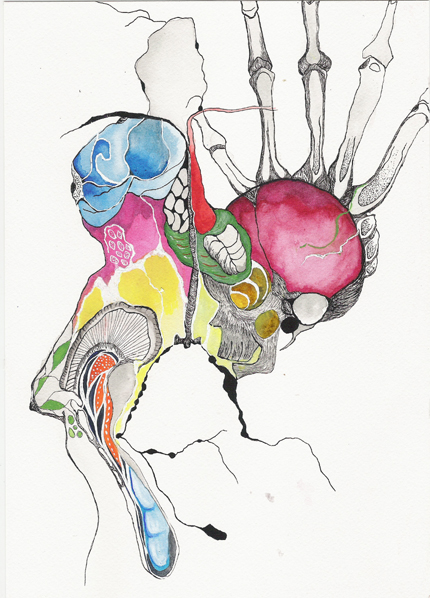
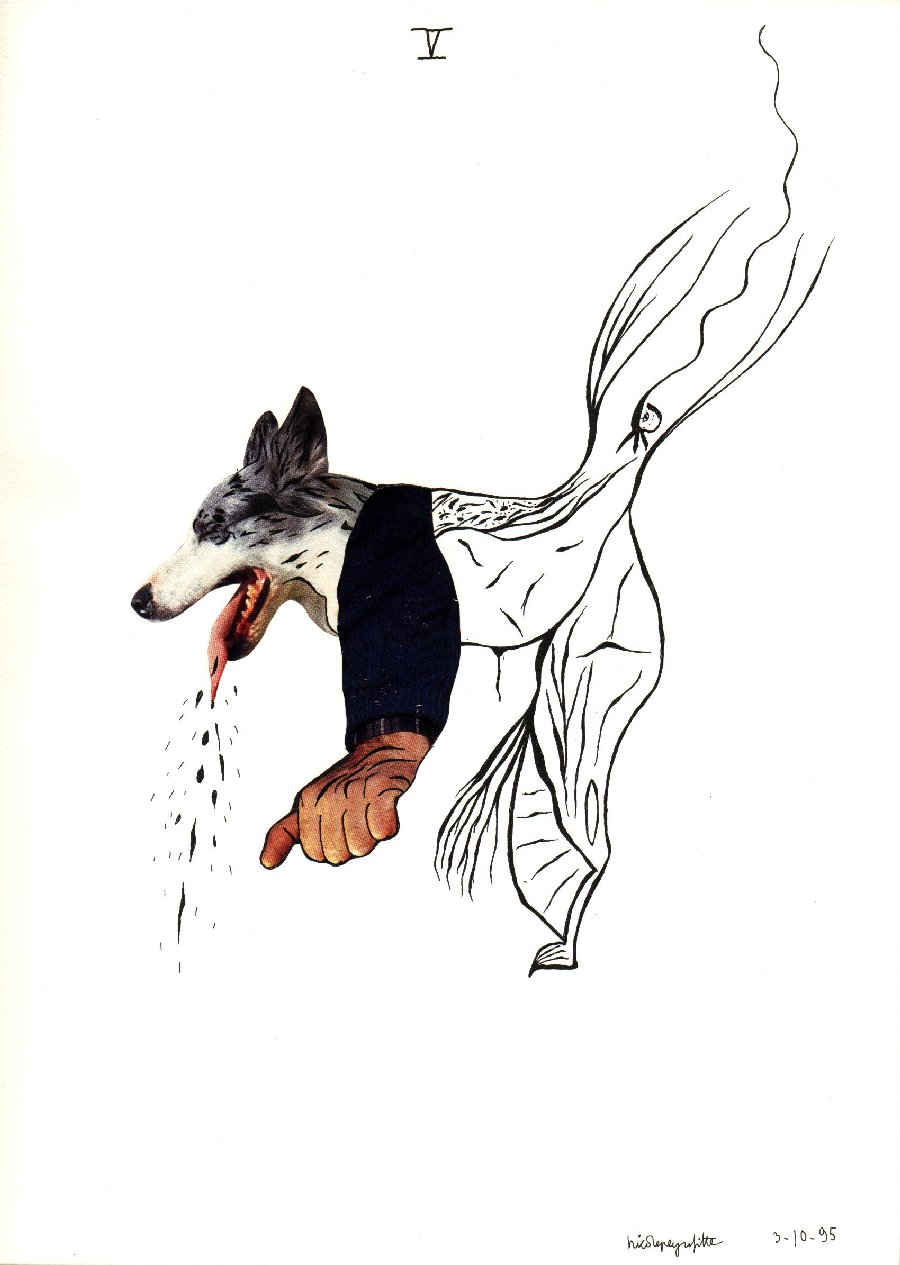
The drawing/collage above titled V (May) is part of a series of 12 drawings-collages developed into a performance piece: “The Calendar”, I premiered in 1997. The performance consisted of a computer projection of an animated version of the drawings and the singing of texts accompanied by musicians. For the first six months Ovid’s Fasti primarily inspired the texts. In this case directly connected to the rituals Ovid describes in Liber V (verses 419-445) cited above.
Next post will be a simple recipe of fresh fava beans. Happy May!