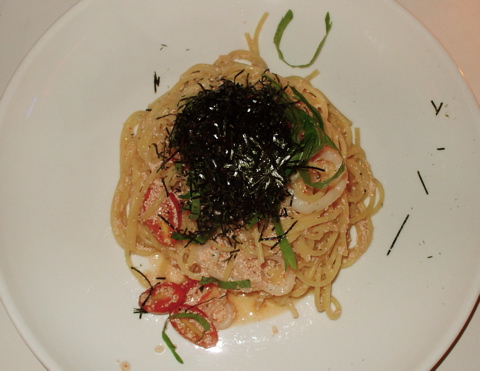
たらこスパゲティー Tarako Spaghettis

たらこスパゲティー  Tarako Spaghettis


photo by Chiaki Matsumoto

Though Tarako spaghettis are part of Yoshoku food (Western influenced Japanese cuisine) it is interesting to note that this dish also has Korean influence.
Tarako is salted Alaskan Pollock roe, most of the time referred to as cod roe. Pollock and cod are member of the Gadidae family, but different genus & specie. The confusion comes probably from the fact that in Japanese, tara (鱈) means cod. Tarako spaghettis is often made with Mentaiko, the spicy marinated roe, and that is were the Korean influence comes into play. Mentaiko originated from myeongran jeot (명란젓) and was most likely introduced to Japan after World War II. Jeotgal or Jeot (명란젓) is used as a condiment in pickling Kimchi and has it’s origin in Chinese cooking. Tarako spaghettis is a transcontinental dish, just the way I like them.


Plain Tarako pix source from Wikipedia

The recipe is pretty standard and simple, depending where you live the most challenging might be to find the Tarako. Korean and Japanese market carry it, just make sure to avoid the ones with MSG and coloring.

This is the recipe I chose from: http://www.recipezaar.com/135630

Ingredients

  • 2 fish roe, see note 1 (must be Japanese salted cod roe called tarako or karashi mentaiko)
  • 6 ounces spaghettini noodles (or finer)
  • 2 tablespoons butter
  • 1/4 cup heavy cream (or less)
  • 1/4 sheet nori, cut into tiny tiny strips

Note 1: a) Tarako comes in sausage-looking pieces
b)you can choose either the spicy kind (karashi mentaiko) or just plain tarako
c)you can find tarako at the Japanese grocery store, often it is in the freezer.

Directions

  1. Cut open the casing on each piece of tarako and gently scrape or squeeze out the roe.
  2. Discard the casings.
  3. Start your water to boil for the spaghetti.
  4. Melt butter in a skillet over medium heat. Reduce heat to low and add roe, stirring until the color of the roe changes to a pale orange.
  5. Stir in about half the heavy cream until well blended and heated through. As necessary, you can add the rest of the heavy cream.
  6. Turn off the heat and keep the sauce just warm.
  7. Don’t ask me why, but a friend stirs in a spoonful of Kewpie Mayonnaise before tossing this dish together (I love Kewpie mayo, but I haven’t tried this addition).
  8. Cook the pasta to al dente.
  9. Drain pasta and toss with sauce (sprinkle on the nori over the top just before taking the plates to the table) to serve.

Thank you Chiaki and Kenji to introduce me to Yoshoku cuisine!
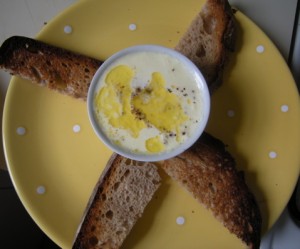
Oeufs Cocotte à la Crème

Oeufs Cocotte à la Crème

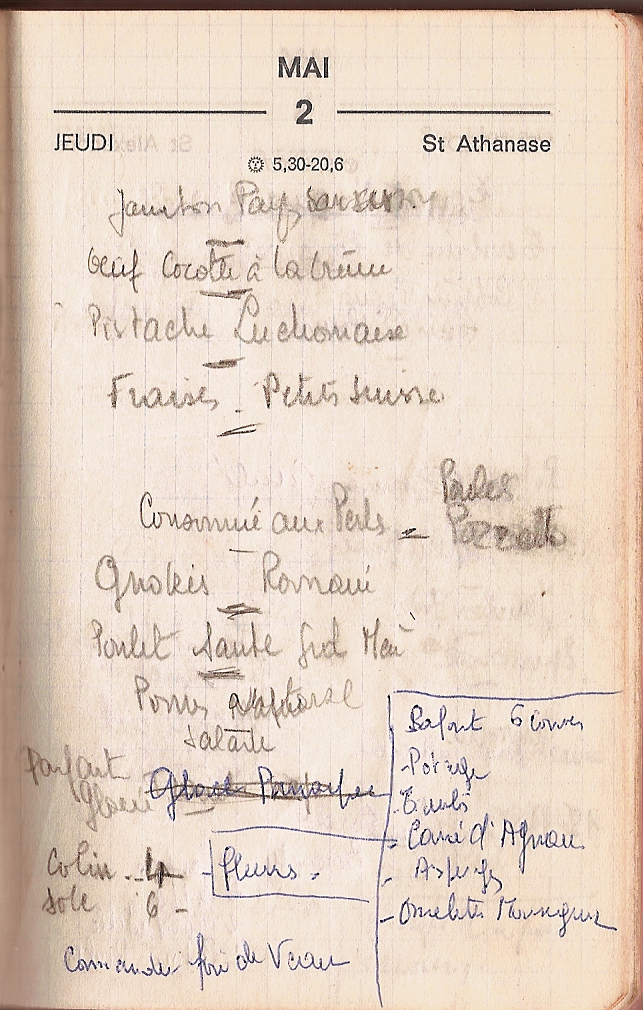
Sunday morning I made Oeufs Cocotte à la Crème. This is another dish that was often served at my family hotel-restaurant and below is the scan of a menu from my grand father Joseph Peyrafitte’s menu notebook.

On Thursday May 2nd 1968 Oeufs Cocotte were served as the first course of the traditional five courses lunch menu. As you can see this lunch did not lack proteins!
Appetizer:
Jambon de Pays (Prosciutto type ham from the Pyrenees)
First Couse: Oeufs Cocotte à la Crème (see recipe below)
Main Course: Pistache Luchonnaise ( a white bean & lamb stew with pork rind — a specialty of the Comminges region. I will have to do a post on this dish)
Plateau de Fromage : not mentioned here but a given.
Dessert Course: Strawberries & Fresh Quark Cheese.

I served the Oeufs Cocotte for brunch and they were incredibly delicious.

Recipe:
But first, what is a cocotte: it is a small fireproof dish in which individual portions of food are cooked and served.


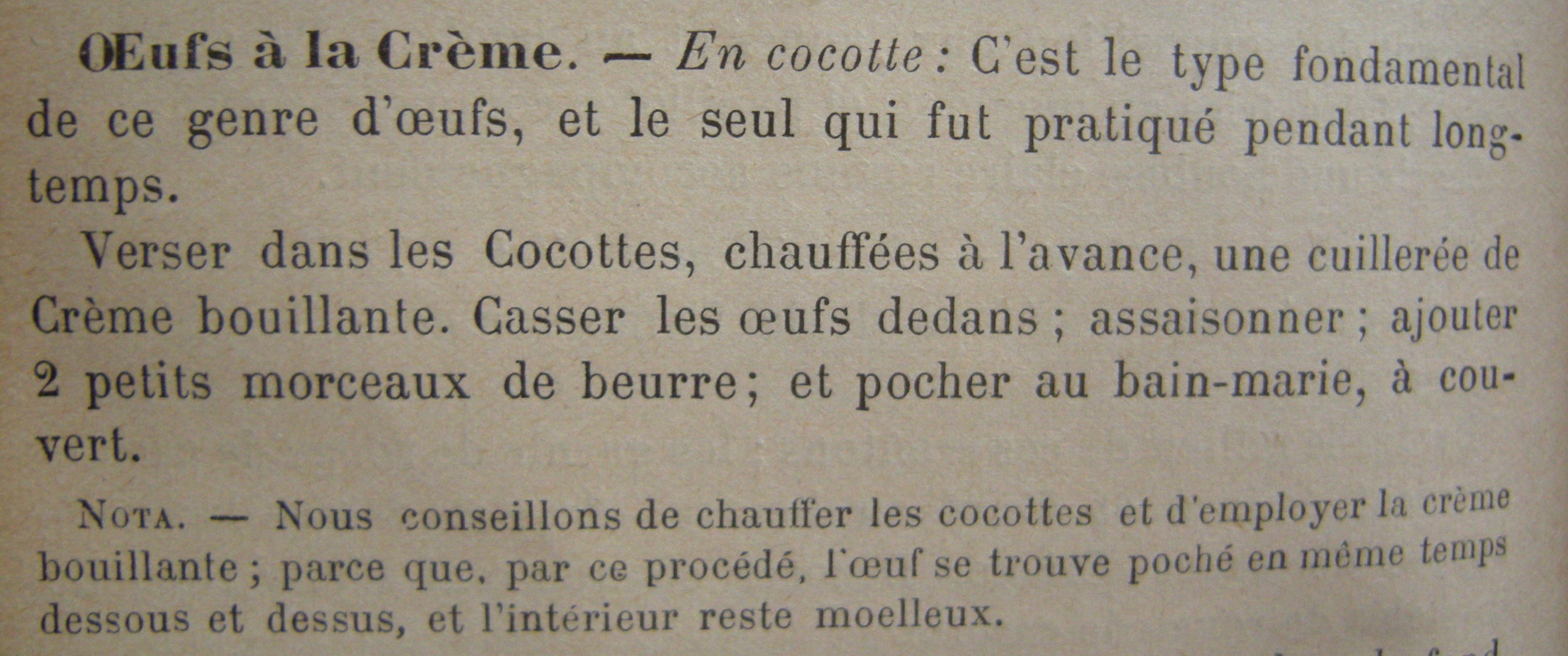
Escoffier recipe from a second edition of the book published in 1907

-Break 2 eggs per person in a bowl and reserve them for later. Escoffier skips this step but I like to do it for two reasons: 1) the eggs will reach room temperature and 2) it will be easier to remove any egg shell bits and check on the quality of the eggs before pouring them into the final dish.

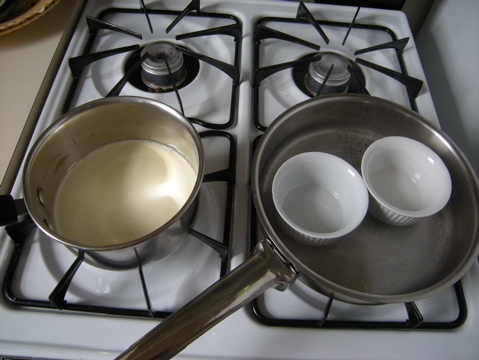
-Warm up the cocotte dishes in a pan filled with water half way
-In a small pan warm up one (generous) table spoon of the heavy cream per person.
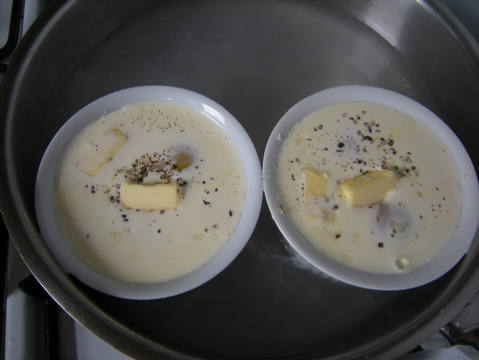
-Pour one of these table spoons of hot heavy cream into each of the warm cocotte dishes. Then add the eggs. Season to taste (Escoffier does not give quantities for seasoning. I used salt & pepper, next time I will add a little paprika), two little pieces of butter (you can see below how much I did put in).
-Cook covered in double boiler for about 4/6 minutes depending on how you like your eggs; the water shouldn’t go higher that 1/2 way up the cocotte dishes. Escoffier doesn’t tell how long it should be cooked; I did mine for about 5 minutes, they were perfect, but that is a matter of taste — I like my eggs very soft.
-Dig in with a spoon and have rye bread toast on the side. Do not butter the toasts! that would be excessive, it is decadent enough as it is! Bon Appetit!

Launching “Voilà Nicole!” + Video via Michael Pollan

Launching “Voilà Nicole!” +  Video via Michael Pollan

I am excited to launch :

Parties YOU host with moi, in your own home, your own kitchen!
Please visit the website : http://voilanicole.com/
and pass it on.
Merci!

Nicole By Yoori!

Then, below you will find a video sent out by Michael Pollan. He is the author of many books and my favorite is: The Omnivore’s Dilemma: A Natural History of Four Meals. I have previously posted about Michael Pollan and to find many recordings of his talks click here.

About the video: As Michael Pollan states in his note,there was very little time to talk about this so serious problem. But from the introduction it sounds that Michael Pollan gave a lecture before and then came the debate.

On Wednesday I participated in a panel discussion with Hugh Grant, the president/CEO of Monsanto, and Sonal Shah, a development expert at Google.org. It was moderated by Larry Brilliant, of Google-org, and held on the Google Campus. It was just posted on Youtube. As you can see, we only had 30 minutes and barely scratched the surface, but it’s rare that Monsanto engages with its critics, so something you won’t see everyday.”Creating a World That Can Feed Itself” Let me know what you think. –Michael

オムライス Omu-Rice

オムライス  Omu-Rice

phot by Chiaki

オムライス Omu-Rice
—photo by Chiaki Matsumoto—

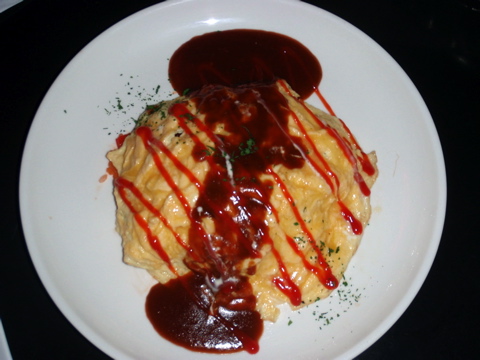
Omu-Rice stands for omelet & rice. I had my first taste of Omu-Rice on Tuesday night at Tokyo Bar in Tribeca (NYC). I was brought there by my good friend Chiaki Matsumoto documentalist & filmaker. We had dinner with Kenji Hayasaki, also filmmaker and artistic manager of the Tokyo Bar. Omu-rice is part of Yoshoku food (食), which means Japanese style Western food, while Washoku food (食) is traditional style Japanese food.
According to a New York Times article writen by Norimistu Onishi and published March 26, 2008:

Yoshoku was born during Japan’s Meiji Restoration, the period that followed this isolationist country’s forced opening by America’s so-called Black Ships in 1854. Japanese were dispatched to Europe and America to learn about Western laws, weapons and industry. They also brought back the cuisine. Shocked to discover how much shorter they were than Westerners, Japanese determined that they would catch up not only economically and militarily but also physically, by eating their food.

There is several version of Omu-Rice but the most consensual recipe tends to be the following one :
Fry (already cooked rice) rice with onions, peppers, ketchup, chicken & mushrooms. Then wrap the rice in a thin omelet. Ketchup and sometimes demi-glace go on top.
I am glad that Chiaki & Kenji didn’t tell me anything about the dish until it came because I would have been very suspicious. This combination sounded heavy & my French upbringing —sometimes unconscious— does not register omelet & rice as a possible combination. It was truly delicious and comforting, and brought back some memories.

My grandfather, Chef Joseph Peyrafitte, who cooked in England in the early 1900 , brought back ketchup & Savora to our Pyreneen hometown. I never saw him use ketchup for any of the dishes at our family restaurant, however he always had a bottle hidden somewhere and when he wanted to win me over he made me a big plate of coquillettes (little macaroni) mixed with ketchup and topped with grated gruyère!

So if you want to try Japanese comfort food dishes, Tokyo Bar is the place. The ambiance and the decor are are aso various events and various djs spin on regular basis. I still have to return to try the Japanese pasta dish : 小ヤリイカと辛子明太子のフェデリーニ or Fedelini w/squid & spicy cod roe and the Tokyo Curry 東京カレー.

A bientot & sayonara
さようなら!

1 53 54 55 56 57 63