Stade Jean Peyrafitte

Stade Jean Peyrafitte


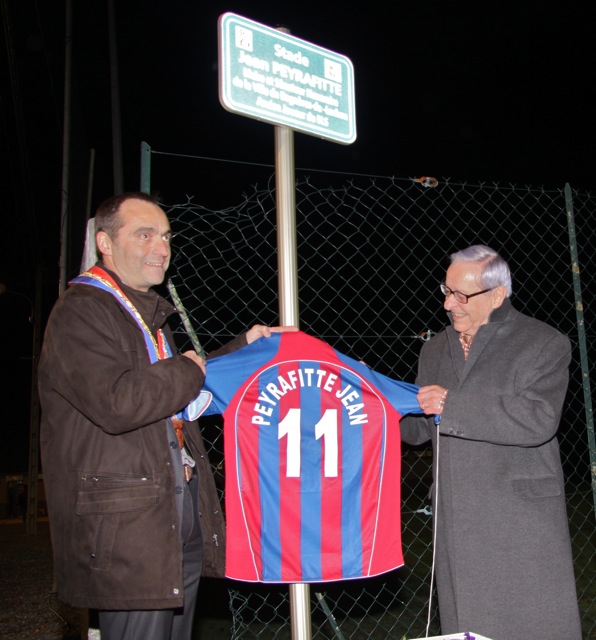
Luchon’s Mayor Louis Ferré & Jean Peyrafitte

On Saturday November 13th, 2010 the soccer stadium in my hometown of Luchon (French Pyrenees) was named the Stade Jean Peyrafitte. Jean Peyrafitte is my father and today he is a dashing 88 years old. His political career lasted for a span of 24 years.  Among many mandates the most significant are: mayor of the town of Luchon (1974-1995); Conseiller Général —county executive— (1977-1992) & Senator (1980-1998).

He was of course touched to be honored during his lifetime but the real thrill was to have the soccer field where he played as a young man named after him. Dad started his soccer career while he was in boarding school in Toulouse; during that time he finished second at the regional best young player contest and therefore was qualified to participate in the final in Paris.  Unfortunately his mother, who was a control freak, didn’t allow him to go; her excuse was: “You are too young to go to Paris”, at that time parental authority was not challenged but I still can feel today how sad he was .
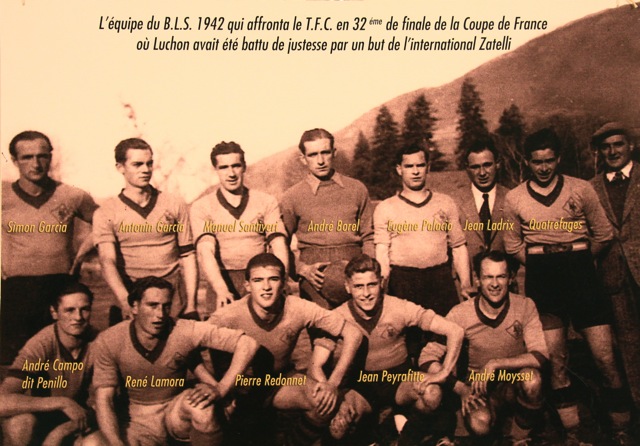
Team Bagnères Luchon Sport 1942

When he was done with school he came back to his hometown and integrated the lead soccer team (équipe première) despite his young age. In 1942 the team won the division championship and managed to play up to the 32th final of the Coupe de France — the French National Soccer Cup. After an intense and dramatic game they lost against Toulouse, a pro team. It was only in the last part of the second half that the then international player Mario Zatelli scored twice.

After being requisitioned for STO — that was the Compulsory Work Service during the German occupation of France — and spending a couple of dreadful years in German factories, my father got drafted in 1946 to serve in  the army. His battalion was stationed in the town of Menton. There he got to join the town soccer team where he once again excelled.  He got noticed by the Monaco managers.  At that time the Monaco soccer team, very close to Menton, was trying to reach professional status. On Mondays during the soccer season they organized friendly games against professional teams in order to prepare for promotion.  They needed better players and they invited my dad to play. At the end of the year they reached promotion to pro level and they offered dad to join the team for good. He seriously considered; he was done with the army, loved the area but once again his mother thwarted his dreams and pressured him to come home. Many times I heard the story of my grand father showing up in Menton to convince him to come back home. Dad was an only child, and they were able to pressure him by claiming  they needed help with the family business; once again he obeyed and returned.

Other offers to play in professional clubs came, but he turned them all down, returned home for good and threw himself into many successful ventures. Before getting into politics, he coached the soccer team, created a night club —where I got to listen to great jazz!—, wrote for local newspapers, promoted Southern French Tourism and food, created an independent hotel chain with friends…well the list would be too long to name them all.
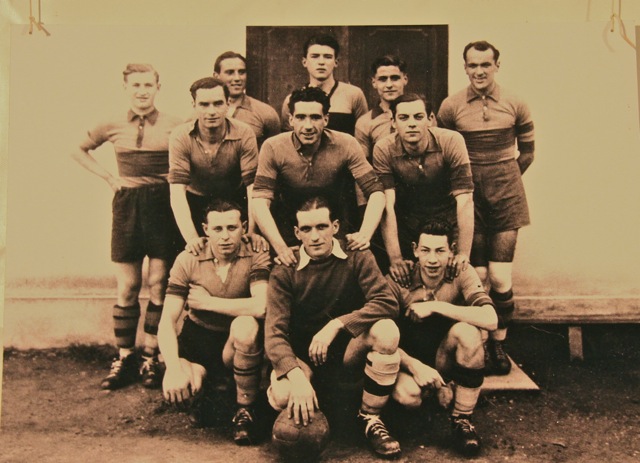
Team Bagnères Luchon Sport 1942

Anyhow, back to the naming of the stadium: Dad being concerned that his voice would not be strong enough since he is struggling with light bouts of Parkinsons that have an effect on his throat, and as he is also concerned with getting over-emotional, he asked me to read his speech. I also typed it for him and that was interesting. When I arrived at his house on Tuesday the dining room was cluttered with boxes, old files, envelopes filled with photos, articles and various dossiers. My mom said: “And that is only a small portion of what we have”! We sat down and started sorting and organizing. We kept all the soccer related documents at hand so dad could refresh his memory to write his speech. We only started typing the speech on Thursday, because we got caught up in looking and filing photos of his night club in the 50’s. I will have to do a separate post on that because there is way too much to say.


So on Thursday we sat side by side and he started dictating me what he wanted to say. I had to listen to many of my dads speeches over the years so I know his style pretty well. I helped trying to keep it concise and focused as he had about 5 minutes to respond to the mayor’s speech. It went pretty well despite how opinionated we both can be. One of the keys was to keep it only between the two of us. He wanted my mother around, for details and dates, but their constant fighting mode of communication would have been too much for me, so I agreed to go consult with mom every time we needed details. He worked on the speech everyday until Saturday. He is a perfectionist and completion comes when there is no more time for revision! Anyhow, everything turned out great. It was a very sweet moment, both my brothers where there too and in his speech my dad mentioned  that his three children had played on that field. Pierre played goalie, he actually had a bit of a carrier in Paris, Jean-Louis played forward and I was part of the first woman’s team of the town! Dad also mention that his father Joseph Peyrafitte had been at the origin of the stadium.  He had been a team manager when my dad played and in the thirties it was he who actually had facilitated the transfer of the stadium to this location and part of the land had been his at some point.
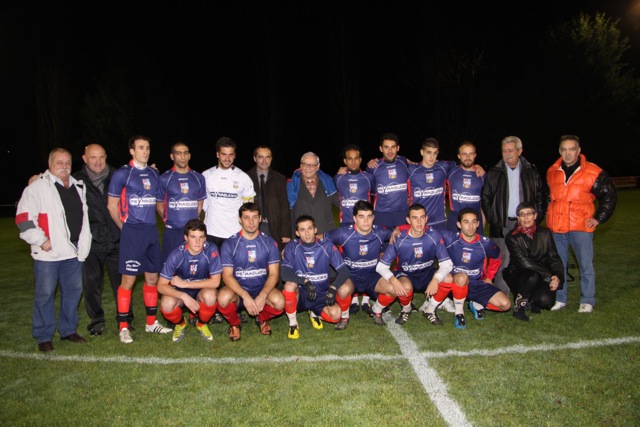
Team BLS 2010 with Jean Peyrafitte Family & Louis Ferré & Serge Santiveri


Below are many pictures of the moving ceremony with all of us. The ceremony was followed by a soccer game where the local team (now playing in a lower division) won 3-0. It looks like they felt inspired by the brillant history — may they begin their rise to a great future. To conclude as my dad did: Vive le Bagnères-Luchon Sport (the name of the team!) —Photo
© Domy-Luchon
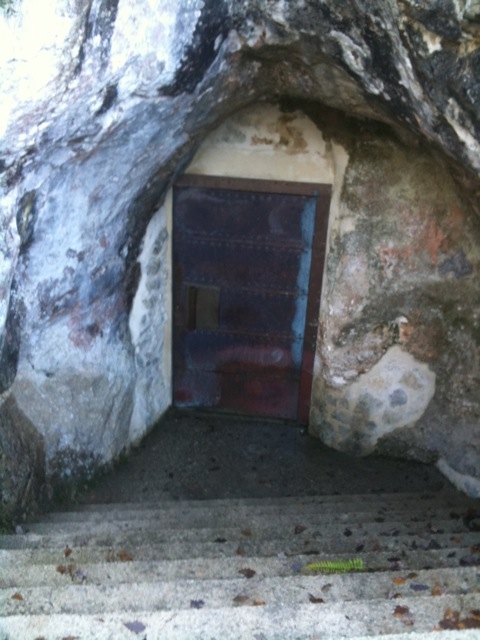
29000 years ago…and Paleo Lunch

29000 years ago…and Paleo Lunch


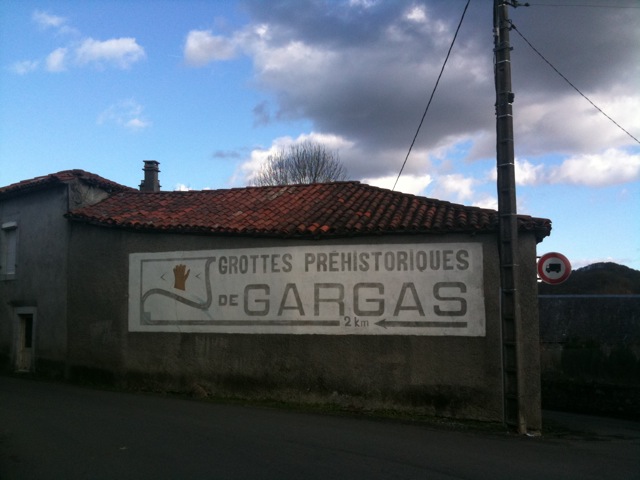
It is humbling and powerful to walk through the entry arch of the Gargas Cave. For thousands upon thousands of years humans have entered the cave through this very opening. The Cave of Gargas is situated in the central Pyrenees, 40 minutes away from my hometown. Though mostly famous for its panels of stenciled hands dating from the Gravettian period (between 28,000 and 22,000 years ago) Yoan Rumeau, curator of the cave, explains that the cave has seen traffic for way longer than that, and even though the hands are the more dramatic artifacts, the engravings —probably from the Magdalenian period— are extremely complex and deserve serious attention and studies. Tribes of nomad people moved around the “Perigord triangle” and came to visit this cave periodically. This theory is supported by the similarity of tools found in the archeological digs.

Gargas

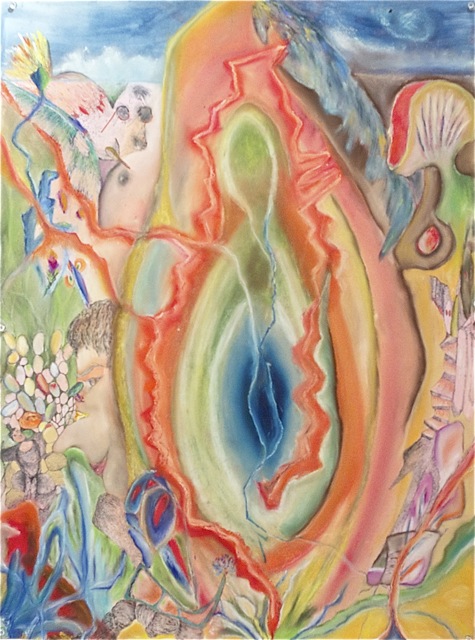
Personally, I was mostly interested in looking at  feminine representations and Yoan Rumeau was extremely kind to tailor the visit according to my interests.  All of these representations are incredible, but the most breathtaking for me was a 5 inch natural vertical opening in the rock that has been reddened with  iron oxyde pigment. It looks exactly like a vulva: from the texture, to the wetness, to the bulging, to the color, it was intensely “real.” I will expand on this visit at another time but the  energy it gave off, plus the visual and scholarly information gathered fed my research & concerns about the Vulvic Space/Knowledge.  This project is inspired by the work of Carolee Schneemann and will include a manisfesto, paintings, texts & performance. Hopefully there will be more on this later. I want to thank Yoan Rumeau for his explanations and the way he so generously gave of his time.

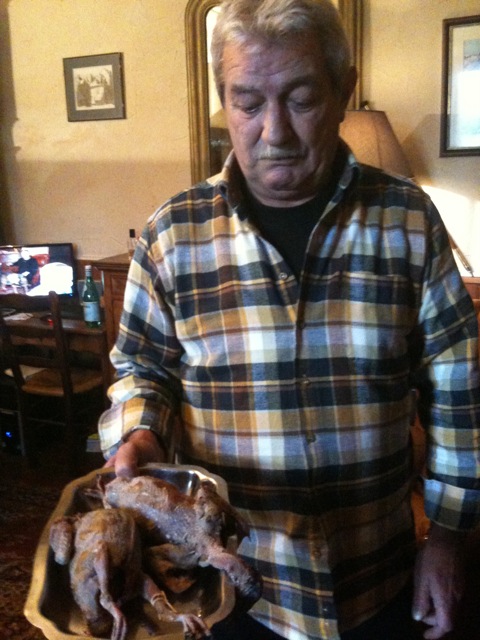
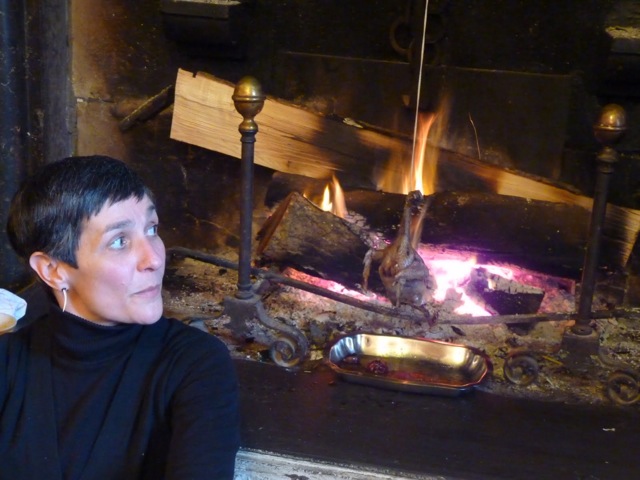
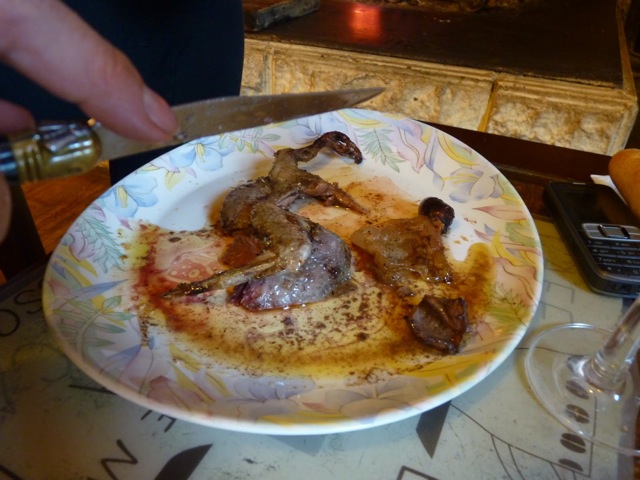
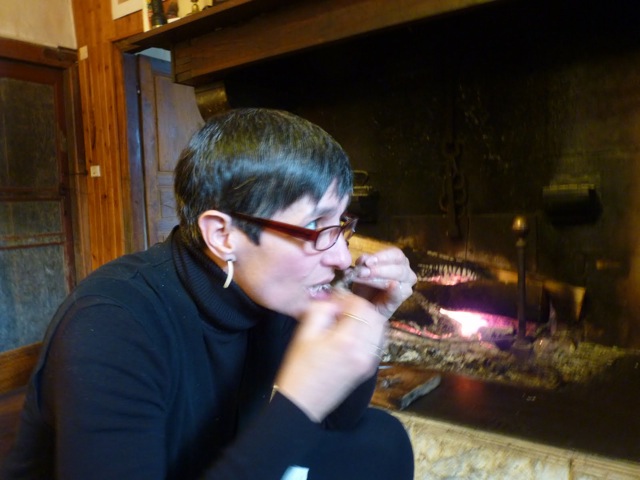
High from the visit I stopped at my brother Pierre’s — he and his partner Christine live quite close to the cave. In fact, Christine ran the cave’s restaurant  for years, though she is now retired and the restaurant is defunct. The photo with the Gargas painted sign is taken from their home. As it was 3:30PM when I arrived, Christine and Pierre had lunched already. I was really hungry and Pierre offered to cook me a palombe (ringdove or wild pigeon) in his fireplace. The birds had been shot on Sunday and brought as a present by his friend Henry Christophe, hunter and journalist. Pierre trussed the bird with a nice slice of lard, brushed it with some oil and piment d’Espelette —chili from the basque country—, salted it and then hung it in front of a roaring fire.

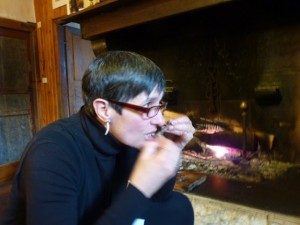
While we had some red wine we occasionally tapped the bird to make sure all sides cooked evenly.  25/30 minutes later we judged it done,  Pierre cut it in a half and said “all yours!” Christine took the pan that had collected the drippings, reduced the juices on the stove for a few minutes and poured it over my bird.

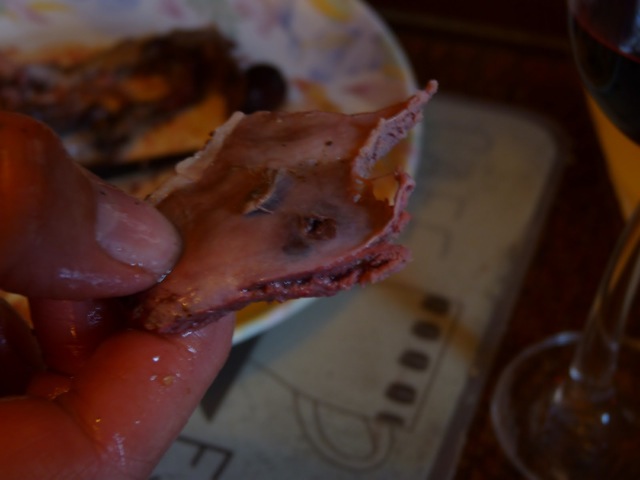
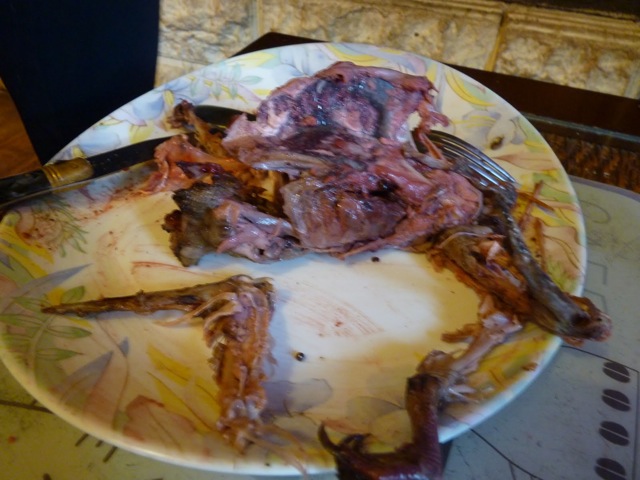
The cooking was simply perfect, moist, gamy but not too strong. I took my time, savored each bite and left the bones clean. I also had to be careful not to break my teeth on the tiny bullet. What a delight!

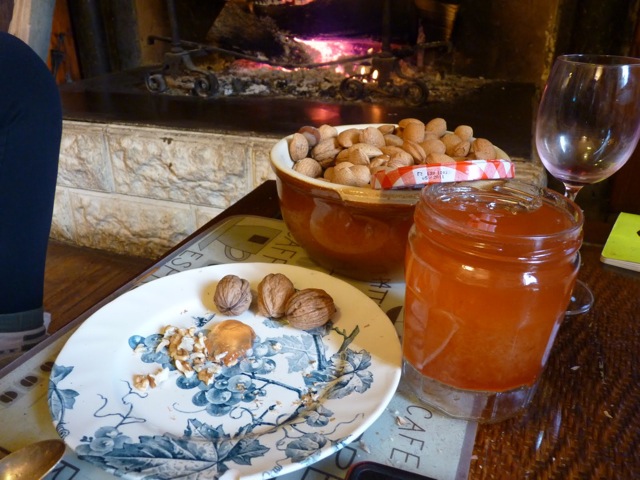
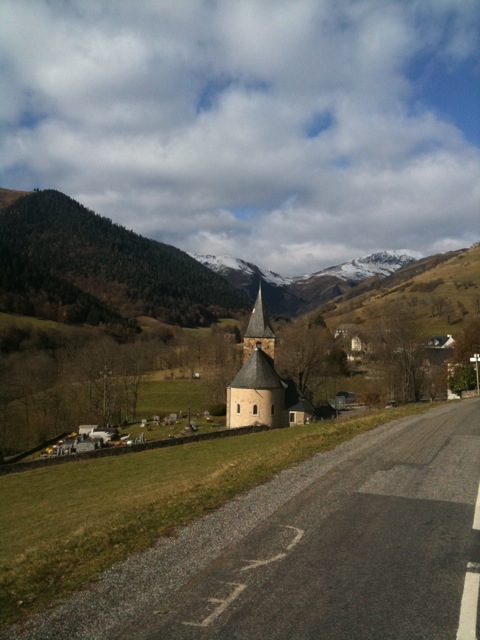
For dessert I had Christine’s scrumptious  home made quince jelly with fresh walnuts and then tea and a piece of local tourte —a kind of fragrant pound cake. I left the village of Aventignan (where the caves are) fully satiated with images, smells and tastes that made me feel like I had traveled through time. I was an ancient woman driving through the narrow valley where the white peaks defied the Prussian blue sky.

Photos by Pierre Peyrafitte

My Montanha & My Soup

My Montanha & My Soup

I arrived Monday afternoon in Bourg d’Oueil after a long but pleasant trip. My Pyrenean home is closer to Spain than to Paris and I am not kidding: it takes 15 minutes by car to reach the Spanish border and about 8 hours to reach Paris!  My travels began Sunday at 1:30 p.m. from our Brooklyn home and I finally reached Bourg d’Oueil on Monday at 3:30 p.m. local time or 9 a.m. Brooklyn time. After taking two planes, two buses, and two car rides I reached our little house in the village at the far end of the Valley. As my intention was to cook a soup on a live fire, the priority was to light the fire.

I had planned to get some veggies in town before my last climb up to the mountains. I arrived too late to get to the market, so my only option was the local supermarket. The offerings where pretty sad and I couldn’t come to terms with buying any of these mass produced veggies. I placed a call to my good friends Joseph & Paulette asking them if they had anything left in their Bourg d’Oueil garden. They had already winterized the garden but had plenty of veggies in their Luchon garden. Not to worry, said Paulette, Joseph will bring me leeks, celery, potatoes, chards, carrots & onions later on. Great! I can always count on them. I did hit the cheese counter and was pleased to be able to get a couple of local cheeses.


The most delightful part of the trip is the 17 kms climb from Luchon to Bourg d’Oueil. Despite the weather forecast there was neither rain nor snow but a slightly overcast sky that let me have a partial view of my mountains. Driving through the villages triggers images: In Benqué Dessus et Benqué Dessous,  it is Jules’ face, the Fournier’s house, and the cromlecs above them. Before Saint Paul d’Oueil,  the sign for Saccourvielle brings up my friend Emingo, who makes the best goat cheese I ever had, and Mme Labry, a writer who was my French teacher in high school. In Mayrègne,  I look at the old “kiosque” where I use to go eat crêpes in the summer as a child; I also think of the recently deceased mayor who was key on having me perform the Bi-Contimental Chowder/ La Garbure Continentale in the Valley.  Then comes Caubous, Cirès, and at this point I can’t think of anything else than trying to get a glimpse of the Peirahitta (my totem!)  that sits at the pass of Pierefite. And finally I reach Bourg d’Oueil the very last village at the end of the valley. I park the car and start schlepping my stuff to the house. It is almost impossible to reach the house by car, the street is so narrow,  evidence if need be that this place was not build for car traffic!


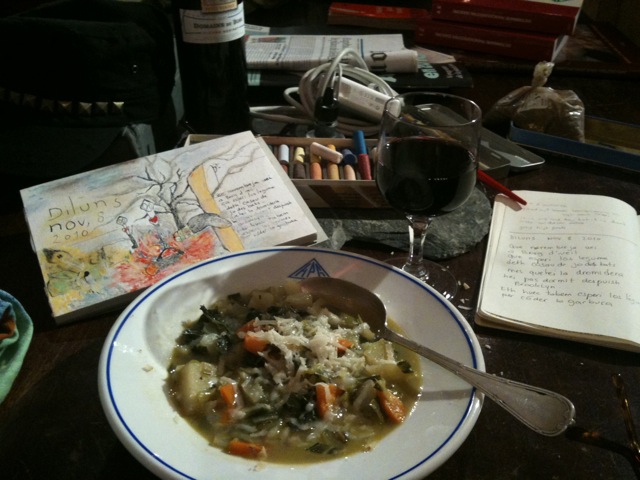
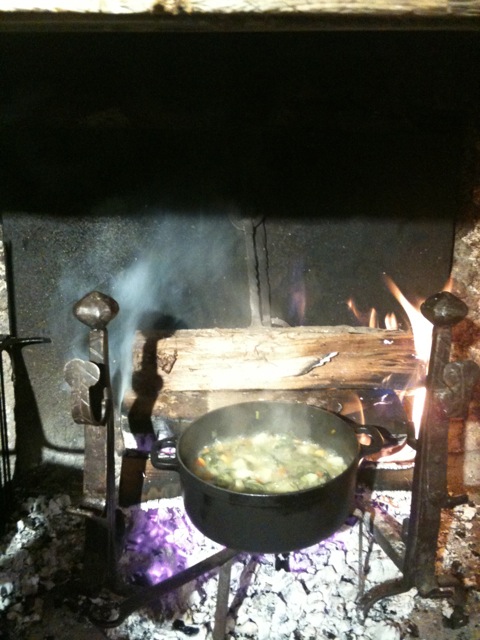
After a quick tour of the house, I lit the fire — we are at 1400m or 4600 feet  here, so the air is nippy on this November afternoon. Once the fire was going strong I started opening my stuff, got my art supplies out, opened a bottle of wine, got the cheese out and waited for Joseph et Paulette who brought the veggies at around 5:30 p.m. — they had added a jar of duck fat and one of honey, all home produced. While the soup was cooking I worked at a drawing that includes some attempts at writing in Gascon.
And then, accompanied by the sound of the stream running under the house, the crackle of the fire and the occasional ringing of the church bell, I savored my soup. The flavors are indescribable. They call on all my senses and the experience is totally gastoorgasmic!

So here is my soup:
2 generous spoons of duck fat
1 onion
2 small leeks
3 carrots
1 branch of celery
3 leafs of chard
Salt & fresh ground pepper
Grated brebis cheese

Sauté all the vegetables in order in the duck fat then add water and let cook until done. The soup is even better the next day, and of course feel free to add other veggies like beans, turnips, cabbage….

Now can you smell? Just try:

November Paintings

November Paintings

Walking up this morning: Nov 3rd, 2010, was not as bad as waking up on November 5th 2008: Bush’s reelection, but certainly not as joyful as waking up on November 5th 2008 : Obama’s election.  I am certainly not looking forward to Boehner‘s face as the House leader,  but I take little comfort at the White House and the Senate still blue.
Below two paintings: “Fear Factor” from Nov 3rd, 2004;  and “VLand #3” — part of the Vulvic Space Series — finished yesterday. Will see what gets painted next, though I will keep working at the Vulvic Space Series for a while…Do I have two years to finish it?

Chantons Les Cornichons!

Chantons Les Cornichons!

Sunday afternoon I was at the The Tenth Annual NYC International Pickle Day where  pickles from around the world were featured, celebrated and sampled—list of participants here. The event is organized by the New York Food Museum & The Lower East Side Business Improvement District. This year the Umami Food & Art Festival curated the first performance and art event at the festival where I was invited to offer some pickle poetry. My origins demanded that I focus on the cornichons a.k.a gherkins.

The video above features my cornichon poem written for the occasion and set to the music of the well know composer and  famous gastronome Gioachino Rossini (1792-1868). The title of the composition is: Hors d’Oeuvres III : Les Cornichons — and this is not a joke.  Quatre Hors d’Oeuvres et Quatre Mendiants are part of Rossini’s last sets of compositions called “Dernier Pêché Mortel, de Vieillesse” or in English:  “Sins of Old Age”. These unpublished late compositions (1857-1868), now compiled in 14 volumes, were meant to be performed at private occasions in the composer’s drawing room.  Below are the details of Volume/ Book 4:

Quatre (4) Hors d’Oeuvres:
[The Hors d’Oeuvres here refer to appetizers]
I- Les Radis –
radishes
II- Les Anchois –  anchovies
III- Les Cornichons-  gherkins
IV- Le Beurre – butter

The Quatre (4) Mendiants:
[Mendiants refer to dried fruits and one of the Thirteen desserts of the Noel Provençal. Each fruit is supposed to represent the robe color of four monk orders]
Les Figues sèches – dry figs  — Carmel order
Les Amandes – almonds —Dominican order
Les Raisins- raisins —Franciscan order
Les Noisettes – hazelnuts
— Capuchins order

This occasion lead me to reconnect with the marvelous Franco-Italian  singer-song writer Nino Ferrer (1934-1998). I learned his “Les Cornichons” and even if you don’t know French, do listen to it. Nino Ferrer was a very interesting artist who had quite a successful carrier. His background included studying anthropology with André Leroy Gourhan and accompanying jazz musicians like Richard Bennett & Bill Coleman. Voilà — and merci beaucoup to  Françoise Bevy for the photos. Enjoy!

1 … 23 24 25 26 27 … 63