Family Heirloom: Les Pannequets Saint-Louis

Family Heirloom: Les Pannequets Saint-Louis

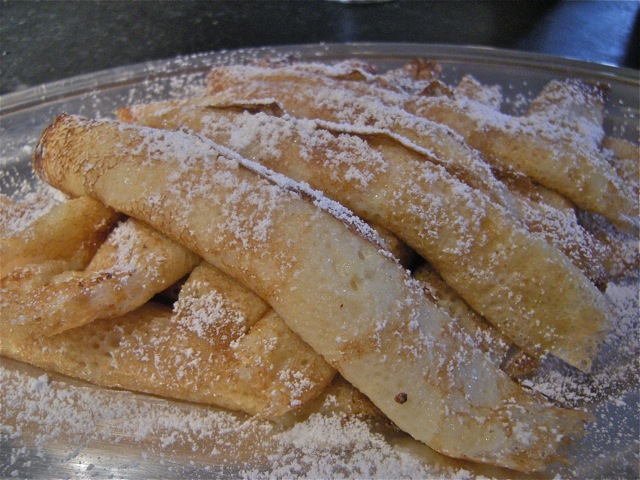
Among all the family recipes Les Pannequets Saint-Louis is truly a unique one, et je pèse mes mots — that is: and I weigh my words — yes: unique, a word I almost never use.
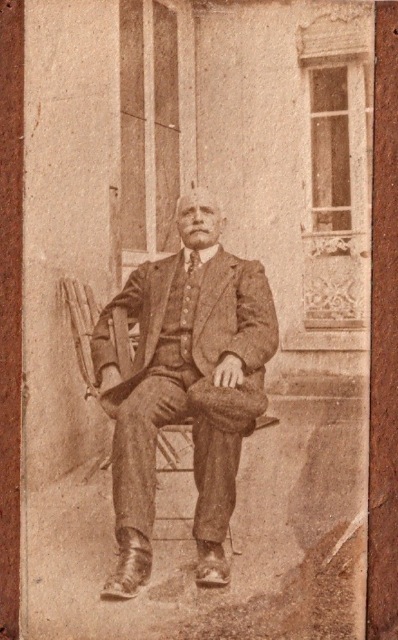
Louis

My great grandfather Louis, Gabriel, Marcel, Marie, Peyrafitte (1858-1929) created this amazing recipe that we still make for very special occasions like this Christmas day when Pierre, Joseph, Miles and I gathered around our kitchen island for a true family food communion.
Pannequets
have been part of the French cuisine repertoire for a long time, though the word derives from the English “pancake”— from the middle English pan +cake that’s an easy one. The famous French chef, Auguste Escoffier, has several entries for pannequets in the Entremets section of his reference work Le Guide Culinaire. So does Joseph Favre in the Dictionnaire Universel de la Cuisine, mentioning an interesting version of pannequets au gingembre — with ginger. They both specify that it is a Patisserie Anglaise or English pastry. Not surprising at all, in fact, that my Pyrenean ancestors would be acquainted with English desserts. In the 1900’s the French Pyrenees were “invaded” by English tourists, the family hotel in Luchon even changed its name: the Hotel de la Poste became the Hotel Poste & Golf ! My family had sold some land so a golf course could be built for to the increasing (colonial) British clientele. Surfing the net to look for traces of my grandfather Joseph’s stay in England (he was there as a cook between 1902-08), I was quite astounded to find the following entry in  “The Gourmet’s Guide to Europe” by Algernon Bastard (probably published around 1903):

Throughout the mountain resorts of the Pyrenees, such as Luchon–Bagnères de Bigorre, Gavarnie, St-Sauveur; Cauterets–Eaux Bonnes, Eaux Chaudes, Oloron, etc., you can always, as was stated previously, rely upon getting an averagely well-served luncheon or dinner, and nothing more — trout and chicken, although excellent, being inevitable. But there is one splendid and notable exception, viz., the Hôtel de France at Argelès-Gazost, kept by Joseph Peyrafitte, known to his intimates as “Papa.” In his way he is as great an artist as the aforementioned Guichard; the main difference between the methods of the two professors being that the latter’s art is influenced by the traditions of the Parisian school, while the former is more of an impressionist, and does not hesitate to introduce local colour with broad effects, — merely a question of taste after all. For this reason you should not fail to pay a visit to Argelès to make the acquaintance of Monsieur Peyrafitte. Ask him to give you a luncheon such as he supplies to the golf club of which Lord Kilmaine is president, and for dinner (being always mindful of the value of local colour) consult him, over a glass of Quinquina and vermouth, as to some of the dishes mentioned earlier in this article. You won’t regret your visit.

The Joseph Peyrafitte (1849-1908) mentioned above is Louis’ brother and therefore my grand father Joseph Peyrafitte’s (1891-1973) uncle who was named after him. Louis & Joseph had married two sisters, Marie & Anna Secail. Anna moved to the Hôtel de France in Argelès-Gazost and Louis Peyrafitte came to Hotel de la Poste in Luchon. The marriages had been arranged by one of the Peyrafitte’s brothers who was a priest at the Vatican with one of the Secail brothers — also a priest. All this is documented — and left a magnificent family heirloom that I inherited: “the Chandelier” but that story is for another blog-post.  Both brothers had been classically trained cooks so one can easily understand how the inspiration for this recipe came about.
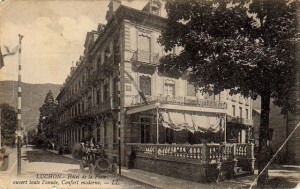


Hotel de la Poste in the late 1890’s

My father, Jean Peyrafitte, doesn’t remember his grandfather’s cooking very much  — he was 6 years old when his grandfather Louis died in 1929 — but he vividly remembers his father Joseph Peyrafitte (my grandfather and cooking mentor) making the Pannequet Saint-Louis.
At that time no “grande carte” was available at the restaurant, though there was a menu du jour which changed daily given that the clientele were “pensionnaires” —residents — who would stay for periods of 3 weeks or more.
My grandfather would occasionally put the pannequets on the menu but only during low season, as they are incredibly time consuming. The recipe was not written down until the mid 1960’s. At that point my dad decided to promote regional cooking and to upgrade the restaurant to a “grande carte,” hoping to get attention from the Guide Michelin and Parisian food critics. So he created a “grande carte” full of regional dishes like Pistache (mutton & bean stew), Peteram Luchonnais (lamb, veal, and mutton tripe), duck confit, etcetera.  My grandfather considered this food low class and believed that lobster and tournedos Rossini was more appropriated.
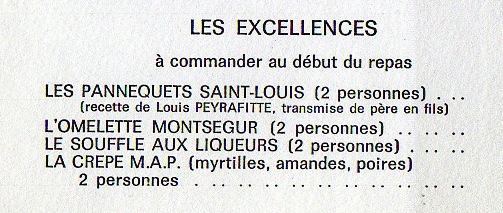
Carte

But my father pointed out that the clients could eat that food anywhere, but not our local specialties. That is when the pannequets Saint-Louis made their way to the dessert menu of the  grande carte and were listed as “Les Excellences to be ordered at the beginning of the meal (order for 2 minimum)”.

Now this is the part I remember. In the late 60’ my mother begged my grandfather to write the recipe down. He said he couldn’t as he knew it by instinct. She didn’t get discouraged. She stood by him as he was making them, weighed the ingredients one by one and made a note of it. I must say that without my mother (Renée Peyrafitte) most of the family memory would be gone.

When I called my parents to talk about the Pannequet Saint-Louis recipe I reassure them that I wasn’t going to give the recipe away. Mom said, “don’t worry no one else can make them anyway.” What she meant is that this recipe takes total dedication. When my grandfather grew old, it was she who was entrusted with the task of making them. She tried to teach a few cooks but the result was never satisfactory.  One of the reasons is that from making the batter to cooking them requires total and utterly focused attention. And if you don’t do that the best dessert in the world turns into the worst glob!
Nicole Peyrafitte

I must say that since a little girl I watched my grandfather & then my mother making them over and over. My favorite post of observation during “service” was in the corridor where I could survey all the action. As soon as I would hear an order for pannequets being “barked,” I would get into position to assist and taste!  I have memorized all the gestures. Unlike the regular crêpes the pannequet doesn’t get flipped (but come and see me do that Sunday at the 36th Annual New Year’s Marathon). Once one millimeter of the batter is poured into a hot and generously buttered cast iron pan, it is let to cook until almost, but not completely, dry. Then the edge of the dough next to the handle is gently detached with a spoon and if cooked perfectly the batter will roll down the pan like a cigarette helped only by little tap in the pan. A perfect pannequet Saint-Louis has a very lightly crisp skin on the outside and custard like consistency on the inside. While the texture melts in your mouth, the rum, almond, lemon & vanilla flavors lead you to gastronomic ecstasy!  I don’t know if my great grandfather named the pannequet “Saint”-Louis himself, but I doubt it — it sounds more like one of those mischievous puns my grandfather Joseph Peyrafitte was famous for!
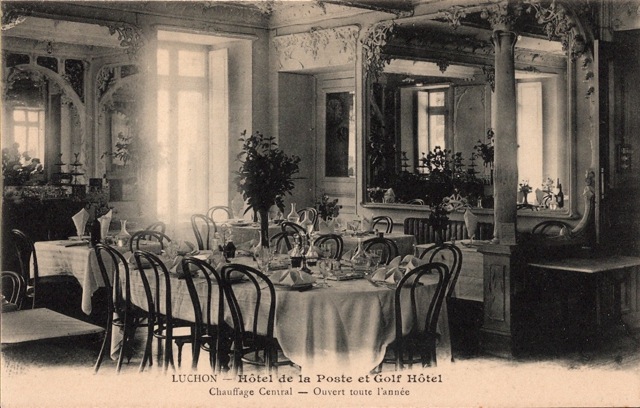

Hotel de la Poste became Hotel Poste & Golf around 1905

Happy New Year, Bona Anada, Bonne Année!
And hope to see you Sunday for poetry and crêpes at the Poetry Project for the 36th Annual New Year’s Day Marathon Benefit Reading .

ps: You might enjoy reading these 2 posts about crêpes:
Crêpes History, Recipe + Video:
The Crêpe, the Theorist, the Chef and the Volunteer
Spirited Noël Dinner

Spirited Noël Dinner

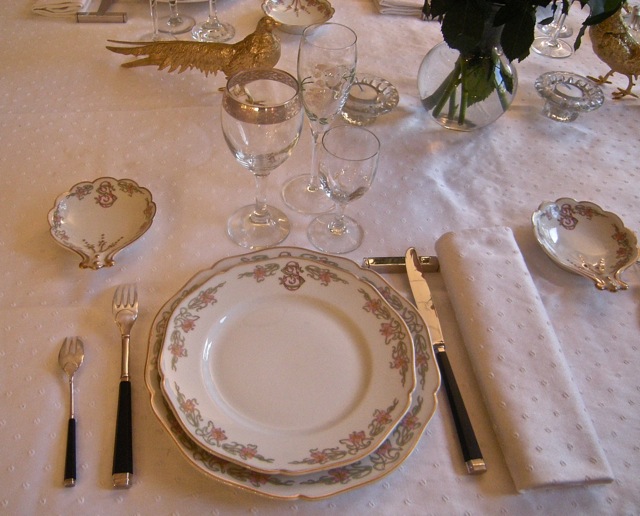
We are not particularly attached to any specific Christmas tradition although this year we were eager to have an intimate family dinner at our new place and to take out the family heirloom china that had been in boxes for a while. So after consulting with husband, sons, and daughter in law, we agreed on a menu:

Foie

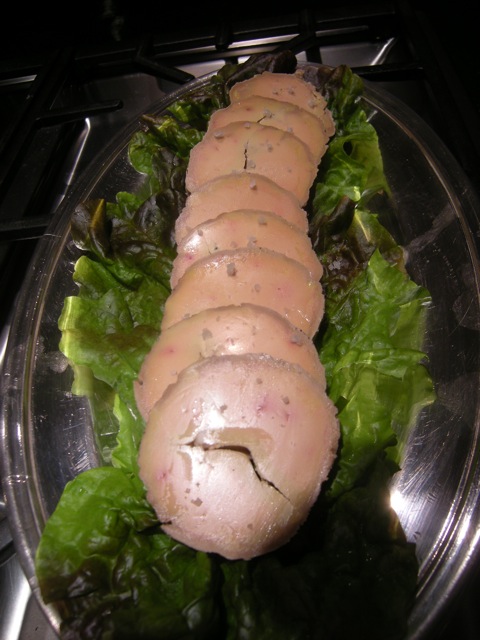
Home made Foie Gras au Torchon

Fisher Island Oysters

Roasted Suckling Pig
Mashed potatoes
Apple & Chestnut Bourbon dressing

Cinnamon Rice Pudding

I had never made Foie au torchon before but my friend, chef Pierre Landet, the executive chef at Cercle Rouge, suggested this excellent idea —by the way, Congrats to Pierre soon to be made Maître Cuisinier or Master Chef! This simple recipe keeps the foie velvety & easy to deal with — even though I have to confess I missed one step.
First break the lobes and delicately take out the nerves and veins. Some people get crazy about the cleaning process and turn their foie into a battlefield. My previous experiences on making terrines had taught me that there is no need for over cleaning. I then seasoned the foie with salt and pepper and rubbed some Armagnac on it. Next step is to put the lobes on top of each other and roll the foie very tightly in cheesecloth —like a sausage — and poach it in a broth at 140ºF for 5/7 minutes. Now cool your foie
in a bath of cold water with ice cube to stop the cooking. This is the step I missed!  So mine was a little over done but no one complained.

Our next course was a dozen Fisher Island oysters each. It gave me a good work out to open the 5 dozen. They were extremely fresh, all very tightly shut. The first taste of a Fisher Island oyster comes as a hit of seawater, followed by the very clean taste of the firm texture of the shiny silvery mollusk. Our favorite way to eat oysters is to add a few sprinkles of lemon, Pierre (Joris) likes to add some fresh ground pepper on his. The experiment this year was to add a ½ teaspoon of a fresh homemade salsa in the oyster shell. Pierre remains skeptic, the kids more enthusiastic; I do like the bite of the salsa on a few of them.  We paired them with a pleasant Sancerre. No other info on that, as the bottle got recycled before I could take a picture of it!

Pierre

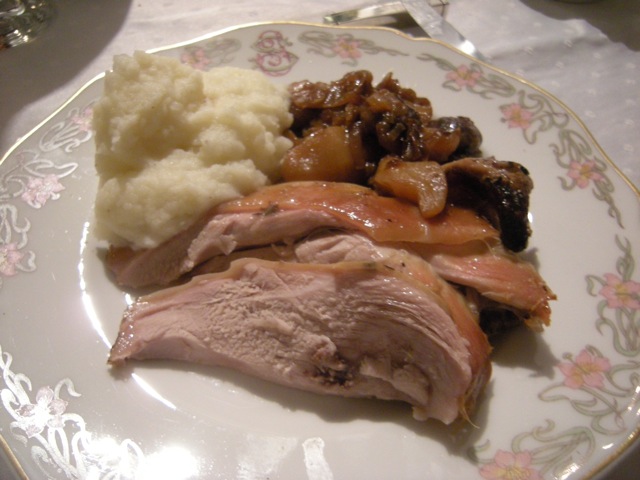
Then came the “piece de resistance:” our roasted suckling pig, an ever so festive and ever so delicious dish. We ordered it from d’Artagnan, and upon it’s arrival we lovingly massaged the piglet with a marinade of lemon, olive oil, thyme and garlic; this can be done 24 to 12 hours before roasting it. We had decided against stuffing it in order to keep our meal “lighter” and most of all to keep the roasting time down! It took about 3 hours for our 10lbs piglet. Pierre (Joris) handled the roasting, he diligently basted it every twenty minutes and covered and uncovered it with aluminum foil as he felt the need to. It turned out perfect, done but moist! I made last minute jus —or light gravy— by deglazing the piglet’s pan with very thinly chopped onions —should have been shallots but I had none— flambé’d it with bourbon, added 1 teaspoon of arrowroot, then some chicken broth and 1 cup of re-hydrated cèpes (boletus), salt & pepper to taste. It was lovely to pour some on the fluffy buttery mashed potatoes (w/ a hint of nutmeg).

Apple

The apple, chestnut & Bourbon dressing (with sautéed minced onions)  enhanced the pork flavor. There is a beautiful complementarity between pork and chestnuts, and as for the apples that had slightly caramelized, they added a pleasing hint of tartness.
The Corbières L’Enclos 2005 —from Domaine des 2 Anes— brought the last touch of bliss to the dish.  This organic blend of mostly Grenache with Carignan, Mourvèdre and Syrah grapes has an earthy, rich and supple taste that literally “talks to me”!

The light, refreshing Ecuadorian cinnamon rice pudding was a Christmas present from our good friend Eleana and it came as a good conclusion to our excellent meal.

Well, the final punctuation was the digestif & the Laubade Armagnac did bring a few spirits down! Santé to you all!

Hara Chana or Green Garbanzos

Hara Chana or Green Garbanzos

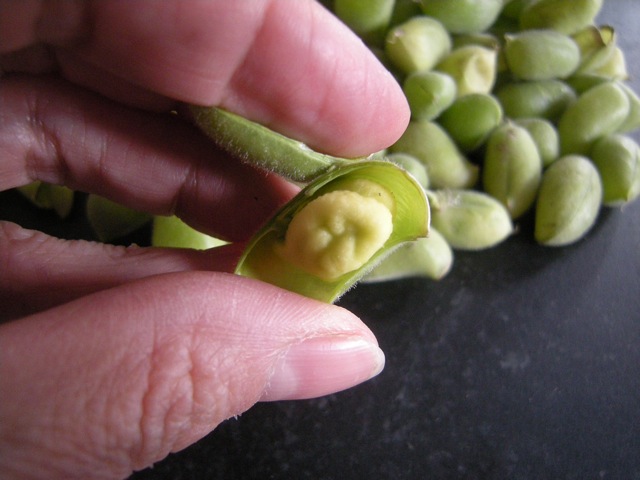
Hara Chana, Garbanzos, Green Chickpeas

Until then I had seen them only naked, brown and dry; but on Saturday I got to see them dressed, green and fresh! How on earth did I miss seeing fresh chickpeas in their full regalia until  that day? I am a little embarrassed to admit to it, but as the French saying goes: un moment de honte est vite passé —a moment of shame is soon over! & the excitement makes up for the embarrassment!

We had planned to meet our BlogoBung friends Larry Litt and Eleanor Heartney for a food tour in Jackson Heights, Queens —their neighborhood for 10 years, and often called one of the most exotic places in New York City. After a delightful & tasty two hour aperitif of talking, munching — on Larry’s appetizing homemade Hummus & Salmon patés — & sipping Lillet at their house we went out for a wonderful Indian meal at Mehfil a Gujurati style restaurant.

Dhal

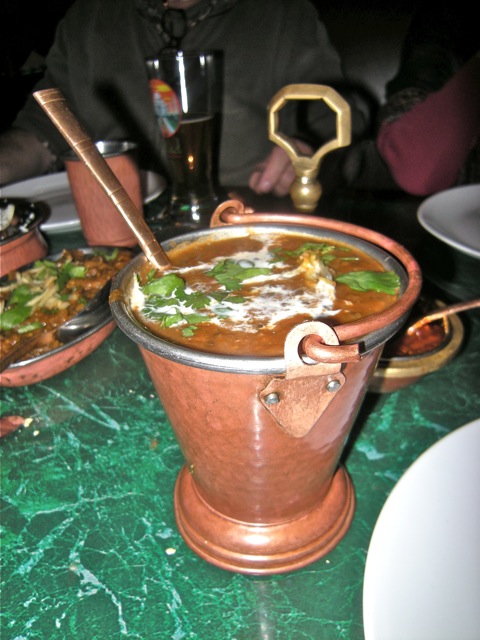
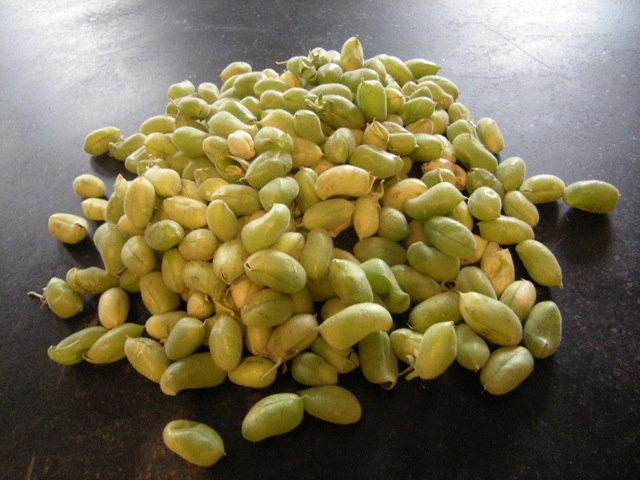
I had Dhal Makhini —creamy black lentils sautéed in butter with freshly ground spices— a restorative dish full of flavors with wonderful fresh coriander overtones that helped me get over my jet-lag. I got a taste of Eleanor and Larry’s delicate Tandoori Salmon & of Pierre’s rather bland Lamb Pasanda. Then we went for a walk and stopped at Patel Brothers —37-27 74th Street, (718) 898-3445 —“the granddaddy” of Indian groceries as quoted by the New York Times. That is where I discovered the fresh chickpeas. First, I saw them in the freezer, I grabbed a bag as I had never seen them green before, but Larry said “Wait! they’ll have them fresh in the produce section”. Larry knows the store like the palm of his hand and sure enough, here were the little green pods of hara chana —green chickpeas.

repackaged

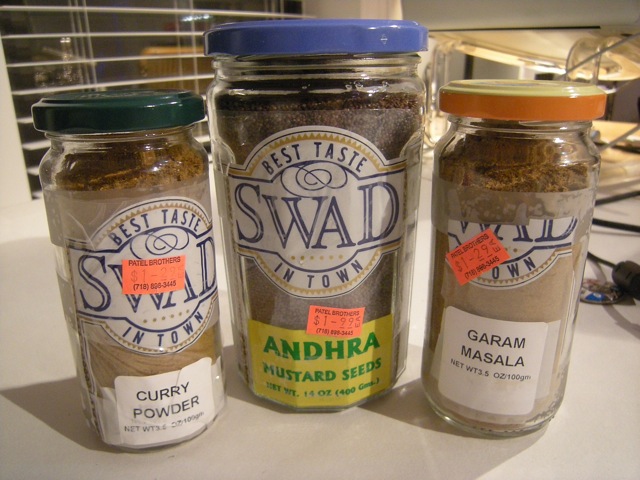
I filled up half a bag while Pierre, guided by Larry’s expertise, selected Garam Masala & Curry powders. We also got mustard seeds, fresh turmeric, black lentils & Arrow Root flour—I like it  to make beurre manié, it is much lighter than wheat flour and gives the sauce a smoother consistency (a good option for my friend Anne B.!). Anyhow we took leave of our friends, our minds —and stomachs— filled with colors & scents.
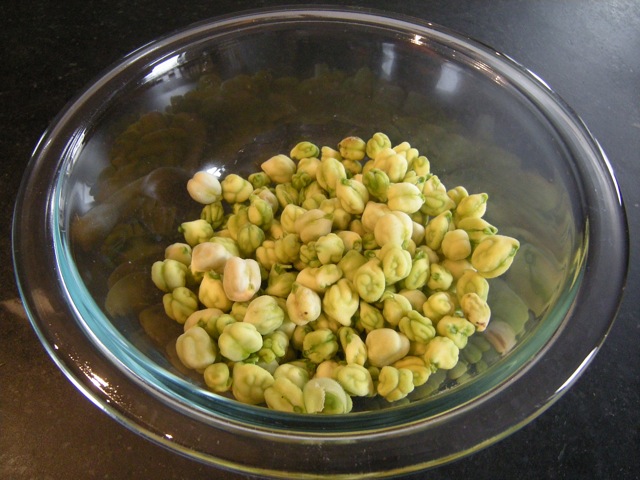
Tuesday I finally got around to shell the peas for lunch. I am glad Pierre assisted me because unlike any other shell beans I know of, chickpeas have one pea per pod, only very occasionally two! A time consuming task that I would recommend doing while watching a good documentary or hire your guests while having aperitifs! (the fresh chick peas take no time to cook at all)

DSCN5205DSCN5212

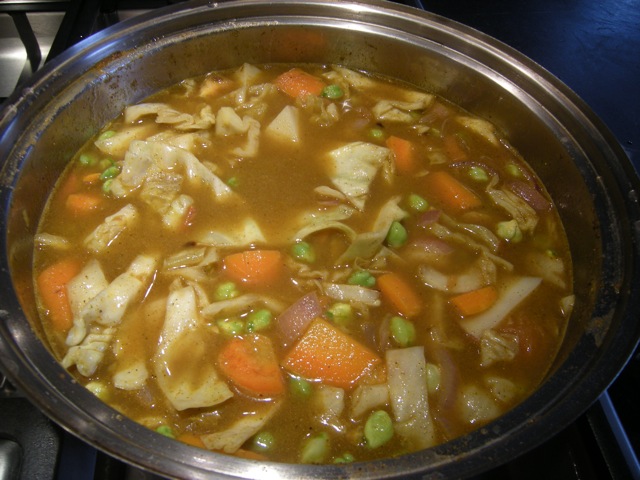
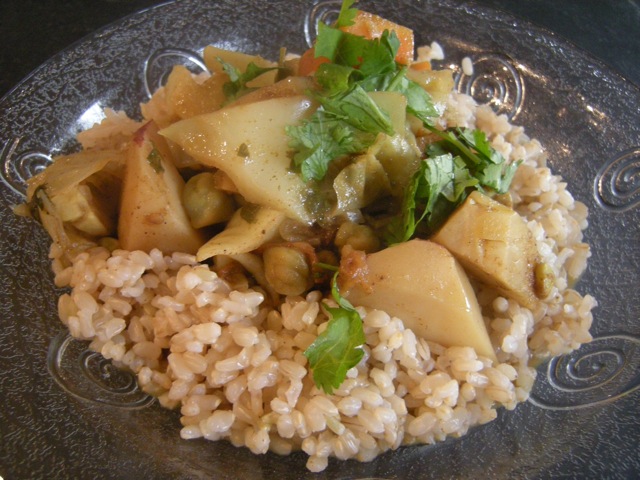
Once shelled,  it turned out to be a small quantity so I decided to improvise a version of  a Hara Chana (green chickpeas), Aloo (potato), Patha gobi (cabbage) and Gajar (carrots) curry that turned out to be best vegetable stew I ever made. I think I was still very inspired by the tastes of the lentil dish I had. The fresh chickpeas are very tender with a subtle nutty flavor and a very smooth texture. Enhanced by the fragrant –medium hot—spices, this combination brings up a remarkable and specific savor. Once again I have to say that the decision of what to put in was made by default! Except for the chickpeas and the spices I literally gathered what was left over in the fridge and that was:

Vegetable

½ onion, diced
1 big carrot , diced
¼ cabbage, cut thick julienne
1 potato, diced
2 garlic cloves, slivered
½ bunch of cilantro, roughly chopped
1 small piece of fresh turmeric, minced),
1 small piece of fresh ginger, minced
1 tablespoon of Garam Masala
1 tablespoon of Curry powder
Salt/Black pepper
/Water or vegetable broth.
Coat a skillet with olive oil —ghee would have been better but I didn’t have enough butter in my fridge to make clarified butter,— and under medium heat sauté the onions until soft.
Add all the vegetables including turmeric, ginger and garlic, sauté for a couple of minutes.
Add the garam Masala & Curry powder, salt and pepper. Mix well and add water to barely cover the veggies.
Once the liquid starts boiling, reduce heat, cover and let simmer for 15/20 minutes or until the potatoes are soft.
I served it with brown rice —Indian style rice would be obviously better, but that is what I had available— and garnish with fresh cilantro.  Namasté to Larry  Eleanor!

Nicole's Vegetable curry

Au revoir Paris, but no Regrets!

Au revoir Paris, but no Regrets!

coquilles d'huitres

My last night in Paris was a good transition to return home. I first met up with a friend from my teenage years that I had not seen in 30 years! Bélinda and I reconnected via Facebook a few months ago. What I find totally fascinating in these reconnection stories —and that happened more than once this year— is the re-collection of my own forgotten memories. Bélinda de-fragmented my hard drive revealing a few events that I am sure glad to have recovered.
The first one was a luncheon at the famous Paris restaurant Chez Coconnas on Place des Vosges with Roland Dhordain.  Roland is a radioman —now long retired— who had been general manager of Radio France in 1965. He became a close friend of the family in the 1970’s. Bélinda also remembered us having Lunch at the Eiffel Tower with my parents the day  Jimmy Carter won the presidential election, so that was November 2nd 1976, I was 16 & Bélinda 18! Bélinda always wanted to be an English teacher and she became one! She loved purple and still does, though I didn’t notice her wearing purple mascara anymore! It was lovely to see her.

Around 7 PM we took off to rue de Rivoli to meet up with New York poet friends Yuko Otomo & Steve Dalachinsky. They had been on a European tour and they were reading at 59 rue de Rivoli for the  “Grand reopening of the Squat / Art Music Poesie”. Steve & Yuko kindly invited me to perform a few pieces. The set up was not an ideal situation for a poetry reading. Lots of people where going in and out to watch the multilevel art shows and there was no microphone. Despite the conditions, Yuko’s beautifully crafted bilingual (Japanese –English) haikus soared through the noise and fall gently into attentive ears.

Claude

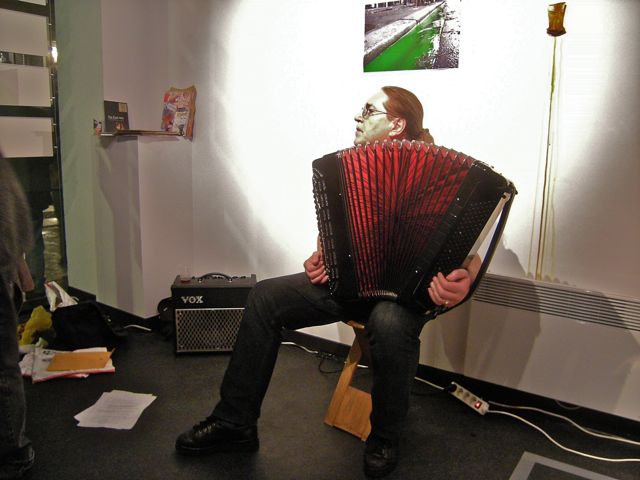
Steve mesmerized the crowd with his rhythmical & entrancing poems; an improvising accordion player called Claude Parlé accompanied him. Claude improvised on my pieces too. Once again my Gascon Southern French accent drew more attention in Paris than in NYC. So I took the opportunity to declare my allegiance to the Southwest — be it Southwest Brooklyn or Southwest Occitania — and proclaimed my self-declared nationality to be Gasco-Ricain! I performed “Things fall where they lie,”  “Cranes” and “Outer outer edges”.

bulot""

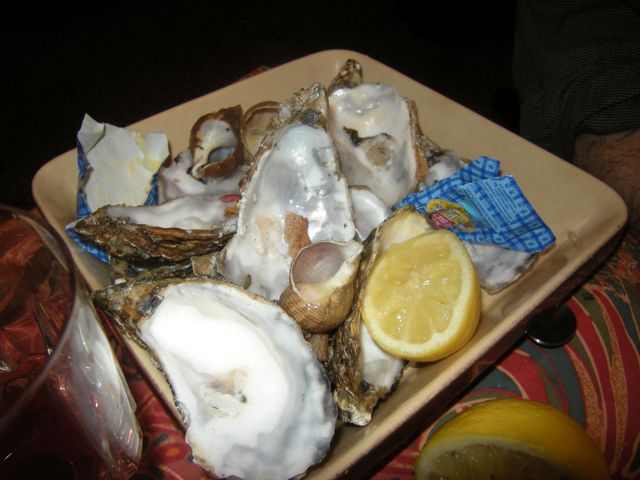
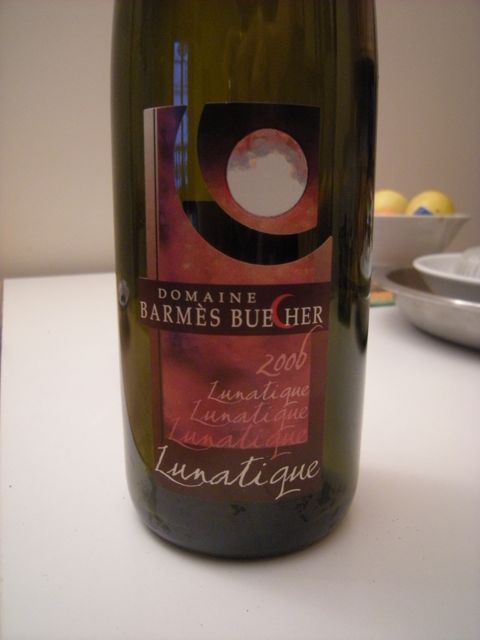
Bélinda returned home after the reading. Steve, Yuko and I had a lovely walk back to my place in the 6th. When we passed the inviting outdoors oyster stand of Bistro de La Grille I couldn’t resist getting some to take back to the studio. On the video below you can see Steve skillfully carrying the mayonnaise and the shallot vinegar through Rue Guisarde. The oysters highly recommended by the écailler were Fine de Claire Nº2, I didn’t get to ask the  exact provenance; the transaction to take the oysters home was a little out of the ordinary but once I called onto the wonderful Thierry —manager for as long as I remember the place! — things eased up and we walked home with all the trimming I mention above, plus an overload of bulots, rye bread and beurre salé de Bretagne (j’ai pensé à Claire!). The oysters were delicious, very meaty and firm, not as green as the one we had in Angoulême but that was the specificity of that type of oysters. As for wine, I had bought a red Alsace wine. It had been recommended by the sommelier of the wine shop at the marché St-Germain. I asked for a light red that would go well with seafood or a light meal. He highly recommended a €10 biodynamic Alsace Pinot noir called “Lunatic”. With a name like this how could I pass. The Estate Barmès Buecher is located in Wettolsheim and totally dedicated to biodynamic  growing; this is what they say about it:

bulot""

” Wine is made on the vine and not in the winery”
…We work the vineyards bio-dynamically, that’s to say with activated preparations, according to the influence of the planets and the apogee and perigee of the moon. No synthesized chemical product is used, neither in the vineyards nor in the winery.
The aim of this is to keep the initial balance of the grapes undisturbed, and not to mask the effect of the vintages, so that the wine can show its “terroir” to the maximum and to preserve the energy it has acquired (from the bio-dynamic culture of the vines).
The soils are ploughed and hoed between November and July and then we mow the grass from August to the harvest.
The vines are planted
closely at a density of 6000 to 8000 plants per hectare to create maximum competition for the roots. This forces them to delve as deeply as possible.
No weedkillers or chemical fertilizers are used. If needed, we just use compost we make ourselves…more click here.

Many would argue about pairing red wine and oysters, but what can I say other than: this simple, clean, straight and dry red wine with a subtle tinge of red berries enchanted me! I loved it and so did my guests! Au diable les conventions!

Voilà! we ate, drank, talked into the late night — voir early morning— and when time came to separate I did something that is very Parisian among intimate friends: I gave them the trash to deposit downstairs! Now I am back home and as the song on the video says, I had a great time but  no regrets to leave Paris!


Piano: Yuko Kishimoto
Voice: Nicole Peyrafitte
recorded at Bender Studio by Sten Isachsen
May 2004

30 Candles, 30 Desserts!

30 Candles, 30 Desserts!

30 dessertsmore desserts

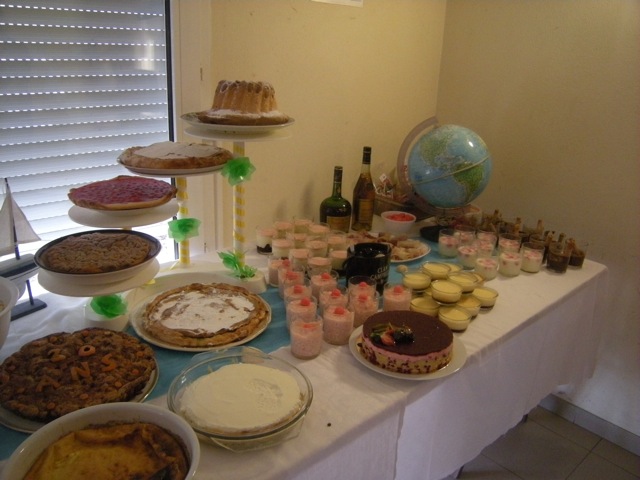
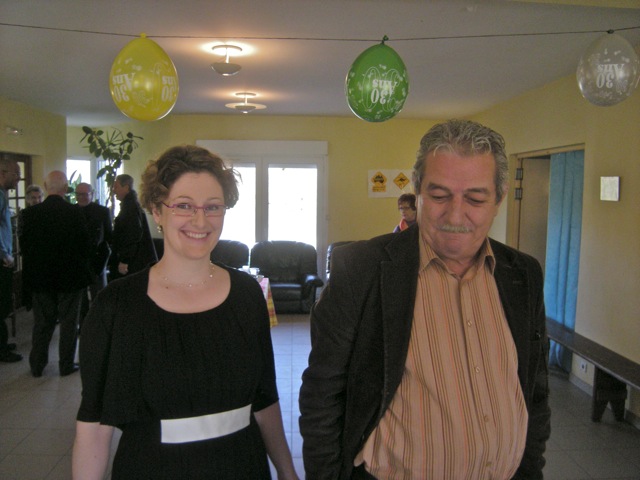
Last week Stephanie turned 30 & her statement/wish was : 30 candles, 30 desserts! About 50 people gathered at a rented “Gîte Rural Municipal” —that is a self catering cottage— in Aventignan, a small village of 135 dwellers in the foothills of the Pyrenees. The birthday girl had handled announcements, decorations, games & music. Christine, the mother & also my brother’s companion, who was a restaurant owner and cook for many years, handled all the shopping & cooking with the skilled assistance of her older daughter, Magali. Before getting into the dessert list let me give you the menu of the prandium.

The gathering started around noon with a 2 hours “apéritif” (that is cocktail hour), where mini patés en croûte, slices of dry salami, Spanish ham, peanuts, dried corn kernels and olives accompanied a stiff fruit punch and an equally stiff sangria. The cocktails were the mischievous oeuvre of Magali.

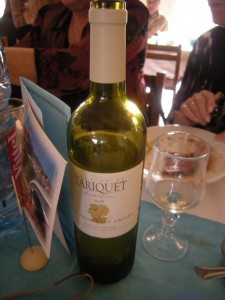
I was really happy to go help in the kitchen in order to avoid getting plastered before sitting at the table! I helped slice the delicious “Terrine de Foie Gras” that Christine had made from scratch a few days before & I dressed the mixed green. At 2:30 pm a cute thank you speech by the birthday girl gave us permission to dive into our foie gras plate. This was paired with a Tariquet: première grives wine. I am not a big fan of sweet white wines in general, but I must say that I really enjoy this late grape from Gascony. This is what the producer has to say about it & I beleive it is available in the U.S:

Origin:
Gascony, Bas-Armagnac Grown, produced and bottled by Domaine du Tariquet.

Varieties:
Gros Manseng and other late-harvest regional grape varieties

Serving suggestion:
Serve chilled, as an aperitif or with a meal. Excellent with foie gras, white meat or soft cheese.

Tasting notes:
Les premières grives, sheer pleasure!
In Gascony, the onset of winter heralds the arrival of the first thrushes (‘premières grives’), eager for their share of the season’s pickings. Harvested in late autumn, mature grapes packed with sweetness and pleasure produce an elegant wine, with fine typicity. Great fullness on the palate, with delicious tropical flavours, sustained by freshness. Balanced sweetness leads to fresh grapes on the finish – an instant delight.

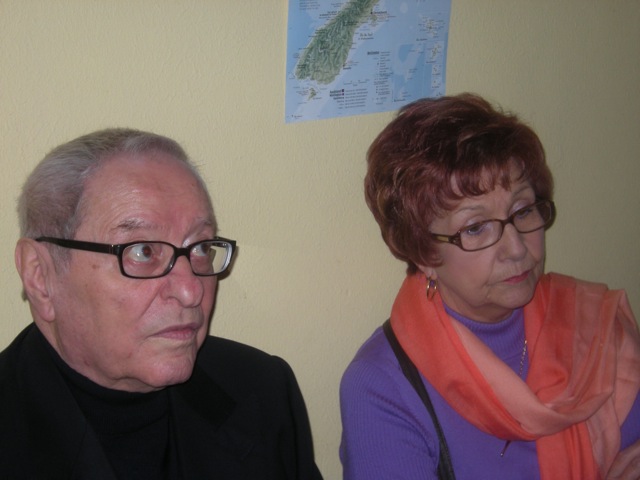
Jean & Renée Peyrafitte
My parents: Jean Peyrafitte (87) Renée Peyrafitte (80)!

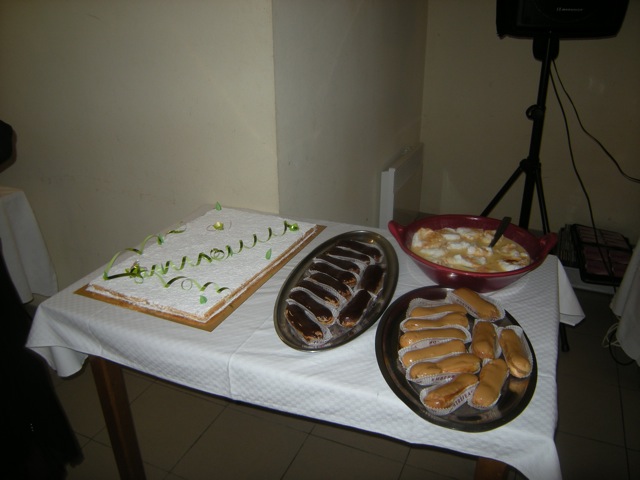
Now back to the kitchen to slice the rare roast beef while the rest of the crew was setting up gratins dauphinois & flan de courgettes (zucchini flan). All very tasty. A plate of generic cheese was passed on for the form but everyone was on their starting blocks to get to the dessert buffet. Even my dad who usually doesn’t eat dessert had 4 of them, 1 éclair au chocolat, 1 mousse au chocolat, a few spoons of crème Anglaise, a slice of Barroussaise. My mother refused to confess what she had.  I had 4 small servings: 1/2 chocolate éclair, a few spoons of crème Anglaise with a thin sliver of Kouggloff, ½ slice of tarte Barroussaise.
Does that say that abundance might leads to excess? Oui!

DSCN5112
Stephanie, the birthday girl & Pierre Peyrafitte, my brother

This is the list of desserts and thank you Stephanie for inviting me and providing the list:

1.  Russe
2.  Millefeuille
3.  Eclairs au chocolat
4.  Banofee
5.  Baroussaise —my mother’s: puff pastry dough with almond flavored custard & meringue on  top
6.   Ile flottante
7.   Fromage blanc et ses coulis
8.   Salade de fruits frais
9.   Fondant au chocolat
10. Tiramisu fruits rouges
11.  Cake banane chocolat
12.  Croustade aux pommes
13.  Gratin de litchis
14.  Tarte aux pommes
15.  Mousse de framboises
16.  Cookies
17.  Mousse au chocolat
18.  Riz au lait au fraises Tagada
19.  Flan
20.  Gateau aux framboises
21.  Kougelholf
22.  Strussel
23.  Gâteau chocolat framboises
24.  Profiteroles
25.  Eclairs au café
26.  Panna cotta
27.  Millasette
28.  Nems aux framboises et chocolat blanc
29.  Tarte à la praline  rose
30.  Gratin d’ananas

And to conclude voilà les pictures of the event.