Return of the Rabbit

Return of the Rabbit

dscn3289

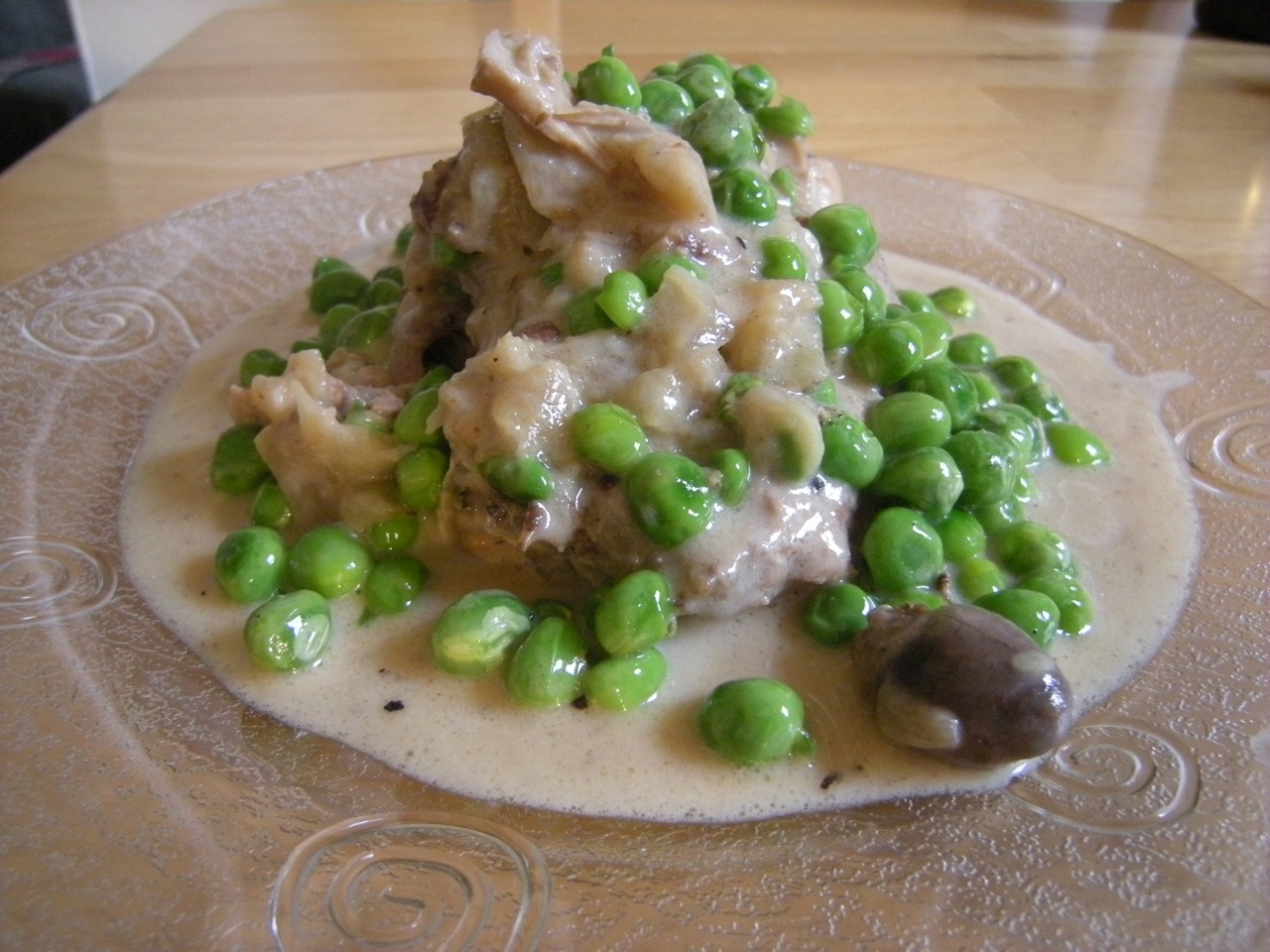
I love to rearrange leftovers. I learned this skill from my grandfather who was a master at making a splendid dish with a week’s worth of leftovers. Do you remember the Quick Apple Rabbit last week? I had frozen the leftovers and I served them last night with fresh green peas. It worked very well though it became a different dish. The apple taste got a bit lost but the  popping texture of the delicious fresh peas with the complex cream sauce  made up of for it.
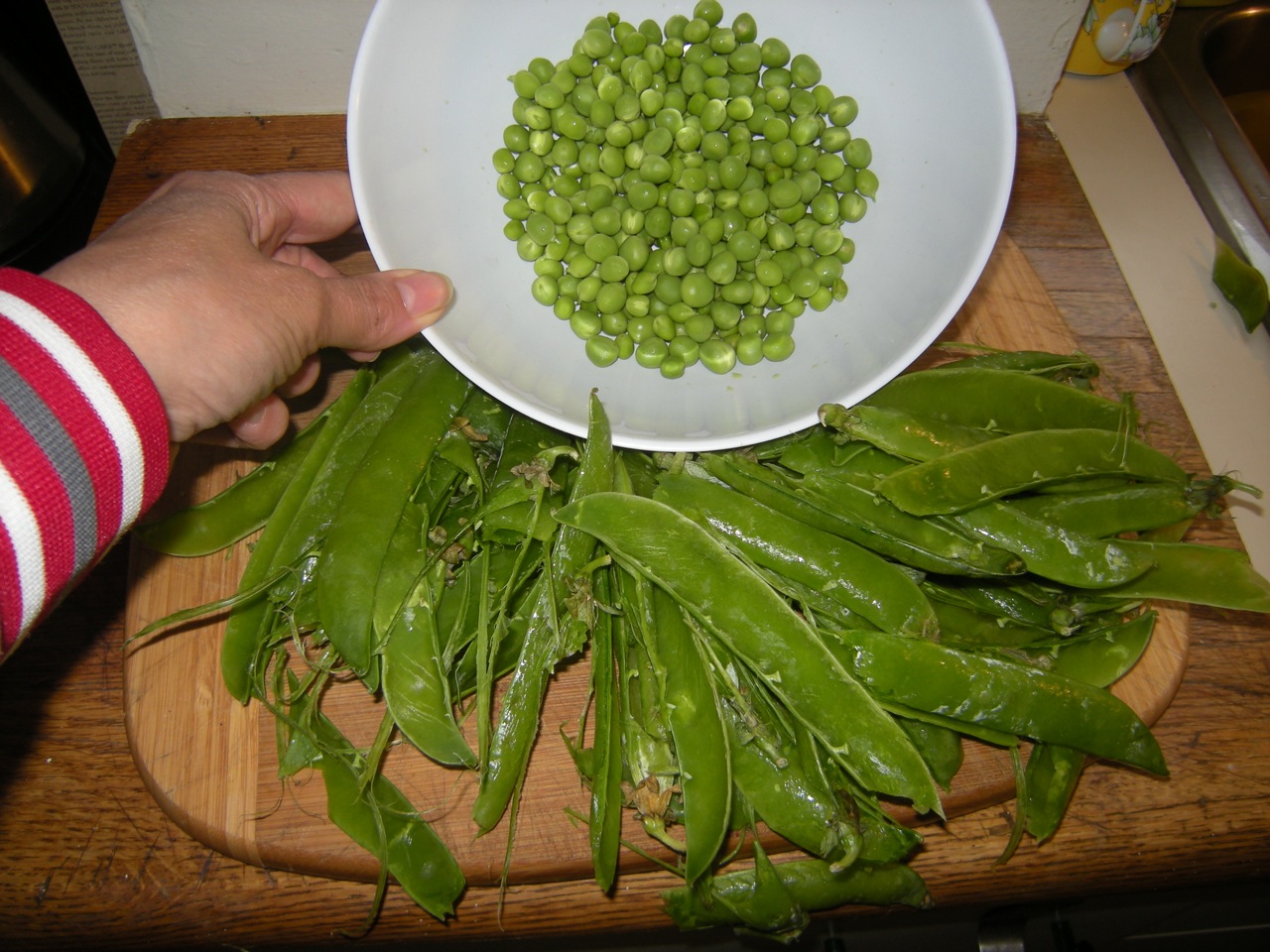
Fresh Green Peas

I would highly recommend the double boiler technique to reheat delicate  dishes or sauces —it works great for mash potatoes, gravy, hollandaise, chocolate sauce. A double boiler is a double-decker sauce pan: the upper container fits tightly into a lower one filled with water. Make sure your lower container has always enough water. Whatever  is in the upper deck will be warmed up by steam and not by a direct flame. This is a more gentle method as you will have better control and it can also be used to keep things warm while you are having your cocktails. I  should mention here that I do not have a microwave and use this technique all the time.
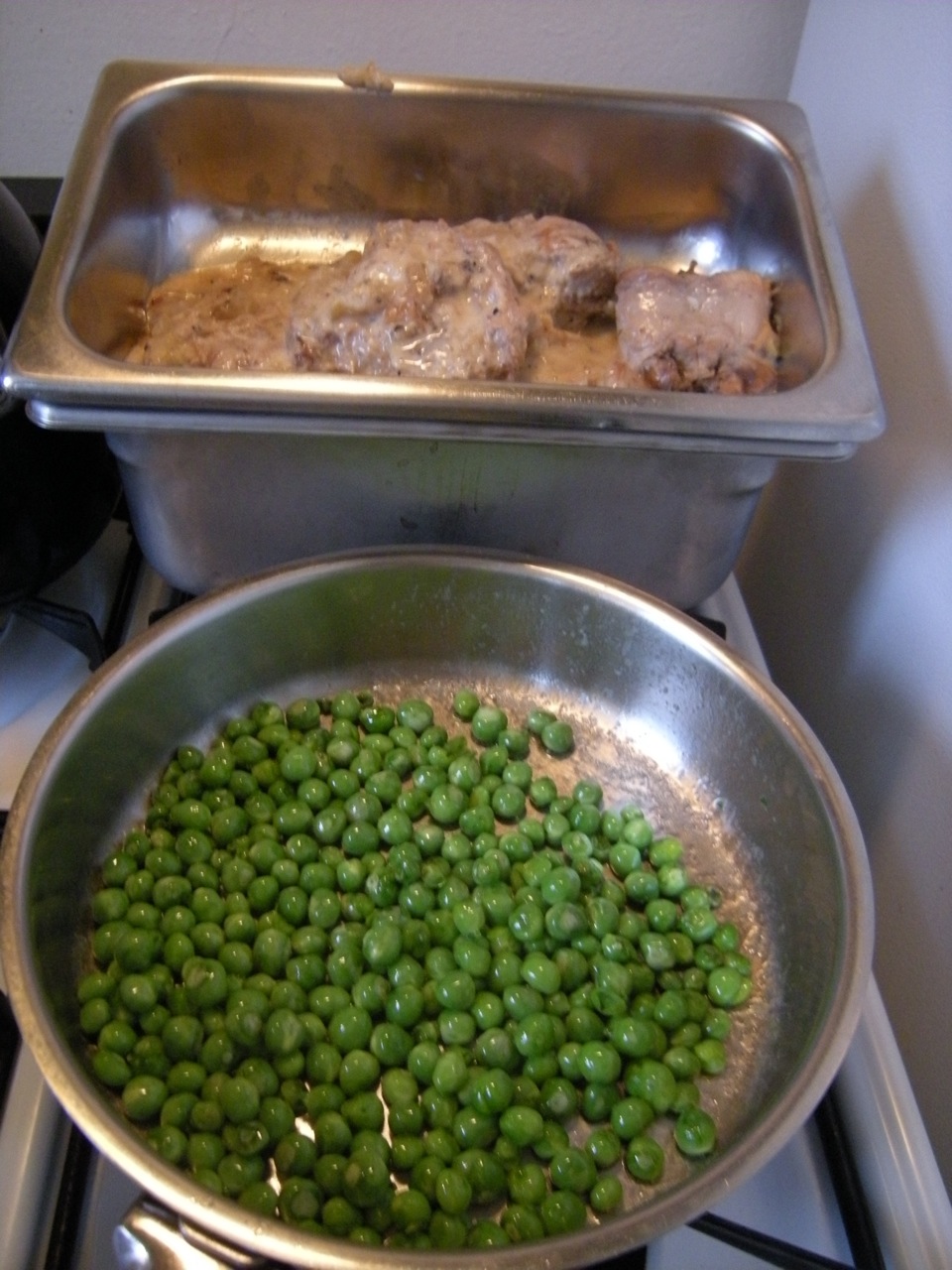

Double boiler

Recipe:
Shell your fresh peas.
In a skillet melt 2 tablespoons of butter with a dash of oil, add the peas, lower the  heat and cover for about 6 minutes — that will depend on how big or mature your peas are.  Make sure they are not over cooked.
Once they are cooked add the to your rabbit, taste and adjust seasoning. I did add a generous “round” of fresh ground pepper.

And speaking of peas, here is my pea drawing from last year in homage of my friend “Petit Pois”:

Petit Pois
From the series "Many Body": Petit Pois

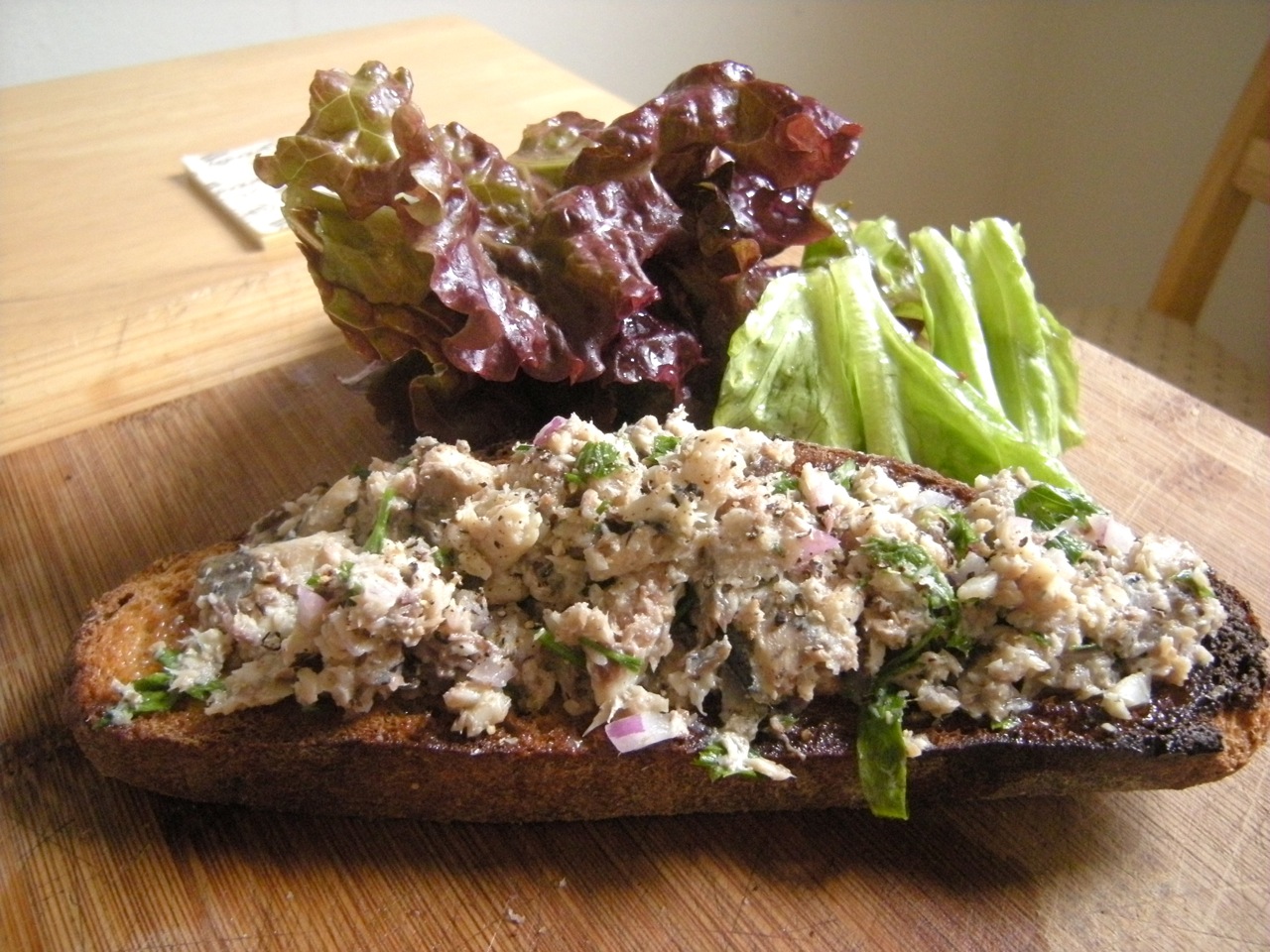
Sardine Tartine

Sardine Tartine

sardine-tartine

Henri IV was born in Pau in 1553; he became the King of France and Navarre in 1589 until his assassination by Ravaillac in 1610. He  was  a very popular king, two of his nicknames were: “Good King Henri” & “the Green Gallant,” the latter referring to his constant womanizing. He had to change faith before being crowned, converting from Calvinism to Catholicism and is famous for having said: “Paris is worth a mass!”.  He wanted all French families to have a Poule au Pot every Sunday—that is, a stuffed chicken in the pot. Another food anecdote about Henri IV, reported in the Dictionnaire universel de cuisine: Encyclopédie illustrée d’hygiène alimentaire, is that he  loved sardines and made them popular at the court of France.

Today there is still a brand of sardines named after him, though I don’t now how good they are as I have never tried them—if you have, please let me know! I usually buy the Brisling in Spring Water because I rather do the seasoning myself with good pungent olive oil. If you read my blog, or know me, you already know that I don’t like, nor buy, canned food — sardines (along with tuna fish, and a couple of tomato cans a year) are the exception that confirms the rule.

The tightly packed sardines in their little tin can are a nutritional gem. Sardines have not only the highest content of  Coenzyme Q10 but also tryptophan, Omega-3, calcium, phospohorus, vitamin B12, B3, D, & proteins. This simple food  makes for a very quick and healthy lunch.

Recipe:
1 can of sardines
1/4 finely chopped onion
1/4 cup fresh chopped parsley
2 tablespoons good extra virgin olive oil
Lots of fresh ground pepper
Salted pastured butter

Mix is all up and serve on buttered toasts. An important note: I butter the toast after they have been toasted, the secret is to have a thin layer of good fresh butter in between the sardine mix and the bread; trust me, that is what makes this little toast exquisite. Serve with Nicole’s simple salad, and if you haven’t yet seen the video, here it is:

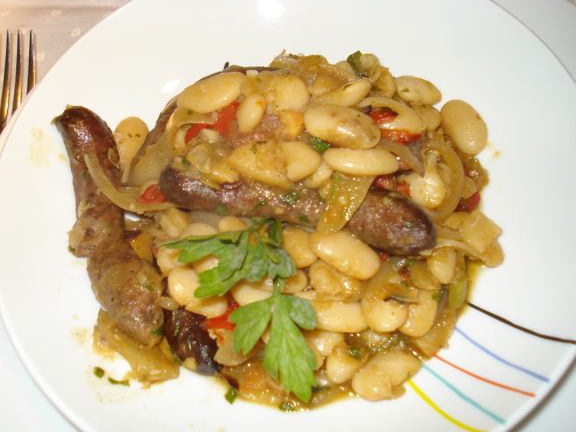
Merguez Mongetade

Merguez Mongetade

dsc02619

Where I am from in the French Pyrenees, and especially in the Comminges Region, when  people need to get together for an annual or a perennial event they throw a mongetade party.  In Occitan language mongetes means beans, so a mongetade will always involve a bean dish and an unlimited number of people. There is as many recipes as there is villages, however there is two consensus: the use of white beans –preferably coco tarbais— and couennes, that is porc rind. The meats varies from pork, duck or geese confit, lamb and/or mutton stew to pork sausages and a piece of cured ham wouldn’t hurt. Never would it be served with merguez —lamb sausage— but why not? and I can guarantee you it is delicious. I made this dish for the graduation dinner of our friend Dr. Randall Horton, I think he liked it, he had several helpings! You will notice that I skipped the pork rind, I didn’t have any available, but I will sure use them for the  famous bean dish often served at mongetades and dear to my heart & stomach: la Pistache Luchonnaise. Stay tune for that post when I go home this summer, meanwhile enjoy this one!

Recipe
Soak 1 lb of Coco Tarbais over night — you can substitute for Lima beans.
2 lbs of fresh Merguez (Mediteraneen lamb sausages. I buy mine
at Aunt Halime’s Halal Meat on 3rd Avenue and Ovinton in Bay Ridge but you can get them on line at….yes! d’Artagnan! )
1 big onion, sliced thin.
1 red pepper, 1 green pepper
1 teaspoon of
piment d’Espelette (medium hot fragrant hot pepper grown in the Basque Country. Can be substitute for hot paprika.)
3 Tbsp of duck fat ( or olive oil)
Salt/Fresh ground pepper to taste

Optional for the hachi:

2 cloves Garlic
1 cup fresh Parsley
1 piece of Fatback

After soaking the beans overnight, drain the beans, change the water bring to a boil, reduce heat once it boils and simmer for about 1 hour or until beans are tender. Do not salt the water. Once the beans are cooked, drain and cool them, drizzle some olive oil on them to prevent them to dry if they are going to sit for a while.
Preheat oven 400º.
Meanwhile in a roaster type pan mix the fat, the onion, the pepper and the sausage, the chili pepper, the salt & the black pepper. Mix thoroughly and put into the oven for 20 minutes, once the vegetables and sausages are sizzling and have rendered all their juice add the beans. There should be juice from the mergez and the veggies in the roaster but make sure you add some liquid if needed; you need about 1/2 inch of liquid in the pan , it can be vegetable or chicken broth
and you can even add 1/2 cup of dry white wine, if you have none of these just add water. Mix well, lower the oven temperature to 320º, put the dish back in the oven and let simmer for 30 minutes so all the flavors can bind together.

Take out the oven and taste, if you find it too blend -which would be surprising- you can add a hachi of parsley, garlic & fatback (optional). To make a hachi blend all the ingredients to  paste in a mortar or food processor (much easier!). Garnish with a sprigs of parsley and serve with good bread and Southwestern French wine; a Corbières  or a Spanish Tempranillo would be perfect.


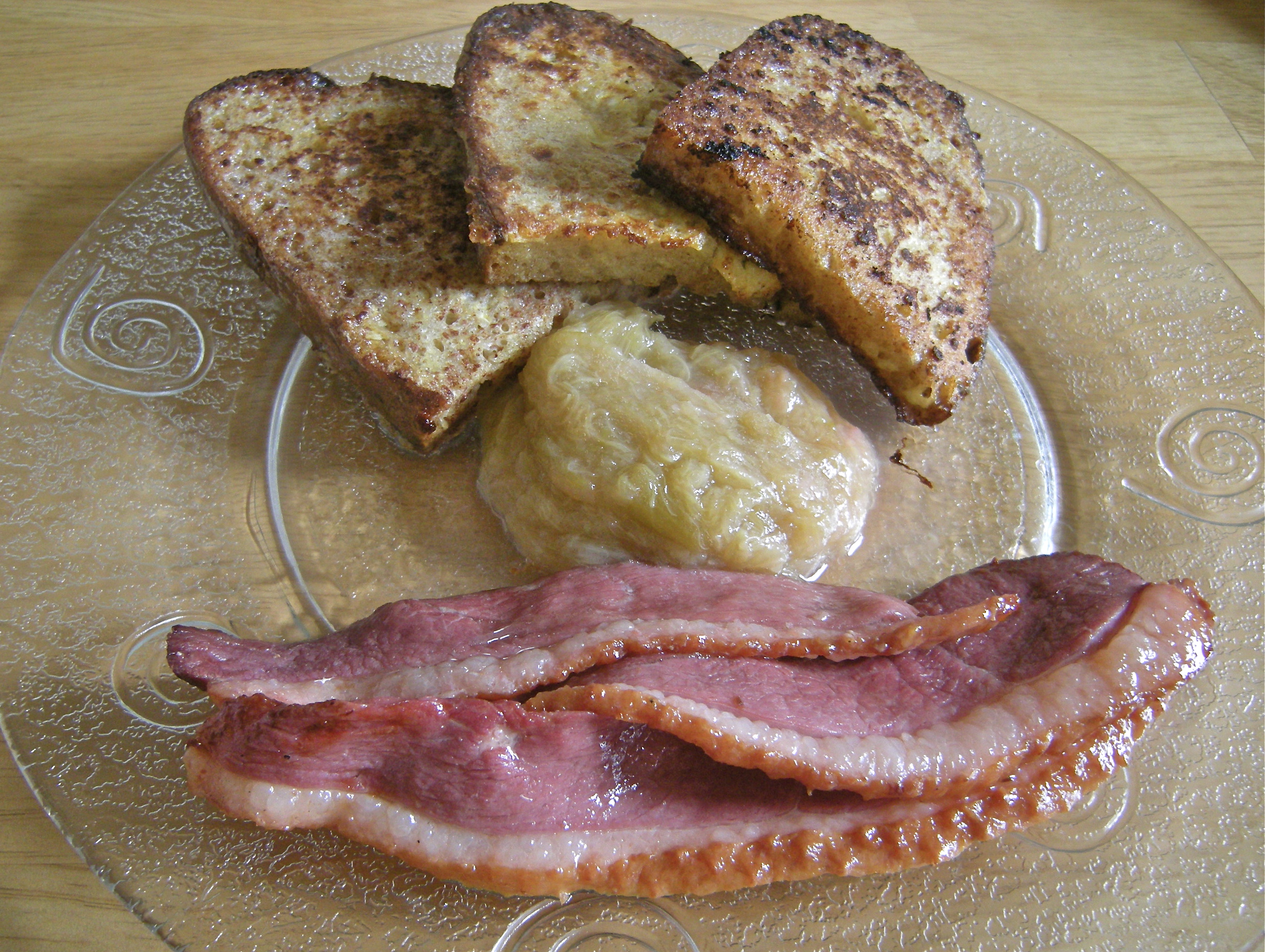
French Toast with Duck Bacon & Rhubarb Compote

French Toast with Duck Bacon & Rhubarb Compote

frenchtoast

This is a delicious, unusual and quick brunch that I made for my friend Pat Smith visiting from Ann Arbor, MI. I like the balance between sweet, salt and tart tastes, as did Pat. French toast is something I knew in France as pain perdu or lost bread, I never had it for breakfast until I came to this country. There, it is always served as a dessert and mostly to use  up stale bread. My batter is pretty simple and the secret is in the bread: I use good french sourdough country bread. The duck bacon is of course from d’Artagnan, it’s slight gaminess reveals itself only after the pleasant tartness of the fresh rhubarb. There is no need for extra maple syrup as I sweeten the rhubarb compote with it.

Rhubarb compote
4 cups of peeled and cut up fresh rhubarb
1/2 cup maple syrup
a few spoons of water

Put all the ingredients in a sauce pan, cook slowly until the rhubarb falls apart. Put aside

French Toast Batter
2 egg
1/2 cup of milk
a pinch of cinnamon (Ariane, Cathie you can skip that part)

Fry the duck bacon in a skillet, keep warm. Save and cook the toasts in the dripping (yum!)

Quick Apple Rabbit or Lapin aux Pommes

Quick Apple Rabbit or Lapin aux Pommes

dscn3167

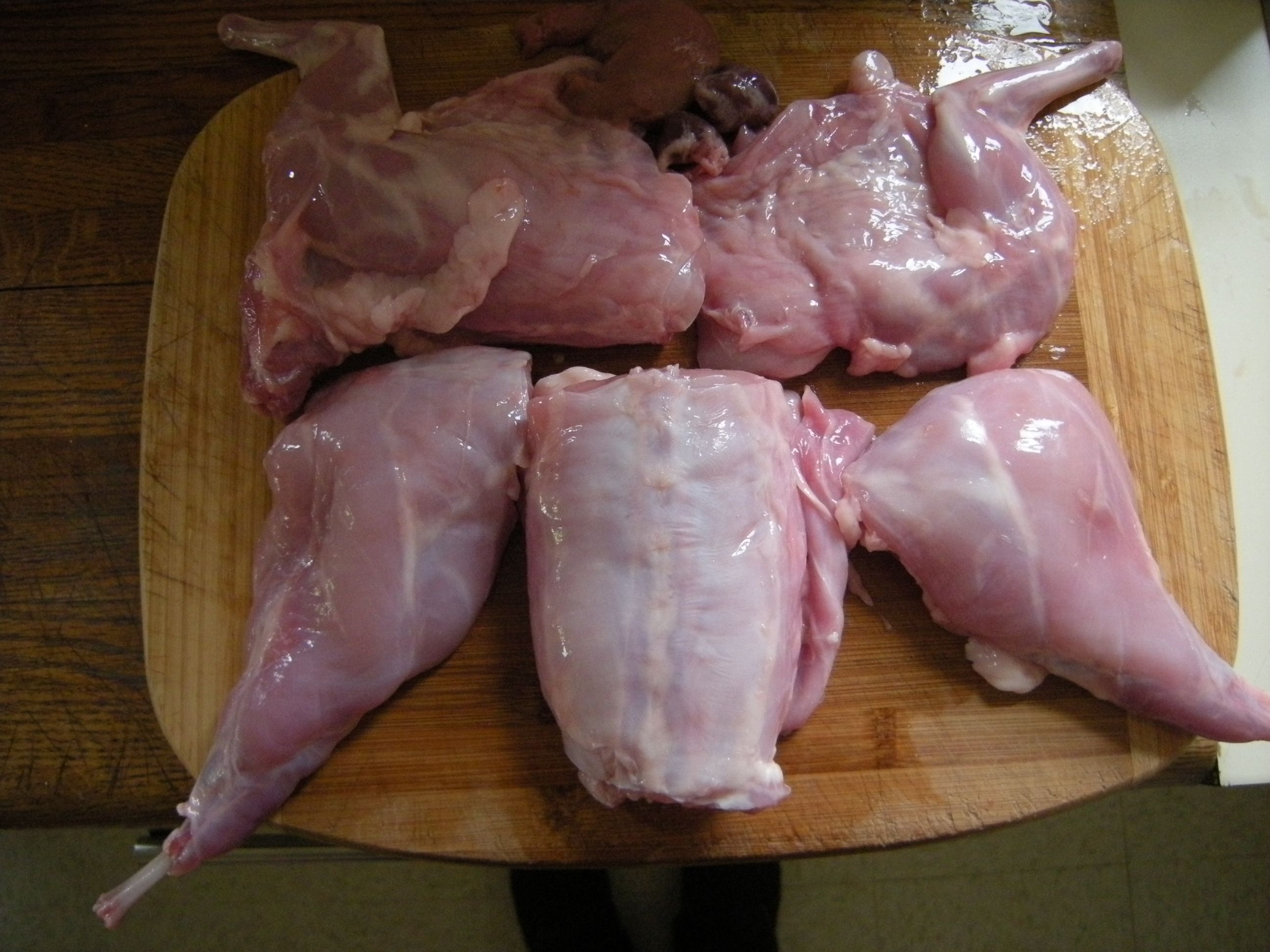
This rabbit recipe is quick, easy and tasty. I buy rabbits from d’Artagnan at the Park Slope Food Coop, you can get the same product on line, click here for details and order. D’Artagnan offers either whole rabbits or a choice of cuts.  At the Park Slope Food Coop no choice, the rabbits come as whole, above is my rabbit cut in 5 pieces, though I ended up cutting the saddle into two pieces later on.

dscn3170

Voilà la recipe:
Preheat oven 350º
1 rabbit- cut into 5/6 pieces
1 big onion-slivered
1 apple -diced
1 cup of apple ice wine — it is an alcohol made from frozen apples, I am not a big fan of it as a drink but love to use it in cooking. Can be substituted for Calvados or any other apple brandy .
2 cups
dry white  wine
3 Tbsp duck fat —you can substitute for olive oil and a dollop of butter or lard or drippings.
1 cup heavy cream

Sauté onions in a skillet coated with duck fat until golden—
Remove onions and brown the rabbit, add some fat if needed.
Flambé the rabbit with apple ice wine, or other brandy.
Return onions to the pan, add apple and combine with the rabbit.
Salt & fresh ground pepper to taste.
Add the white wine, stir and, either cook slowly on top of the stove covered or, as I prefer it,  cook into preheated oven
for about 40 minutes, the skillet should be covered.

Once the rabbit is cook take out the skillet out of the oven, remove the pieces of rabbit from the pan, keep them warm. Meanwhile pour the heavy cream into the skillet and yes! Do keep the onions, apples & juices in the pan and bring it to a boil.
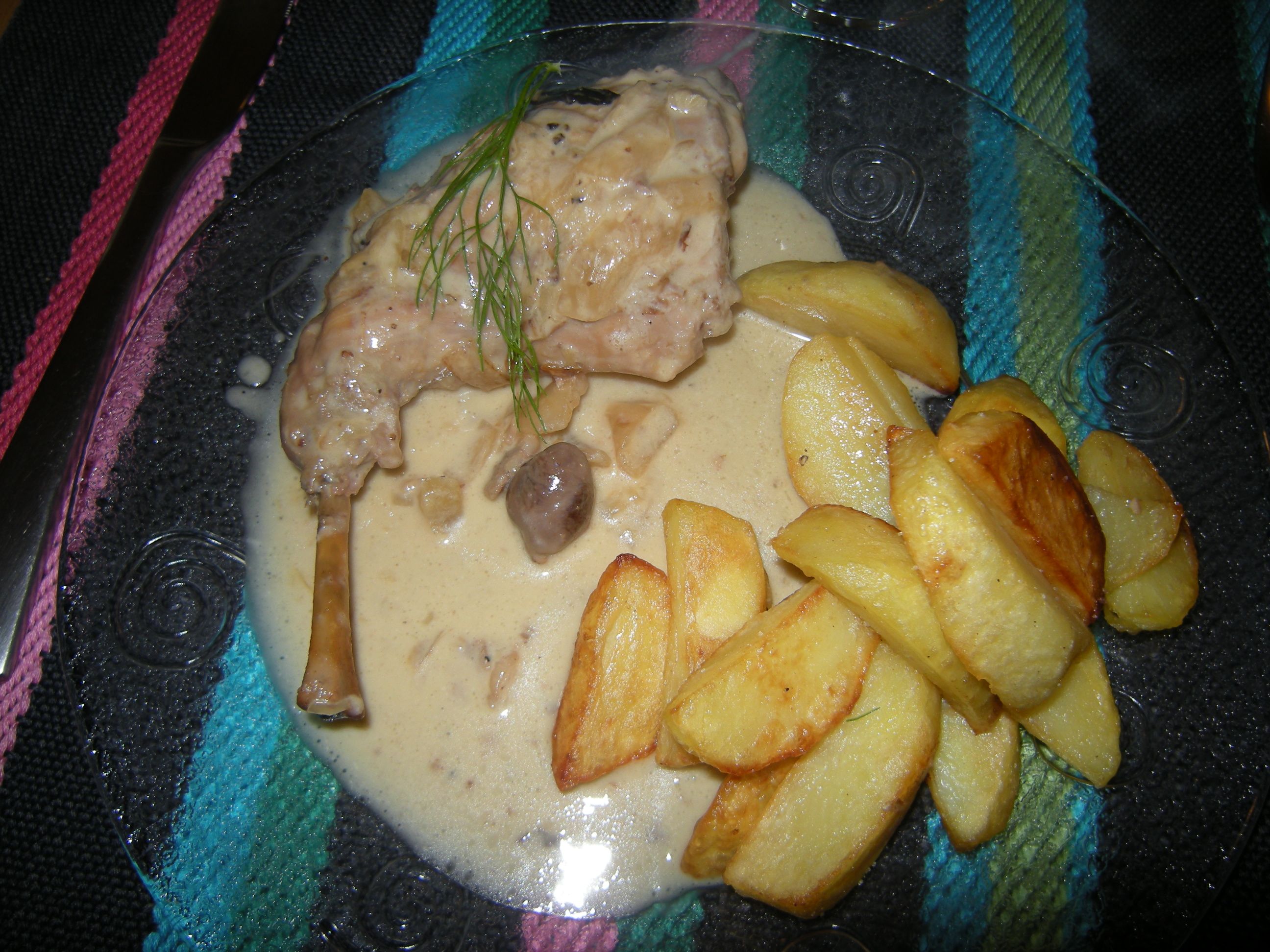
Reduce the sauce  until it thickens; stir frequently with a wooden spoon and when the sauce coats the back of the spoon it is a good indication the sauce has the perfect consistency. Adjust seasoning if necessary, return rabbit into the sauce, garnish with fennel sprigs,  serve with homemade french fries or chips and a green salad with thinly sliced fennel bulb.  Enjoy!